Full article about Dawn over Seixo do Côa: granite, river, bell
Walk schist lanes, hear wolf-country silence, taste Dão wine at Capeia Arraiana
Hide article Read full article
The valley wakes first
A single bell, somewhere beyond sight, sends its note rolling between walls of schist and granite until it dissolves in the Côa’s steady hush. At 721 m the dawn air tastes of wet soil and rock-rose; the Beira Interior chill settles on skin like damp silk. In Seixo do Côa the houses – grey granite, timber doors split by decades – appear to have germinated from the riverbed itself, prised open by nothing more urgent than time.
By the water
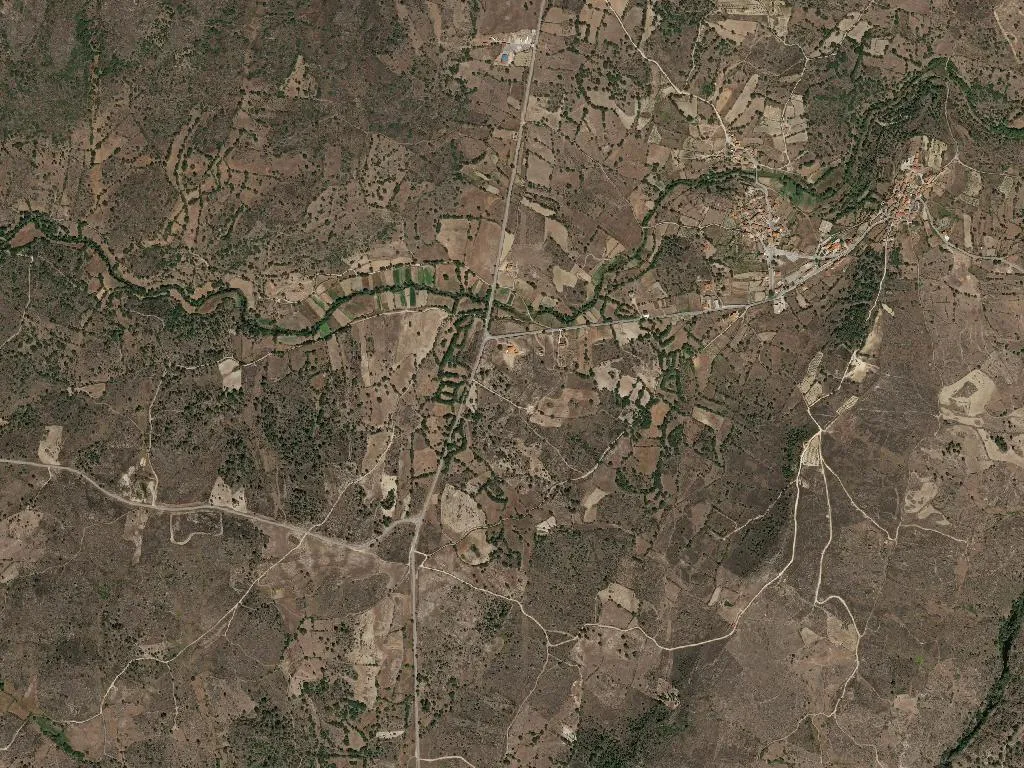
The parish takes its name from the egg-smooth pebbles the river leaves behind. When low winter sun skims the water they glow like porcelain. The Côa has sawn a deep trench through the plateau, lining it with olive terraces and knee-high maquis. Walk the old mule track east to Vale Longo and you feel the rules being set by stone, water, sky; silence is broken only by wind combing the pines or the high whistle of a Bonelli’s eagle turning overhead.
Four kilometres south the Malcata Natural Reserve begins: 16 000 ha of cork oak and heather where Iberian wolves still hunt and black vultures ride thermals. Trails climb through rose-bay and lavender to quartzite rims that let you survey three unfenced counties at once.
What remains
The 2013 merger of the two villages stitched together micro-histories of transhumance and subsistence farming. Their eighteenth- and nineteenth-century chapels are unadorned, whitewashed rectangles – no gilded carving, just stone pulpits and the smell of beeswax. Outside, the heritage is workaday: granite granaries on staddle stones, threshing floors polished by wind, dry-stack walls that wander uphill at the speed of a donkey.
On the first weekend of August the Capeia Arraiana upends the calendar. Bulls on ropes career through the lanes, followed by accordion bands and makeshift bars grilling kid and chanfana (goat stewed in red wine). Requeijão cheesecakes and honey-drenched filhós appear while the local Dão-blend is poured from unlabelled jugs. It is less performance than family reunion: emigrants return from France and Switzerland, outnumbering the year-round residents two to one.
The arithmetic of stillness
182 people now live here – seven are under fourteen, ninety-nine are over sixty-five. By noon the only noise is your own footfall ricocheting off granite. Wood-smoke begins to rise around four; by dusk it threads through the valley like incense. There is no mobile signal in the river gorge, no gift shop, no interpretative centre. Instead there is an invitation to simply be: the cold weight of stone under your palm, the tannic bite of an olive just knocked from the branch, the Côa sliding past with a hush older than any border. When night finally clamps down, the few street lamps blink like hesitant fireflies against the absolute dark of the Serra da Marofa.