Full article about Vale de Espinho: Where Bells Echo Across Granite Sky
Bull-dust streets, lynx-haunted ridges and crackling roast kid at 900 m in Sabugal’s high village
Hide article Read full article
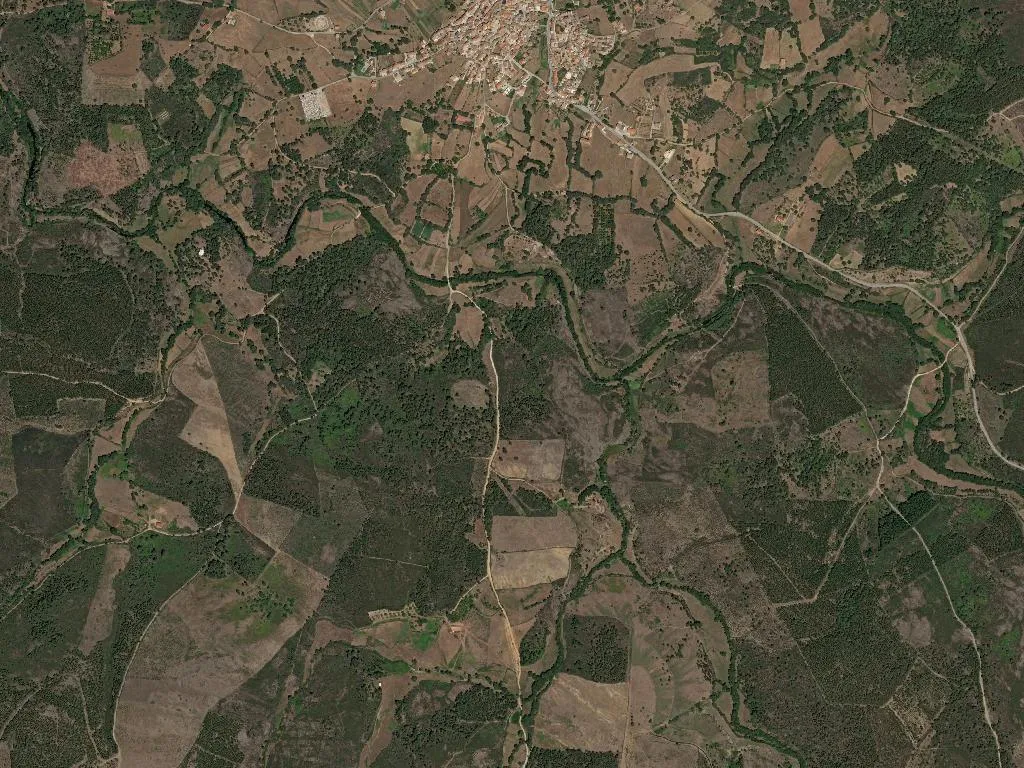
Dry-stone schist walls stitch the hillside into shallow terraces, each one a ledger of centuries. At almost 900 m, Vale de Espinho sits high enough for the air to turn blade-sharp on thermal-inversion mornings, when the church bells on their own granite plinth carry halfway to Spain. Only 308 souls occupy 31 km² of scrub, oak and boulder — a ratio that lets the eye race across valleys and meet nothing grander than a smoke-blackened ham-curing hut or a threshing circle licked by weeds.
Between the Ridge and the Real
Technically the village belongs to Sabugal council, yet its back leans against the fenced silence of the Serra da Malcata Natural Reserve. Iberian lynx prints were last verified here in the late nineties; still, every July some widower will swear he heard the “wild cat” scream above the wheat stubble. Granite outcrops polish the wind that scours the plateau; winter frost engraves lace on window-panes, while August heat splits cork-oak bark like overstretched leather. Nothing in this landscape volunteers itself — you must walk, pause, learn to read the badger’s shuffle or the short-toed eagle’s low pass.
Living Ritual: Capeia Arraiana
Once a year the village stages its Capeia Arraiana, a border-bull tradition that swaps the ring for the high street and matadors for local “capinhas”. No blood is spilled, but tension spikes when a 600-kilo novilho bolts downhill and men armed only with a hand-held cape measure courage against momentum. Women watch from first-floor windows, children dart behind straw-bale barriers, and the smell of charred sardines fuses with hoof-raised dust. Think of it as Portuguese-style bull-grabbing without the silk ties.
At Table: Beira Flavours
The star protein is Cabrito da Beira, roast kid protected by Protected Geographical Indication status and fired in a wood oven until the skin balloons into glass-brittle crackling. Olive oil arrives from scattered groves — low-acid, almond-sweet Azeites da Beira Interior DOP, crushed in granite mills whose millstones pre-date the Republic. On feast days you will find rice with giblets, lamb stew, and rye broa so dark it looks burnt, perfect with sheep cheeses aged in granite cellars. There are no restaurants; instead, front doors open on pilgrimage days and enamel platters appear. Dona Amélia, 84, still despatches the kid with the same hand that beats her husband’s Sunday shirts.
Ageing and Persistence
186 residents are over 65; just ten are under 14. Demography is brutal, yet stubborn gestures endure: the dusk watering of vegetable plots, the autumn stacking of pine logs, the dog that barks only when the postman’s bicycle clicks past the chapel. At ten inhabitants per square kilometre every encounter counts — on the bend by the chestnut grove, outside the churchyard, beside the granite fountain where water runs glacial even in August. When Zé do Carmo drives to town he always returns with gossip from Café Moderna and the neighbours’ mail tucked under his seat.
Silence here is not absence; it is a dense material, woven by wind through maritime pines, by the distant murmur of a stream, by the slow squeal of an iron gate. You wear it like road dust, like the chill that lingers in stone shadow long after sundown.