Full article about Vila Boa: granite warmth, cork-oak shade & Preta the outlaw
Above Guarda, schist alleys echo three-o’clock bells while French vans hunt a vanished centre.
Hide article Read full article
The bell rings three, and the stone keeps the heat
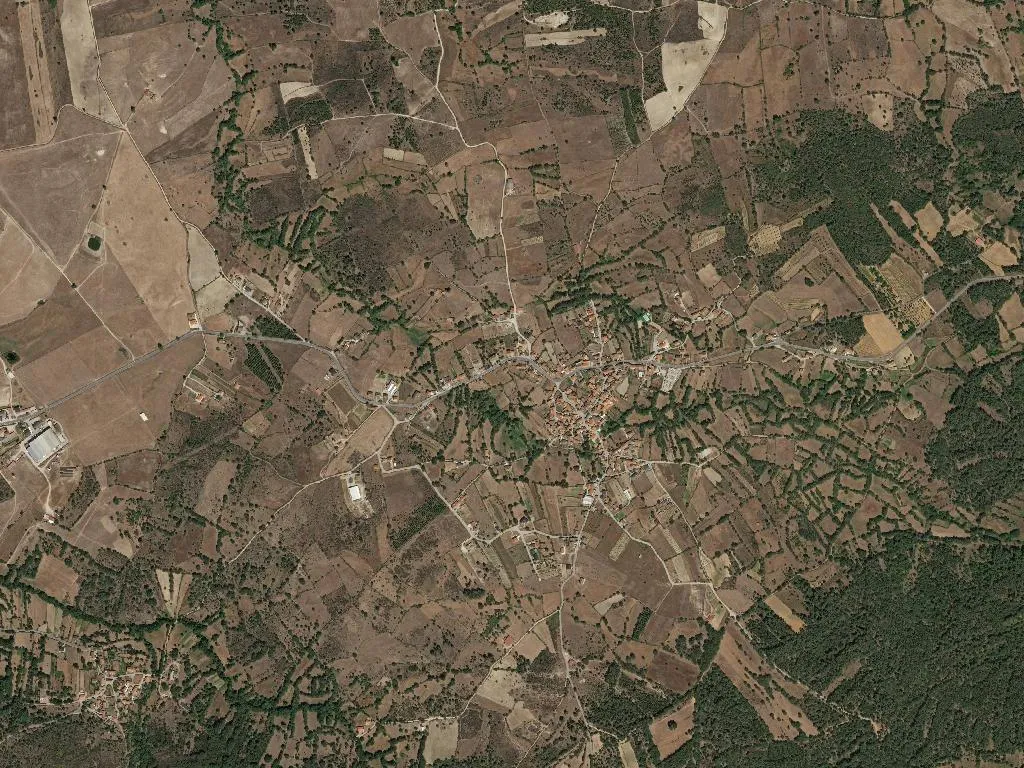
The church bell strikes three in the afternoon and the note slides downhill, brushing the schist walls that still bear the bruises of 1958’s renovation. At 769 m above sea-level, the granite of Vila Boa radiates the day’s warmth like a baker’s peel, yet the cork oak by the spring hoards yesterday’s damp earth in its shade. That hen is not “a hen”: she is Preta, who lays only behind the water tank because Zé Carlos’s grandson once trussed her legs with elastic bands.
Two hundred and thirty-eight souls are registered here; in July the census swells. Caravans with French plates nose down the lane, shower-gel sachets rattling in the glovebox. They ask for “the centre”. It is the concrete bench opposite the stationers that no longer stocks paper. Capeia is not a “border festival” – it is the day António parks his tractor in the junction so the dancers can use the threshing floor, and César’s wife ladles wheat-enriched broth into clay bowls because plastic snaps under the weight of generosity.
Before the sign says Malcata
The Serra da Malcata begins where Joãozinho’s last olive tree leans, the track kinks left, and the air thickens with rockrose until you forget to breathe. No way-markers: locals know the turns, outsiders take Ordnance Survey maps. The only souvenir is pale dust on your shoes. Up there the Iberian lynx is gossip – hunters speak of prints in the mud, biologists of night-vision cameras that steal portraits at 2 a.m. Golden eagles are seen only when a sheep dies; otherwise they are full stops the elders can no longer distinguish from aircraft contrails.
The olive oil tastes of dawn-picked fruit, the ones harvested with hands cracked by October frost. At Moço’s press, straw mats still squeeze the paste; oil drips into a zinc tank and the scent survives three washes of your jumper. The kid is not IGP-certified; it is Tonho’s – born in February, fed on mountain grass until St Matthew’s Day, when Tonho’s mother queues at the communal oven before seven to reserve the spit. She always tucks a bay leaf into her apron pocket: “Ovens have short memories.”
The closed school still does sums
Of the 238, seventy-one draw their pension at Júlio’s café – open at seven-thirty for hot milk, closed at ten once the television news has sent everyone home. Yesterday there were seventeen children on the church step, not eighteen: Matilde’s granddaughter from Lisbon doesn’t count. The primary school shut in 2009; the council stuffed it with seed sacks that will never be sown. The orange sapling planted on the eve of closure now shades the wall, but its fruit stays bitter – even the hens refuse it.
Winter arrives the morning steam from Zé’s bar clouds the inside of the window. Snow is optional; fog is mandatory, rolling in every December afternoon at half-past five, as punctual as the priest bringing communion to the bed-bound. Stones darken, dogs fall silent, and only the squeak of a log trolley on the ramp disturbs the air. When the storm arrives from nowhere, the back-lane stream swells and carries away buckets someone forgot to hoist.
At dusk the blackbird is not on the bell-tower – it is on the ground, pecking an olive that rolled from a basket. Vila Boa offers nothing, asks nothing. It keeps those who wish to stay, releases those who tire. Stone, altitude and obstinacy are, here, the same thing.