Full article about Girabolhos: Where Serra da Estrela Breathes
Stone hamlet clings to granite ridges, scenting air with cardoon cheese & cellar wine
Hide article Read full article
The wind drops off the ridge of the Serra da Estrela and rifles through the folds of Girabolhos without asking permission. At 412 m, the air always arrives freighted: petrichor after a sudden shower, hearth-smoke laced with eucalyptus, the hot-resin breath of rock-rose when summer overstays.
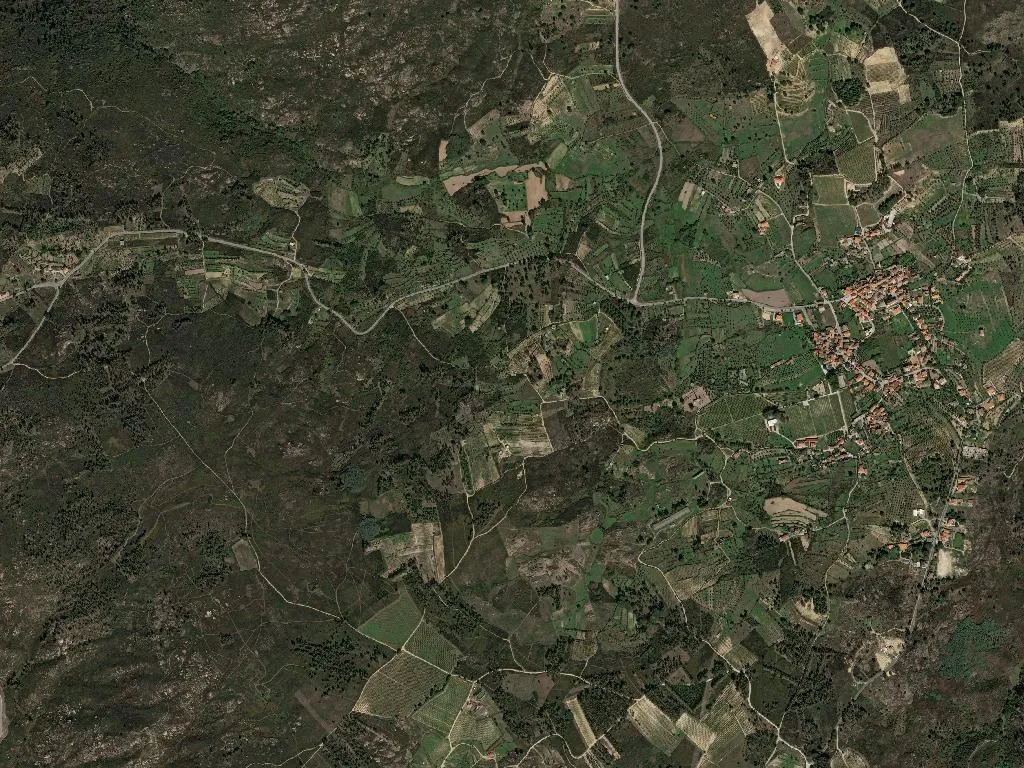
Girabolhos spreads across 1,773 ha where the mountain finally makes up its mind to be a mountain. Within the Estrela Geopark, the parish is a ledger of granite and pasture, of olive terraces that climb improbable gradients and of vines that cling to sun-bruised schist ledges. Two-hundred-and-forty-one people remain—more than a hundred fewer than a decade ago—scattered among houses that grip the incline or tuck themselves into valley folds.
What you eat (and drink)
Cheese is still made in kitchens from Bordaleira ewe’s milk, set with cardoon stamens picked from the garden. Every household keeps its own clock: some wheels cure longer, others are lodged in cellars where moss quilts the stone. The morning after milking, the curd is eaten straight from the cloth with spoons of honey or mountain sugar.
Lambs once grazed slopes now swallowed by gorse; goats, angular and conspiratorial, still browse the scrub. Olive oil is pressed in spotless modern mills, yet centenarian trees in the Vale de Tábua were already bearing fruit when the current owners’ grandfathers went barefoot to school.
Wine is strictly “de mesa”, trodden in stone tanks sunk into cottage cellars. It is not Dão; it is Girabolhos—light, bright, poured cool in summer alongside bolo de matraquilhos, an anise-scented loaf women still slide into the communal bread oven on Saturdays.
What you see (and feel)
Walking here means perpetual elevation change. The single asphalt lane climbs to the 18th-century church—locals wager the belfry will fall before the faith does—then zig-zags down to the stream. Way-marking is unofficial but reliable: the Aleixo foot-path, the Corga track, the shortcut to Pardieiros.
Stone-built cottages are vanishing under cement render or simply folding back into the hill. Circular threshing floors survive, their conical slate roofs now patched with zinc that ticks as it expands in the heat.
At five o’clock, when the sun slips behind the Torre plateau, the hamlet catches fire in low gold. Dogs trade neighbourhood news, cows file homeward, and someone lights the hearth even in August—a thin vertical plume the only signal that this landscape, quieter every year, is still inhabited.