Full article about Lapa dos Dinheiros
King Dinis coined the name over goat and cheese; fountains still murmur among 14 granite spouts.
Hide article Read full article
Granite breathing at 972 metres
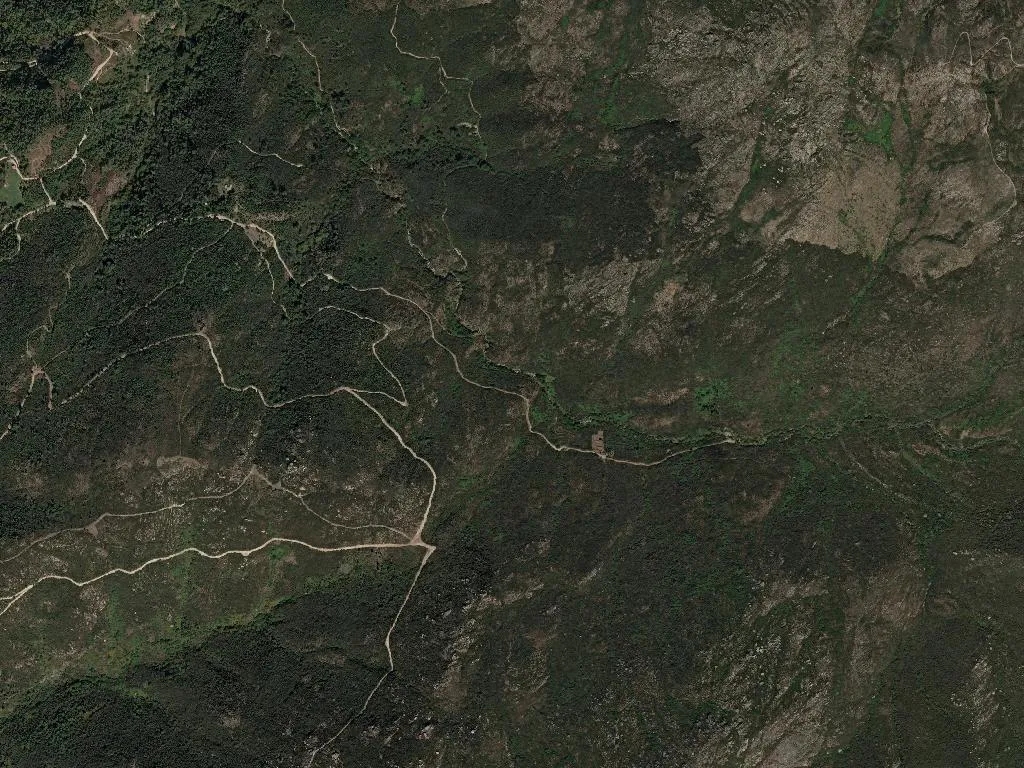
Granite erupts straight from the ground in Lapa dos Dinheiros, great boulders that look half-bitten from the earth’s jaw. The hamlet clings to them at 972 m, folded into a natural amphitheatre where the first dwellings were glued to the rock as though wind-proofing themselves. At seven o’clock the air is sharp enough to flay skin and carries the tang of oak-wood smoke from kitchen cookers. Far below, the Ribeira da Caniça keeps up a constant murmur – unseen, but always felt, like the village pulse.
The story goes that King Dinis, served kid goat and ewe’s-milk cheese under these stones, asked how the locals paid for such luxury. “With our own dinheiros,” they replied – “our money”. The king laughed and christened the place on the spot. Apocryphal or not, Lapa only became an official parish in 1987; before that it was simply the livestock outpost of São Romão. Even now, older residents say “vamos à vila” when they drive down to Seia, as if crossing a frontier.
Water, stone and procession
Fourteen granite fountains are scattered through the lanes like anchors. The one in Largo D. Dinis has a spout so broad it fills a jug in thirty seconds; women pause here to swap recipes for cornmeal cake while the water sings. In wall niches, sun-bleached saints stand in for the candles no one has time to light. On Sunday mornings, before the eleven-o’clock mass, the priest still blesses each spring – a tradition no one has thought to question.
On the hilltop, the open-armed Sacred Heart surveys maize terraces and vegetable plots enclosed by dry-stone walls. The church, built by parish labour in 1923, has walls a metre thick that stay cool even when the valley below simmers. Inside, the air is beeswax and lavender; footfalls echo as if inside a cave.
During the first weekend of August the population doubles. Emigrants arrive from France at four a.m., abandon Renault hatchbacks wherever they stop, and embrace relatives unseen for two years. The procession of São Sebastião climbs Rua da Igreja behind a brass band belting out marches older than the musicians. Elderly women cry without shame. In the pop-up tavernas, curd cheese is served with wooden spoons and red wine arrives in clay pitchers. After dark the young drift to the bandstand; the old remain on doorsteps, counting aloud who has died since last summer.
Seven kilometres of boulders and waterfalls
The Caniça trail begins behind the Central Pastry Shop – just follow the scent of roasting chestnuts. A tunnel of centuries-old sweet-chestnut trees slopes downward, moss cushioning every step. First stop is Buraco da Moura: a three-metre waterfall plunging into a perfectly round basin where children still bomb in their pants even in October. Higher up, the Cornos do Diabo – “Devil’s Horns” – are two leaning slabs that almost touch, framing the valley like a camera lens.
Mata do Desterro is another country: beech trunks so tall they erase the sky, silence broken only by a lone woodpecker. Summers here smell of leaf-rot and warm earth. When you hear voices before you see anyone, the river-beach is near – bright towels splashed against dark green, kids screaming “it’s freezing!” before the first splash.
Between the mountain and the world
The old primary school, where pupils once practised calligraphy with Chinese ink, now has 200-meg fibre. Digital nomads arrive with architect-stickered laptops and sacks of single-estate beans; they sit at desks where eight-year-olds once wrestled with times tables. The difference is that break-time now involves gazing at the Sameiro ridge and breathing air that simply doesn’t exist in Lisbon. At six p.m. a recorded bell – the iron original cracked years ago – sends everyone to the windows; the sun has parked itself in the exact same notch it used yesterday.
Dusk stretches the boulders’ shadows like fingers across the fields. Oak smoke rises again, mingling with the scent of bread still baking in Dona Alda’s wood oven. Call it Wednesday, not nostalgia.