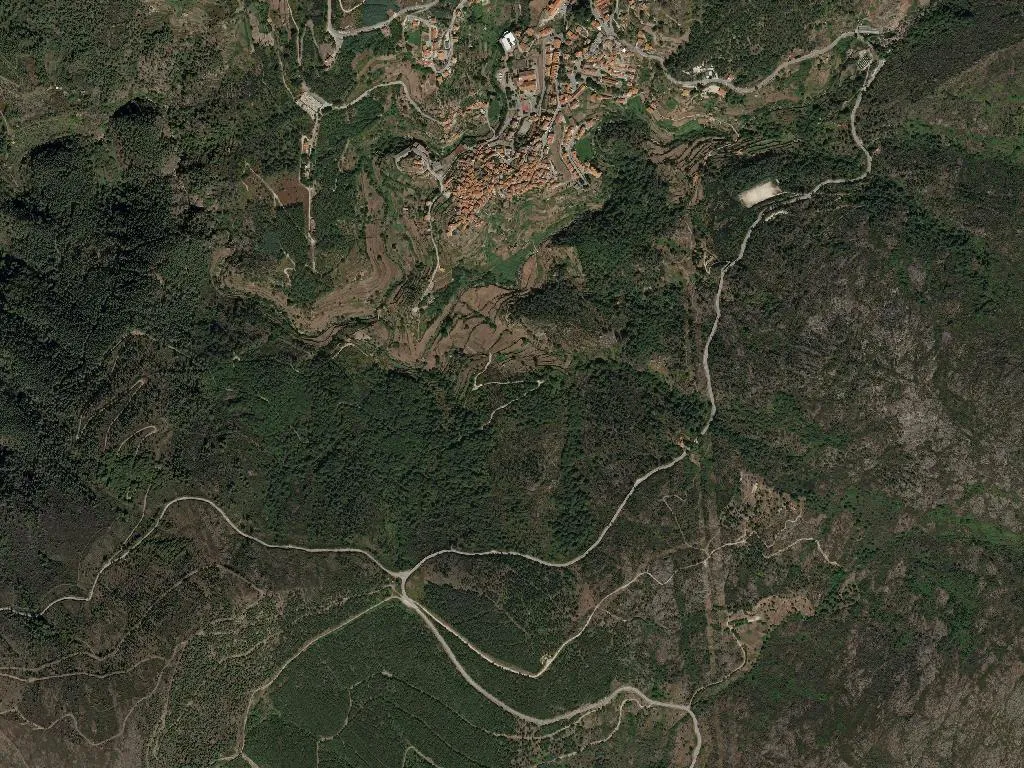
Full article about Loriga: granite village in a glacial vice
Loriga, Guarda – river beach in a 20,000-year-old glacial corridor, stone plank bridge, wool-mill ruins and DOP cheese.
Hide article Read full article
The granite bed you can see two metres down
The Ribeira de Loriga is so transparent you can count the quartz specks on the riverbed before your boots get wet. The valley – scooped by the last glaciation 20,000 years ago – runs ruler-straight for 300 m, then slams shut like a book. White houses grip the left-hand slope; when an Atlantic storm slips over the Serra da Estrela, the water climbs the front steps and barges straight through the door.
Eighty steps and a bridge you can stride across
Rua da Oliveira is an 80-stair calf workout, no handrail, no apology. At the top, the so-called Roman bridge is barely three metres long – more a stone plank than a crossing – yet it carried wool lorries until the Carnation Revolution. The parish church unlocks at nine, bolts again at noon; ask the key-keeper and he’ll fetch a 16th-century silver chalice from the sacristy drawer. The pillory in the square is a plaster replica; the granite original sits under spotlights in Bragança’s Abade de Baçal museum.
The beach that makes your bones ache
Loriga’s river beach lies at the dead end of the glacial trough – 300 m of imported sand, water that holds at 14 °C even in August. It flew a Blue Flag in 2012, lost it in 2019 for want of loos. Parking is €2 until 6 pm; after that the barrier lifts for free. The signed trail to Torre, mainland Portugal’s highest point, is 11 km and 1,000 m of ascent – four hours up, three down, waymarks red-over-white since the 2020 storm ripped the first board off its post.
Where the looms stopped
The textile mill on Rua da Fábrica shut its doors in 1983; broken windows still blink in the sun and the iron waterwheel hangs like a snapped collarbone. The same levada that once rinsed raw wool now feeds lettuce plots. Across the lane, the old vocational school has been turned into a care home; Friday lunch is turnip soup and slices of chouriço, served at communal tables.
What to eat, what to pay
Buy Serra da Estrela DOP cheese at the village workshop – €16 a kilo, two euros less than in Seia’s boutiques. O Fontinha roasts a kid shoulder for two with roast potatoes and mountain honey for €24. Cornbread is €1.20 from the bakery (7 am–7 pm, closed Sunday). The café on Praça José de Castro pours unlabelled Dão wine at €3 a bottle; ask for a “copo de tinto” and they bring the whole thing to the table.
Snow permitting, the chapel of Nossa Senhora da Auxiliadora is a 15-minute climb past the cemetery. The bell tolls at 19:30 for that day’s dead. When the north wind drives snow up the valley, the track vanishes and the whiteness lingers in the trough for a fortnight.