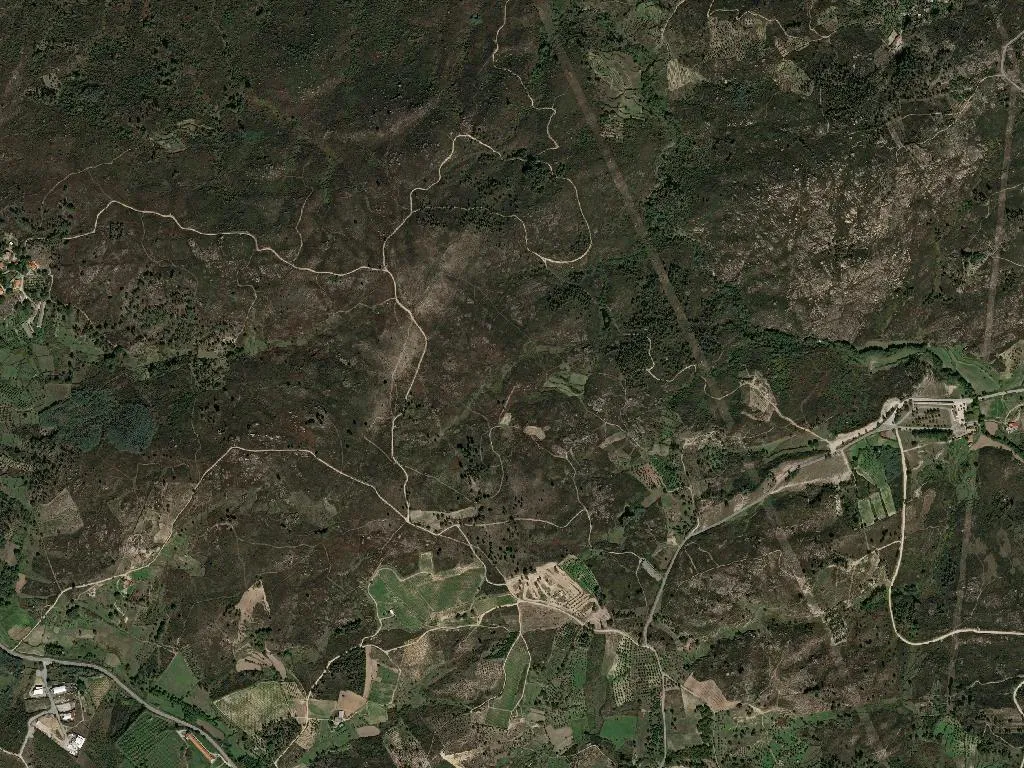
Full article about Paranhos: Where Granite Breathes in Serra da Estrela
Dry-stone walls cradle coffee-cherry bushes as the tilted cross guards heaven-bound souls in Guarda’
Hide article Read full article
The Granite That Breathes
Granite presses right against the door-sills, warm and pewter-grey, as though Paranhos germinated from the rock itself. The Serra da Estrela is not a distant backdrop; it leans over the rooftops, exhaling mist that slips down the valley and unravels among the olives. The river Alva is never mere white-noise: at night, with the windows unlatched, you hear it rearranging stones, its pitch rising whenever rain needles the higher ground.
Come October the vines do not blush scarlet as travel brochures promise. Their leaves rust first, then settle into the colour of burnt iron, a foil for the sudden violet of the ripening coffee-cherry bushes, as if the earth were choosing its pyjamas before the long sleep. The dry-stone walls are not "heritage features"; my grandfather and the neighbour stacked them so Rosa’s goats would keep out of her kale patch. When fog corks the village the air smells of no romantic moss; it smells of the bread my mother drew from the wood-oven at five o’clock, sweating through the crack of the kitchen door.
Architecture That Refuses To Bow
The parish church of São Tiago forces tall men to dip their heads: the lintel was gouged in 1758 by a mounted knight who rode in sword-first, and no one ever raised it. The national monument is the Corgo da Serra wayside cross—tilted since anyone can remember. Old Sr. Manel insists the dead prefer the slant because it gives them a straighter sight-line to heaven. Houses were measured by the donkey’s load of firewood and whatever coins remained after the tax-man rode down from Seia; windows stayed narrow because winter here arrives early and overstays until May.
A Kitchen With Postcode Protection
The cheese is Serra da Estrela DOP, soft enough to sag but proud enough to be sliced and melted over blackened rye, then laced with heather honey that Rui ladles into jam-jars at Saturday market. No "succulent kid" clichés: the goat is roasted in the old granary where arbutus wood releases a smoke sharp enough to make you weep and skin blister-dry. Olive oil is not "fruity"; it was pressed yesterday from Quinta do Carapinhal’s fruit and still carries the green bite of bruised fig-leaf. You will know the name of the animal that gave the milk, the scrub she grazed and the neighbour who ladled the curds—traceability is simply knowing who lives three doors away.
Silence here is demographic: 1,265 souls, 42 born in the same April week as I was. When the threshing-floor stops creaking you realise Cândida has turned in. We still meet in Basílio’s bar to swap news—who married, who emigrated to Lyon, who stayed behind to water their mother’s geraniums. The six guest-accommodations are not "boutique retreats": they are Nuno’s grandfather’s corn-loft, Ana’s hay-barn after her son left for France, and the old classroom where "Estudo e Trabalho" is still chalk-white on the ceiling from 1959.
Late sunlight strikes the bakery wall and warms the stone where grandchildren queue for warm bolo. The smell is not "oak-smoked sausage": it is the oak Joaquim split last night after supper, and the black-pork chouriço his daughter-in-law carried down from Valezim, clay still spattered from the matança. The granite is not "ancient"; it is local, quarried by men whose names are scratched into the blocks, and it will still be here to warm someone else’s back when we are not.