Full article about Sabugueiro: Bread smoke & sheep bells at 1,120 m
Communal ovens, glacial pools and shepherd trails in Portugal’s highest village, Sabugueiro.
Hide article Read full article
Smoke rises in a ruler-straight plume from the granite chimney, slicing the cold air before unravelling above the slate roofs. Inside the communal bread oven, oak logs crackle while fingers work the last batch of dough; the scent of fermenting rye mingles with hot stone and drags me straight to my grandmother’s kitchen. At 1,120 m, Sabugueiro wakes slowly, swaddled by the Serra da Estrela’s hush, where every sound is outlined in ink: the creek’s murmur, a distant dog, a hinge that begs for oil.
Where shepherds stopped roaming
The hamlet began as seasonal huts—dry-stone shelters thrown up by transhumant shepherds who followed the grass. The name comes from the Latin sabugium, a nod to the elder trees that still fringe the damp banks. Cabins thickened into cottages, the parish church claimed the ridge’s highest knob, and Sabugueiro became the obligatory first halt on the old drovers’ road up to the Torre plateau.
Of the 405 residents still counted on the electoral roll, most can recall when the only tarmac ended at Loriga. They keep time to a pastoral rhythm that never quite synced with the 20th century: morning milking at 05:30, cheese turned before ten, sheep back on the granite scars by dusk.
Geography of cold and water
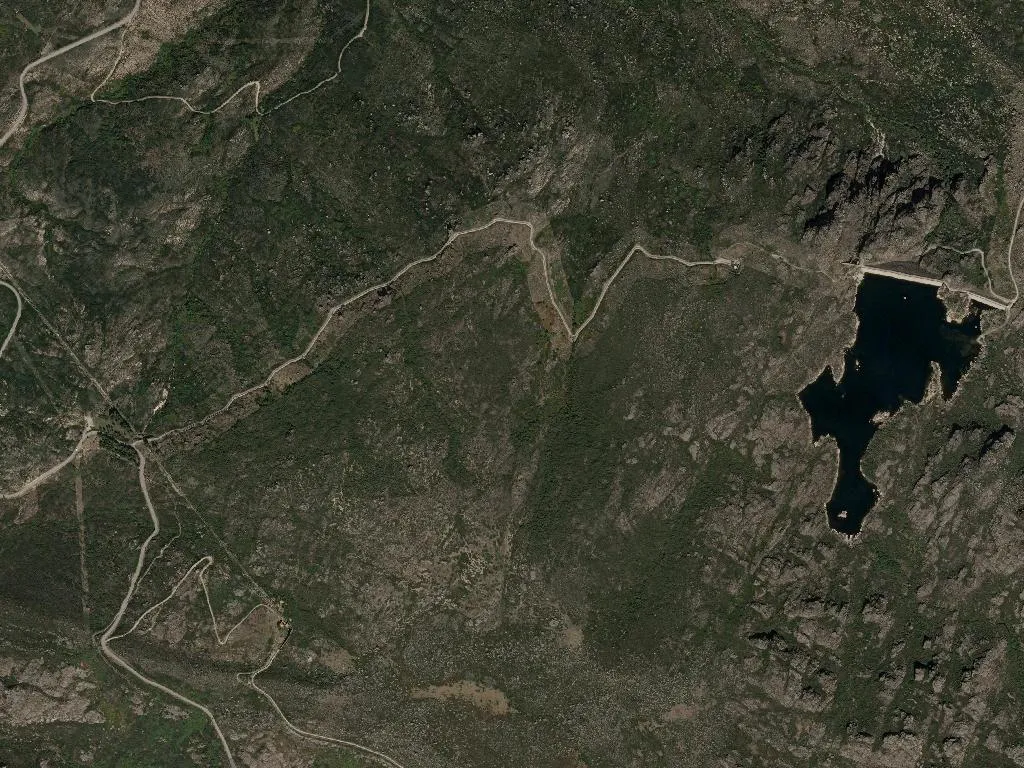
The Fervença stream bisects the village, its granite bed polished into natural slides. In July it doubles as the river-beach—water so glacial that children shriek, leap, and shoot out again like seals. Follow the signed footpath east and the scale widens: the track to Lagoa Comprida climbs through frost-shattered boulders and broom-scented pasture where merino bells still clang. The reservoir—Serra da Estrela’s largest—mirrors the sky with a silence that makes you lower your voice.
Another hour of steady ascent brings you to Covão dos Conchos, the 1950s hydraulic tunnel that Instagram has turned into a geological meme. Seen live, the concrete spillway is less sci-fi portal, more vertiginous plughole swallowing a roomful of mountain water every second; stand too close and the draught sucks the breath from your lungs.
What the larder keeps
The communal-oven loaf is dense, its crust almost black—built to survive a turnip soup without dissolving. Tear it open and the crumb steams like a stone wall after rain. It is the obligatory vehicle for DOP Queijo Serra da Estrela, spooned molten from its cedar hoop, and for warm requeijão dribbled into red-clay bowls. The local lamb grazed on thyme and genista; the meat is lean, almost herbal, and needs nothing beyond salt, garlic, and a slow hour over heather embers. In the one-room ethnographic museum, tin milk pails and wooden cheese presses remind you this kitchen archaeology was survival, not rustic theatre.
Myth and measurement
Sabugueiro markets itself as “Portugal’s highest village”. Cartographically the claim wobbles—Montalegre’s loftiest hamlets nudge 1,300 m—but within the boundaries of the Serra da Estrela Natural Park the altimeter here tops out at 1,511 m. The difference arrives in your ears as you step from the car and in the anorak you never quite shed, even in June. When snow blocks the EN231 the place becomes a white island; the 46 guesthouses sell out, the café on Largo Dr. Augusto César fills with skiers who came for the flakes and stay for the aguardiente.
At the Cruzeiro fountain the water runs so cold it numbs your fillings. Cup it, feel the granite chill climb your wrists, and you understand altitude not as a figure but as a temperature you can taste.