Full article about Sazes da Beira: Smoke, Stone & Chanfana at 655 m
Walk Roman adits, climb August romarias, taste kid goat slow-braised in Dão wine amid schist silence
Hide article Read full article
Smoke rises, then silence
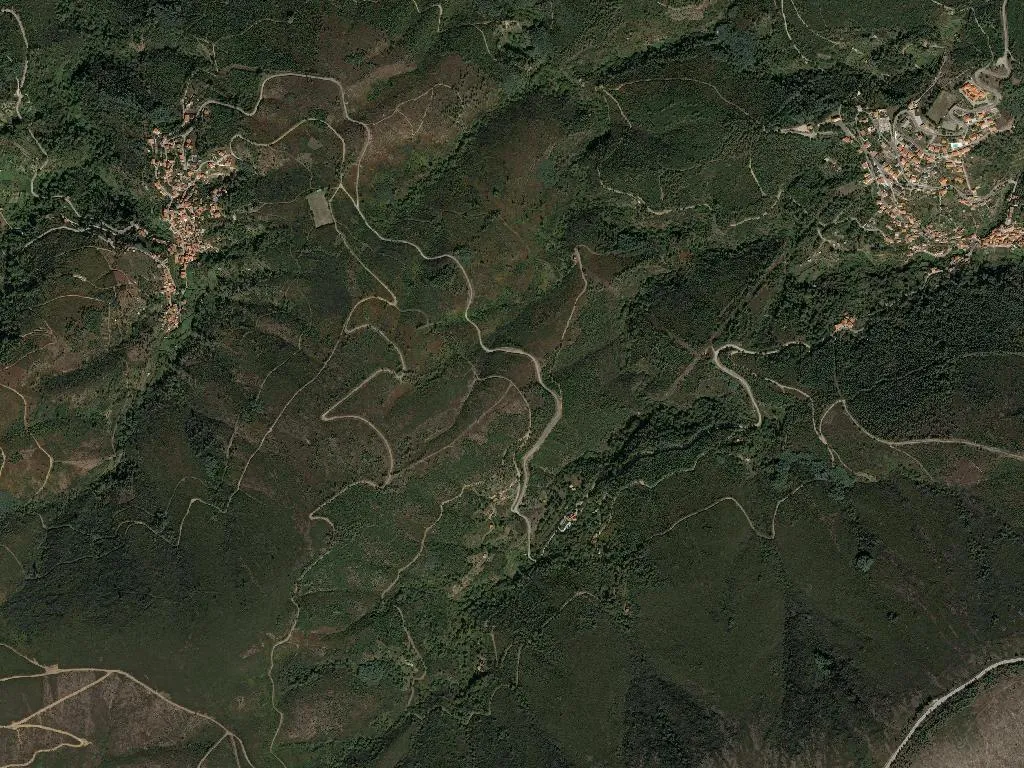
The first plume lifts straight from the schist chimney, thinning into the cold dawn above Sazes da Beira. Behind the house an axe bites wood; the crack travels downhill, ricochets off stone terraces that have parcelled these slopes since before enclosure acts or land registries. At 655 m the air carries equal parts pine resin and damp granite, the scent of streams already hurrying east to join the River Alva.
A village that moved downhill
What you see today is an 18th-century relocation. When the original hilltop hamlet—Sazes Velho, three kilometres higher—ran out of arable patience, families drifted down the slope and laid out fresh streets. The new parish church, Nossa Senhora do Rosário, went up in 1731; its gilded Gothic altarpiece survived later baroque enthusiasm. Higher still, the 1906 chapel of Nossa Senhora do Monte Alto watches the Torre, continental Portugal’s highest ground, cut like a shark’s fin against the sky. Every August the faithful climb the track between broom and skylark song for the romaria, the last proper procession before harvest.
Stone memory
Romans were here first, tunnelling for lead and silver in the 5th century BC. Their adits, now choked with bramble, glitter with secondary quartz where head-lamps flicker. Easier to spot are the two manor farms on the valley floor—Quinta da Ribeirinha and Quinta da Ribeira—roofless but proud, their schist walls refusing to slump. Sazes has lost two-thirds of its people since the 1960s (245 souls at the last count, median age sixty-eight), yet memory has grown denser. Inside the parish museum a single room displays chestnut sieves, ox-yokes and sepia photographs taken on these same lanes; faces stare out with the unblinking reserve of mountain Presbyterians.
Mountain kitchen
Lunch arrives in clay. Chanfana de cabrito—kid goat braised overnight in Dão red until it surrenders—shares the table with Serra da Estrela lamb and bean stew, a rainbow of charcuterie (morcela the colour of midnight, paprika-bright chouriço), and rye bread so heavy it bends the knife. Autumn brings chestnut soup, thick enough to support a spoon upright; pudding is either corn-meal cake the shade of sunflowers or pine-nut brittle that tastes of sap. Everything is lubricated by peppery Beira Interior olive oil and slabs of Serra cheese that sigh apart at the touch.
Between water and stars
The signed Sazes loop is only five kilometres but compresses a geography textbook: centuries-old chestnut coppices, boulder fields of glittering schist, pasture where cattle graze unrestrained and water clear enough to count trout. Night erases head-lamps; the Milky Way spills from ridge to ridge like sifted sugar. When the church bell sends its last stroke across the valley, the echo takes three whole seconds to die. In that interval Sazes da Beira is fully, defiantly, alive.