Full article about Teixeira: Stone Village Where Serra da Estrela Begins
Granite cottages cling to a 497 m shoulder above the Alva, where 144 villagers still milk Bordaleira
Hide article Read full article
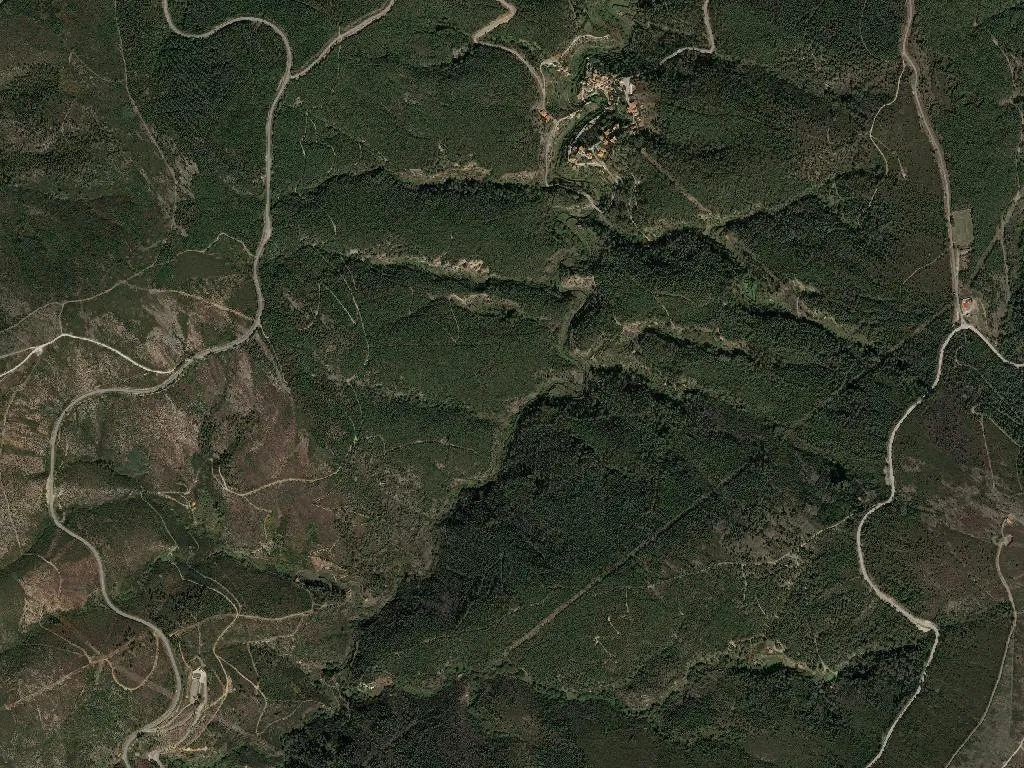
The tarmac narrows to a single lane between pines and oaks, then surrenders to schist and granite. Five hundred metres below, the Alva River draws a mercury thread across the valley floor. Teixeira reveals itself only after the final bend: eighteen houses soldered to a 497-metre shoulder of the Serra da Estrela, their roofs pitched to shrug off Atlantic weather that can arrive in any season. No sign announces the parish; the mountain itself is the landmark.
The mountain’s footings
Spread across 1,592 hectares of sun-sculpted slopes, Teixeira is one of the 41 “Aldeias de Montanha” promoted by the Centro region, yet it receives fewer overnight guests in a year than nearby Manteigas does in a weekend. Its 144 residents—three-quarters past retirement age—still move sheep through levadas first cut by transhumant shepherds in the 1300s. Dry-stone walls divide terraces of rye and early potatoes; water leaps from spring to field in narrow irrigation channels that pre-date the 1755 earthquake. Granite for the houses was split on site, the blocks laid so tight a blade of grass can’t find a crevice. At dusk the walls exhale the day’s heat, warming fig trees espaliered against them like afterthoughts.
Milk and stone
Teixeira sits inside the UNESCO-designated Estrela Geopark, its substratum 300 million-year-old schist folded over granitic batholiths. That geology translates to grass: tender, mineral-rich swards that flavour the milk of Bordaleira ewes. Each dawn, before the sun clears the Mondego escarpment, two brothers coax 80 animals into a low stone parlour where the temperature hovers at 4 °C. By 07:30 the whey is already separating, coagulated by cardoon stamens gathered last summer and dried above the hearth. The resulting Queijo Serra da Estrela DOP will be hand-ladled into rush baskets, turned twice a day, and sold—still velvety—three weeks later at Seia’s Friday market.
What the mountain puts on the plate
Local menus read like a geological survey. Cabrito da Beira IGP kid is rubbed only with coarse salt, garlic and a thread of Beira Alta olive oil, then roasted for four hours in a wood-fired oven whose chimney is carved through three metres of granite. Mountain lamb, matured on thyme and rockrose, arrives at table the colour of wet slate, its fat scented with rosemary that grows where the snow lingers longest. Wines from the Dão’s southern flank—Jaen and Alfrocheiro grown on pink granite 20 km away—pair naturally, their acidity slicing through the animal richness. Dessert is requeijão, the cheese’s younger sibling, spooned onto rye bread baked in communal ovens that fire only on Saturdays.
A clock you can hear
Accommodation is limited to two small houses: one a converted hayloft, the other a former school whose blackboard still bears the date 1957. Together they offer seven beds, which means Teixeira’s population can quadruple on a busy night. Walking trails—way-marked in 2022 by the municipality—climb through dwarf oak and heather toward the 1,000-metre contour; you’ll meet more goshawks than people. The only public clock is the church bell, recast in 1942 after fire gutted the 18th-century nave. Its bronze note carries two kilometres down-valley, a sonic handrail for anyone returning after dark along the irrigation channels. When it strikes seven, the shepherds close the parlour doors and the village lights—solar-powered since 2019—flicker on like low stars.