Full article about Granite, Graze and Glacier-Scented Air in Tourais e Lajes
Shepherds’ paths, olive terraces and cardoon-set cheese in Seia’s quietest ridge
Hide article Read full article
Stone, slope and silence
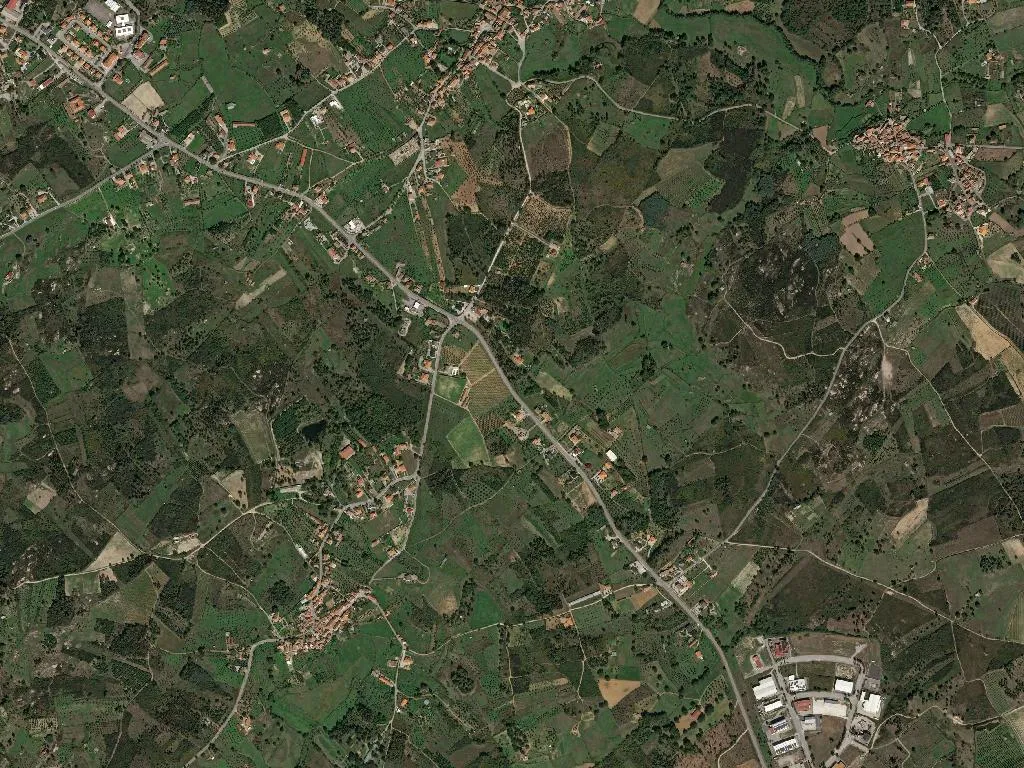
Oak smoke drifts through the dawn air, sharpening the metallic chill that comes with 465 m of altitude. Below, granite slabs shoulder their way between olive trunks bowed by centuries of wind; the terraces they sit on were built before the first written record of these villages and are still pruned by hand. When the sky clears, the view lifts straight to the jagged rim of the Serra da Estrela; when it doesn’t, the mountain makes its presence felt anyway—an updraft of cold air, a sudden shadow, the faint smell of snow.
A name carved in rock
“Lajes” needs no translation: step outside and you’re standing on it—broad plates of granite and schist that serve as pavement, lintel, garden wall. Tourais arrived later, a contraction of Turricula, a medieval watch-tower long gone but whose ghost still patrols the ridge. The 2013 merger of the two parishes was paperwork only; the hamlets have always shared the same calendar of sowing, transhumance and cheese-making, and together they still number only 1 529 souls across 26 km²—quiet measured in hectares.
Height that seasons the plate
Mountain farming here is less marketed myth than daily ballast. Milk from Bordaleira sheep, coagulated with wild cardoon, becomes Serra da Estrela DOP cheese—ivory, spoonable, tasting of thyme and wet slate. Its softer cousin, requeijão, is slathered on warm rye before the crust forms. On feast days, sides of Serra da Estrela DOP lamb roast for six hours in the communal oven at Lajes, the only seasoning a paste of coarse salt and garlic crushed in a granite mortar. Beira IGP kid is braised with mountain rosemary; the meat collapses into its own liquor at the nudge of a fork.
Olive groves planted at the thermal limit of the tree yield Beira Interior DOP oil—grassy, peppery, able to survive –8 °C nights. Dão wines, drawn from Touriga Nacional and Encruzado grown on the western edge of the region, keep their acidity at this altitude and open reluctantly in the glass: pour, wait, argue, pour again.
Geography that still explains itself
The Serra da Estrela Natural Park begins where the parish ends; glacial valleys scored 20 000 years ago funnel streams into the Rio Alva and Rio Mondego. Since 2020 the entire massif has carried UNESCO Geopark status, turning every roadside outcrop into a text: Hercynian granite, quartz veins, striations left by retreating ice. Waymarked trails follow dry-stone walls up to chestnut and oak forest, then break out onto heather ridges where short-toed eagles ride the thermals and wild boar rootle after acorns. Winter rarely drops below –5 °C, summer seldom climbs above 30 °C—climate mild enough for olives yet sharp enough to remind you you’re halfway up a mountain.
A timetable set by daylight
Seven places to stay—stone cottages, two-room guesthouses, a quinta with a pool cut into the bedrock—operate on the same unhurried pulse. Mornings begin with coffee dragged across a wood-fired hob; evenings finish when the village generator hums itself to sleep. You can walk to a dairy at milking time, taste wine still fermenting in open concrete vats, or follow the sound of bells to the 17th-century chapel of São Sebastião in Tourais whose single priest still counts the parishioners by name. Seia, with its bread museum and roadside shops selling woollen burel, is 12 km south; Gouveia, whose quintas host Dão tastings in granite cellars, 18 km west. Linhares da Beira—its castle keep staring straight at the continental divide—adds another seven kilometres of switch-back.
Dusk arrives abruptly. Granite walls that have absorbed heat all day release it in a slow exhale, tinting the air iodine-pink. The silence is not absence but subtraction: one dog, one creaking hinge, one pair of voices negotiating the price of chestnuts. You taste salt and sheep’s milk on your tongue, feel the chill rising from the valley floor, sense the weight of the plateau under your boots—proof that some landscapes still explain themselves without caption or filter.