Full article about Travancinha: bell-smoke, slate & butter-coloured cheese
Walk schist lanes where oak-smoke sharpens air, then taste Serra DOP curd still warm from cardoon
Hide article Read full article
Smoke, Stone & Serra Butter
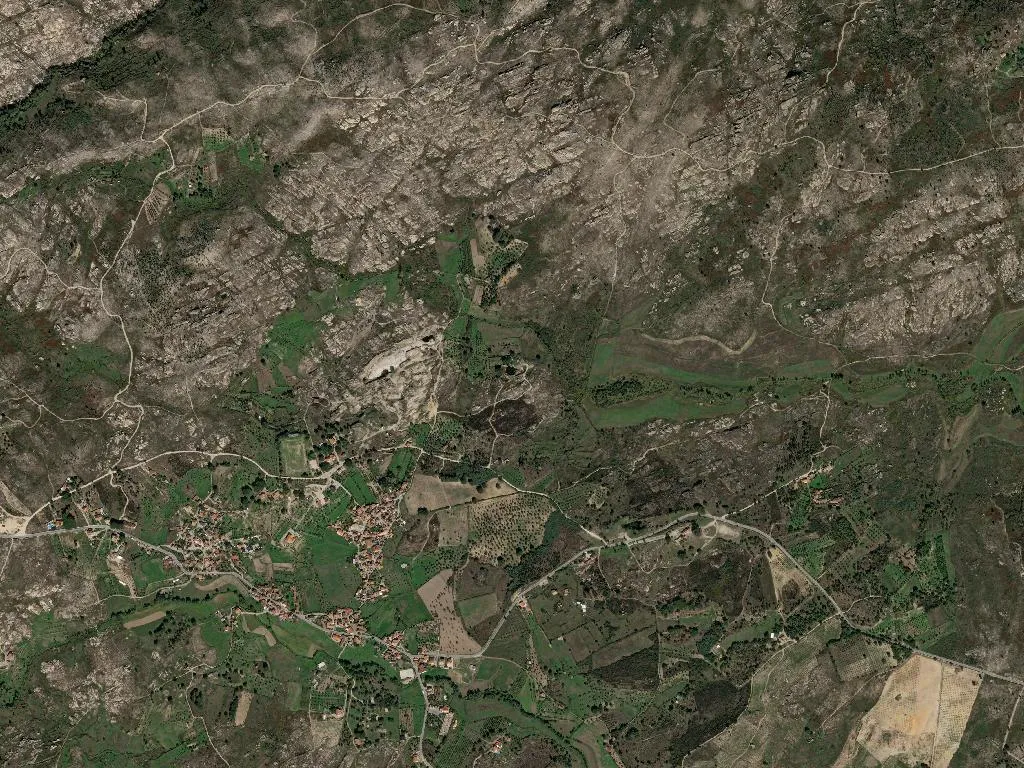
The olive-oil haze rises lazily into the cold morning and collides with the fog that still clings to the slopes. Oak-wood smoke and new-crop oil sharpen the air, a rasping aroma that catches the throat before the first drop even reaches tongue-level. At 374 m, between the Alva and Seia rivers, Travancinha wakes to the slow toll of S. Pedro’s bell reverberating off slate roofs and dry-stone walls that climb the hillside like lichened terraces. The parish counts 387 souls; you sense every one of them is listening to the water gnawing the schist cliffs below.
Stone, cheese, belief
The main church stands dead-centre, a single-nave eighteenth-century box whose gilded baroque altarpiece drinks the late-afternoon light. In the forecourt a 1782 granite cross—cold as river water, moss filling the chiselled date—announces the parish boundary. Up in Mesquitela, tiny S. Bento chapel keeps the memory of a long-gone rural mosque, a hint of Moorish presence before the Reconquista pushed the frontier south. On Easter Monday villagers tramp the dirt track carrying laurel branches to an open-air Mass; afterwards the community hall dishes out cornmeal porridge trickled with heather honey, the spoon scraping terracotta, burnt sugar blackening fingertips.
Taste of the high country
Kid goat, butterflied and marinated in Dão white, garlic and bay, spits over oak embers; fat drips, flares, threads of smoke curling into the evening. Travancinha’s economy rests on Serra da Estrela DOP cheese—made only between November and March when cardoon thistle sets the curd. Paste the colour of pale butter spreads like thick custard across sourdough. Along the self-guided Cheese Route, producers knot linen belts around tubs of curd, press, turn and salt wheels in humid lofts where wood darkens with age. Beira Interior DOP olive oil—pressed from the stubborn cobrançoa olive—catches the throat and perfumes winter chestnut soups the colour of wet sand.
Trails & quiet
Signpost PR4 “Entre Rios” begins beside the church, crosses the Seia over a granite slab bridge where water glides across polished pebbles. Eight kilometres of gentle climb deliver you to Penedo do Gato lookout: Estrela’s granite ramparts stagger-step to the skyline, Scots pines stencilled against the blue. Abandoned stone olive mills, maize granaries on stilts, sun-drying walls patched with sulphur-yellow lichens punctuate the path. Silence hangs thick, broken only by a short-toed eagle slicing the thermals.
At day’s end the oblique light ignites cottage walls and the wheeze of concertinas drifts up from summer evening dances—high reedy notes that ricochet across the valley, mingle with river murmur and the faint smoulder of chouriço in backyard smokehouses. Travancinha keeps its own slow time: cheese maturing in granite cellars, new oil smouldering on the tongue.