Full article about Cótimos
Stone lanes, smokehouses and shepherds keep this Trancoso parish alive above the clouds
Hide article Read full article
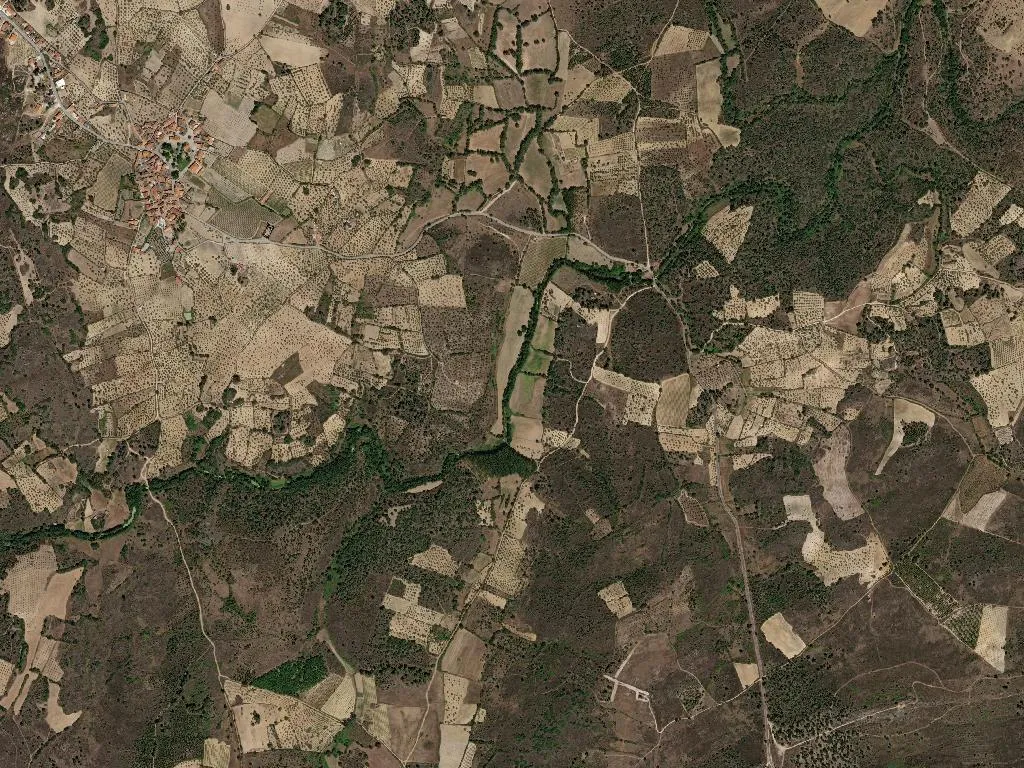
The single-track lane corkscrews between schist walls and olive trunks that have twisted themselves into corkscrews of their own before spitting the car into a clearing. Cótimos exhales. No mobile signal, no neon, no soundtrack – just the soft percussion of a distant gate and a dog that seems to bark in another century. Granite houses shoulder together along cobbled ramps, their joints freckled with lichen the colour of oxidised copper.
One hundred and eighty-eight people still vote here, spread across 1,350 hectares of ridge and ravine at 469 m above sea level. The mathematics is brutal: eight children, ninety-five pensioners. Yet the terraces are clipped, the vines wired, the smokehouses plumed with acacia smoke. Someone is forever hoeing a row of kale or rattling a bucket of feed for the Serra da Estrela ewes that wander the water meadows after winter rain.
Where walkers cross
The village is a waypoint on the Interior Portuguese Route to Santiago, the lesser-spotted cousin of the coastal camino. Pilgrims emerge from the maize fields, boots powdered with red dust, and pause only long enough to refill a bottle from the stone spout by the church. There is no albergue, no pastelaria, no stamp-happy bar owner – just a plastic chair outside No. 14 where a woman leaves a loaf of broa and a map scrawled in biro. Hospitality is measured in gestures, not stars.
Flavours that hold the line
Agriculture is the only choreography. Cheese is still called queijo because it arrives still warm from the morning milking, wrapped in a muslin knot. The same hands slit the cardoon, stir the thistle-rennet, salt the wheels that will become DOP Serra da Estrela. Lambs wear the parish name around their ankles in the form of a green ear-tag; their pasture is a salad burnet of wild marjoram and thyme that seasons the meat long before it reaches the wood-fired oven. In November the chestnut roasters appear – DOP Soutos da Lapa – their skins splitting like overheated postage stamps while the Beira Interior reds, thick as bishop’s ink, are decanted into white-rimmed glasses.
Evenings shut down fast. When the wind drops, chimney smoke rises in vertical columns, as if the houses are trying to stitch themselves to the sky. Granite façades catch the last low sun and flare briefly to bullion, then the cold settles – damp, dense, the sort that makes you zip your coat right up under your ears. Cótimos offers no spectacle, no spa weekend, no Wi-Fi password. It offers the echo of your own soles on deserted stone, the smell of oak embers at dusk, and the certainty that somewhere life is still being lived at the speed of handwriting.