Full article about Granja: Where Sheep Outnumber People 11 to 1
Serra-ridge village of 109 souls, rye terraces and oak-smoke, home to lava-soft DOP cheese
Hide article Read full article
Granite, Smoke and Sheepbells
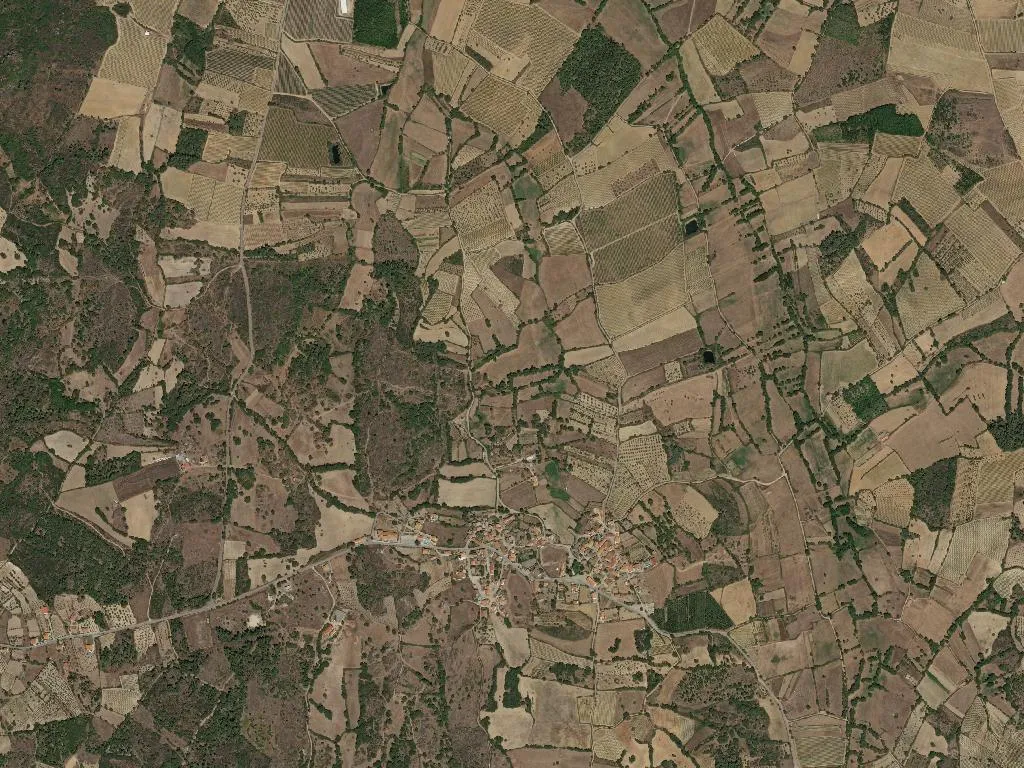
The tarmac narrows to a single stripe between dry-stone walls and olive trunks that twist like arthritic fingers. At noon a church bell throws a single bronze note across the valley, but nobody quickens their step; in Granja the only clock that matters is the turning of the seasons. The village sits at 587 m on a ridge of Portugal’s eastern flank, where the Serra da Estrela begins its long exhale towards Spain and the wind carries the scent of freshly split oak from hearths lit since October.
There are 109 residents, six of them under ten, forty-five over seventy. Spread across almost a thousand hectares, that works out at eleven souls per square kilometre—numbers that read like abandonment until you notice the terraced rye glowing after rain, the sheep moving across the slope like slow white punctuation, the cheese cave hacked into granite where the temperature never drifts above twelve degrees. Absence is not the story here; stewardship is.
What the Land Tastes Like
The pantry is geography you can eat. Wheels of Serra da Estrela DOP soften in cool basements until they slump like custard; break the rind and the interior flows like pale lava. Requeijão, the cloud-light curd, is still warm when it meets yesterday’s rye. On feast days a leg of Borrego Serra da Estrela DOP—milk-fed lamb—roasts in the communal oven with nothing but coarse salt and roadside rosemary. Add Beira kid (IGP) and chestnuts from the certified groves of Soutos da Lopa, roasted until the skins pop like chestnut-brown bubble-wrap, and you begin to understand why the parish scores 70/100 on Portugal’s rural gastronomic index: knowledge compressed into flavour, generation after generation.
Walking Without Footprints
The Inner Way of the Via Lusitana crosses the parish on its meander towards Santiago, but even in May you can walk an afternoon and meet only a farmer on a Lusitano cross, riding sideways to check his fences. The horizon is a sequence of gentle crests the colour of weathered serge, stitched together by schist walls whose mortar is moss. Romance here is not postcard drama; it is the hour before dusk when low sun ignites the granite and every cottage wall glows like the inside of a kiln—enough, apparently, to earn Granja 60/100 on the national “romantic index”. Take that as you will.
The Decision to Stay
Granja offers no boutique repose, no wifi epiphanies. The last café closed in 2019; diesel is a 20-minute descent to Trancoso; groceries arrive in a white van on Thursdays. What you get instead is a life still being lived on its own terms: smoke plumb-vertical at twilight, the metallic tang of curdling milk in Dona Alda’s cellar, night so dark you can read by star-shine. You will not leave with Instagram gold. You will leave with lungs full of cold air and the unshakeable sense that somewhere, parallel to your own, another version of time is ticking—slower, quieter, stubbornly unconverted.