Full article about Guilheiro: granite silence above Guarda
126 souls, 1,367 hectares of chestnut, goat bells and frost-scented smoke
Hide article Read full article
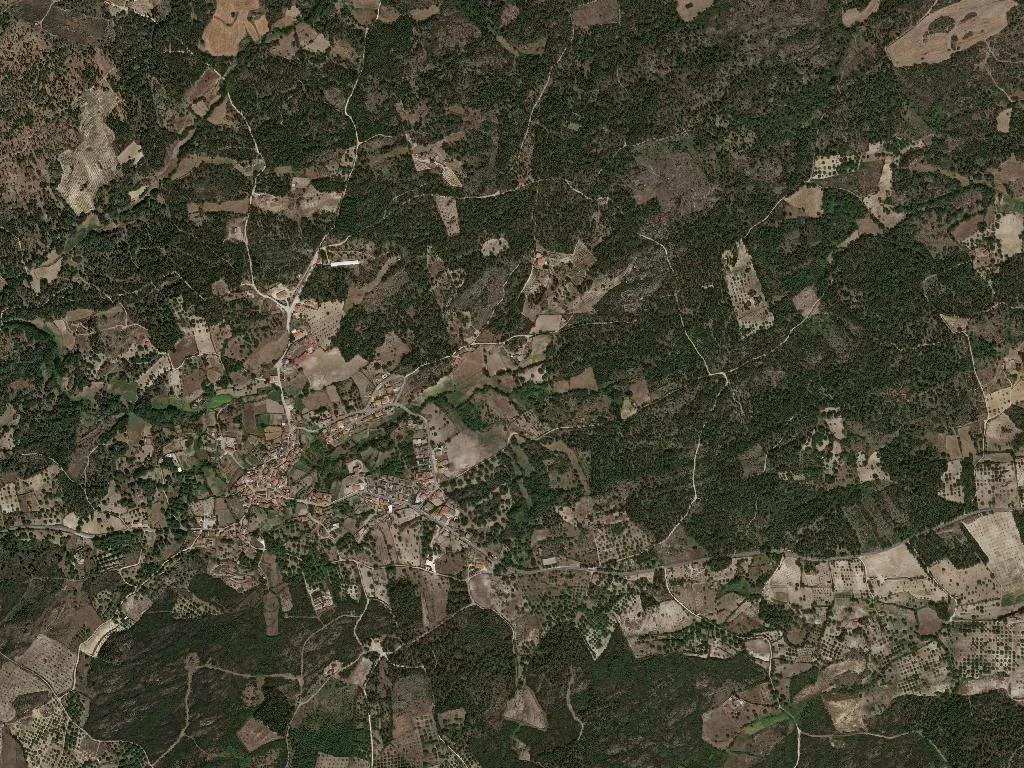
At 864 metres above sea level, the wind arrives before the sun. It combs through the communal chestnut grove – the souto – and rattles last year’s husks across the granite. A single bell tolls from the parish church: seven o’clock Mass, yet the earthen lanes of Guilheiro stay empty. Only 126 people occupy 1,367 hectares of upland, and time is still measured by firewood stacks, by the first frosts that seal the maize fields, and by the slow drift of smoke from someone burning vine prunings.
Granite, gospel and goat bells
The mother church of Nossa Senhora da Assunção stands square to the square, a plain-fronted 18th-century rectangle with a stone Latin cross in the forecourt. Inside, candlefat gleams on gilded carved-wood and cobalt azulejos narrate the life of the Virgin panel by panel. A kilometre away the chapel of São Sebastião – 1777 chiselled above the door – waits for 20 January, when farmers lead horses, sheep and dogs into the yard to be blessed with salt and holy water. Between the two monuments the landscape is mapped in granite: windowless espigueiro granaries raised on stilts to foil mice, and two listed 18th-century washing tanks where women still scrub the sheets while gossiping across the water.
Mountain larder, European label
The kitchen does not attempt modernity. Lamb from the Serra da Estrela DOP herd is slow-cooked with white wine, bay and colorau paprika; kid is braised in the same black pot, the lid sealed with a ribbon of corn dough. In winter, a stew of belly pork, savoy cabbage and butter beans slides across the table. Chestnuts – 25 tonnes harvested in 2023, 80 % of them EU-certified and shipped to France and Belgium – appear fried in local honey or folded into wild-boar ragoût. Serra da Estrela DOP cheese, runny at the rim, is spooned onto yellow maize bread, while Trincadeira and Siria reds from the Beira Interior demarcation cut through the altitude richness.
Chestnut loop and Roman footprints
The PR3 footpath unrolls for seven kilometres between Guilheiro and the neighbouring hamlet of Tamanhos, corkscrewing through centenarian chestnuts, schist walls and broom scrub where the dwarf daffodil Narcissus asturiensis appears in late February. From the Caramulinho lookout at 860 m the Távora valley unravels below – a rippled cloak of oak and heather where red fox and little owls still hunt. Yellow arrows mark the Portuguese interior branch of the Camino de Santiago as it crosses the parish, a reminder that a Roman vicus once sat at this crossroads of two secondary imperial roads.
August, fire and iron pots
On 15 August the Assumption procession files through the lanes, statues hoisted on shoulders, petals scattered ahead of the priest. Afterwards the communal hall hosts a sardine feast: iron cauldrons of lamb stew are carried by women whose forearms know the exact weight of dinner. At midsummer the same women light bonfires beside the espigueiros to “give strength to the sun” and safeguard the rye. Outside these two dates Guilheiro subsists on fieldwork and the weekly rhythm of the milk kettle: March snow still lingers in the hollows when the cheese-maker opens his stable door and sells Serra da Estrela curd to whoever climbs the hill for it.
Dusk tips over the Nogueira ridge; the church pediment quivers in the washing-tank water. Someone snaps a padlock on an espigueiro – the lock was bought in Viseu by a grandfather long dead – and the night smells of damp bark and woodsmoke. Between chestnut and granite, the essentials still have both weight and name: the heft of an iron pot, the first name of every woman who ever scrubbed linen on the same cold stone.