Full article about Palhais: Where Straw Roofs Meet Wool-Pom Sheep
Echoing gates, 710-m stream, granite calvaries; a Trancoso parish that moved banks for straw lofts.
Hide article Read full article
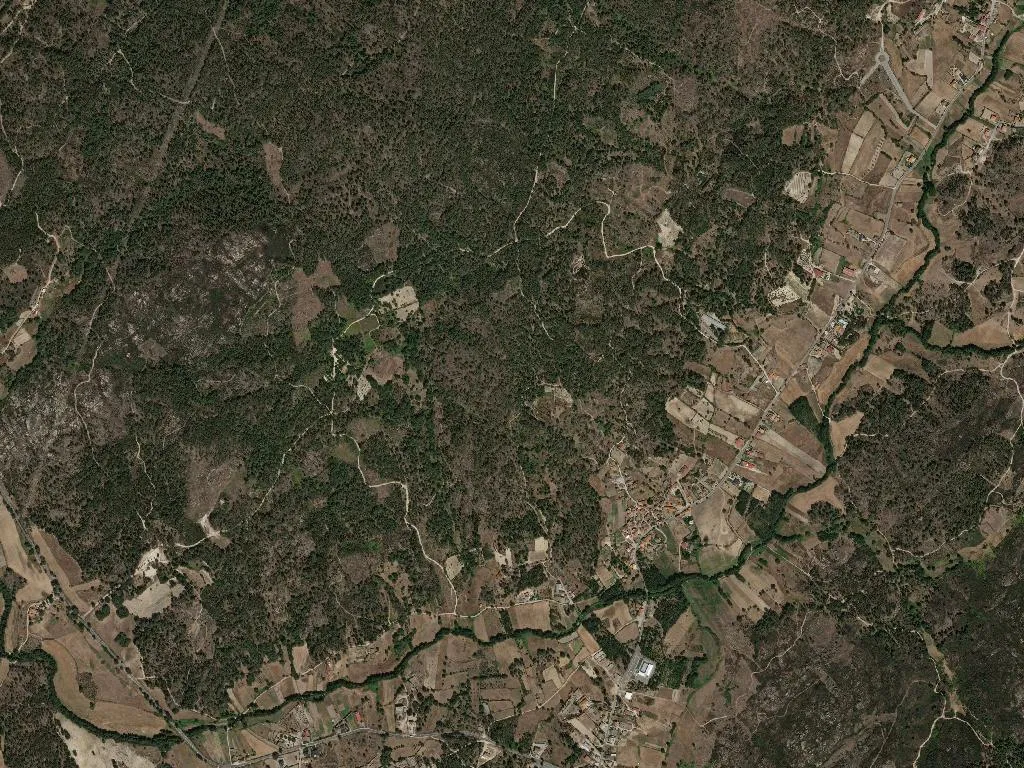
The iron gate drags across stone before you see it, footsteps echoing along the uneven pavement, and the Ribeirinha stream chatters at exactly 710 metres above sea level. One hundred and fifty-four souls occupy 432 hectares. Dawn light snags on schist roofs; the altitude keeps the air sharp enough to sting.
Moving to the other bank
Dom Maria Pais Ribeiro settled the hamlet on the left bank; today only brambles and crumbling walls remain. The village decamped to the right bank where straw loaves once stored winter fodder, and the name Palhais – “straw stores” – stuck. Until 1855 it answered to the distant castle of Sernancelhe; granite calvaries and roadside shrines still police the boundaries.
Between chapels and flocks
The parish church of Santo António anchors the single square; the riverside chapel of Nossa Senhora da Ribeira, raised over an earlier hermitage, watches the water. Between May and June shepherds parade sheep wearing pompoms of dyed wool to be blessed; on “Acemsam” day the town halls of Trancoso and Carapito send delegations. Where a Franciscan convent stood in 1640, only fractured walls remain.
Wool pompoms and the Inner Way
The local folklore group fields ten teenagers against seventy retirees. The Interior Way of the Via Lusitana passes through, feeding hikers with DOP Transmontano goat’s cheese, DOP lamb and IGP kid. Trancoso lies 14 km away – far enough that no one stumbles here by accident.
When the sun drops behind the chapel ridge, Palhais falls silent again.