Full article about Reboleiro: granite silence above Trancoso
Sheep outnumber folk in this wind-scoured Beira village where Serra cheese melts on rye
Hide article Read full article
Where granite outcrops outnumber people
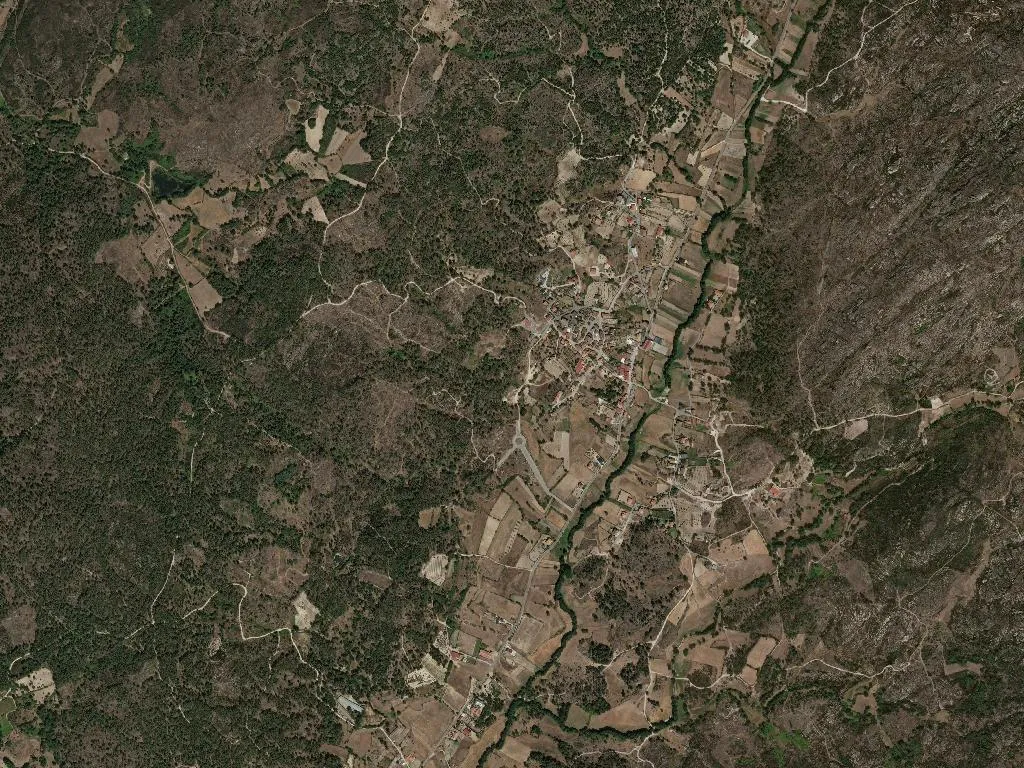
Granite ribs push through the low walls that hem in smallholdings where sheep still graze. At 667 m the wind of Portugal’s interior Beiras has nothing to break it—winter arrives straight from the Spanish meseta with an edge that gets into the marrow, while August heat ricochets off the stone and scrambles the senses. Reboleiro’s soundtrack is parsimonious: a distant bleat, the shuffle of carpet-slippers on uneven cobbles, a dog announcing an invisible stranger.
The 2021 census logged 247 inhabitants; 137 of them had already qualified for a state pension. Children? Twelve. Their names are a closed list. What governs the daily tempo are the elders who still swing a mattock, light the hearth before dawn and can lead you, unerringly, to the granite slab a grandfather levered into place half a century ago. Farmhouses stand well apart, their plots large enough for a potato patch, a chicken run and a laundry line that doesn’t intrude on the neighbour—who lives 200 metres away.
On the pilgrims’ trace
The Via Lusitana of the Caminho de Santiago cuts through the parish. There is no albergue, no café, no yellow scallop daubed on a wall—only a cold-water tap, a bench in the shade and, if the season is right, Zé offering orchard oranges to walkers who have left Trancoso that morning. It is hospitality stripped to its essentials, and after 18 km of dusty track it feels like luxury.
Tastes with a mountain passport
The cheese is Serra da Estrela DOP, spoon-soft under its natural rind, firmer at the core, made for smearing on rye baked by Dona Alda in the communal wood oven. Lamb grazes the high scrub above 600 m and tastes faintly of wild thyme; kid is reserved for feast days, slow-roasted for three hours over oak embers, basted with a glass of local white so the meat stays lactic and tender. Chestnuts come from the soutos (coppiced stands) at Lapa, destined either for soup or for the egg-yolk sweet D. Fernanda produces without a recipe—she measures by eye and ancestral memory.
Life between stone and pasture
There are no monuments, only granite houses that have shouldered thunderstorms since 1832, bread ovens fired every Friday, red-dirt tracks that drop to sheltered vineyards and century-old olive groves. The wine is for the table, not the export market—light, high-acid, ideal with a clay dish of kidney-bean stew.
At dusk the sun slips behind a rounded hill and the walls turn the colour of burnt honey. One by one, chimneys exhale a thin blue thread: the signal that another day—nothing grand, everything sufficient—has quietly closed.