Full article about Wind-Slashed Walls of Castelo Melhor
Hear silence echo off 13th-century shale ramparts above the Côa’s Palaeolithic engravings
Hide article Read full article
The first thing you hear is the wind. Not a breeze – a draught that climbs the Côa valley and slaps the stone curtain wall the way you knock on a locked door when nobody’s home. After that, nothing. Silence so dense you become the soundtrack: pulse in your ears, soles scuffing the packed earth, a snapped almond twig like a pistol shot. Castelo Melhor greets you with absence, not fanfare.
The village perches at 420 m on a staircase of schist terraces where vines, olives and almonds sit in rows like spectators at a match. The census lists 168 inhabitants; 93 are over sixty-five, five are under fifteen. Every shuttered door, every vacant granite bench beside the church, every lichen-spattered wall tells the same story: the place didn’t hollow out from lack of character – the world outside simply swelled.
A fortress that tried to outdo Calabria
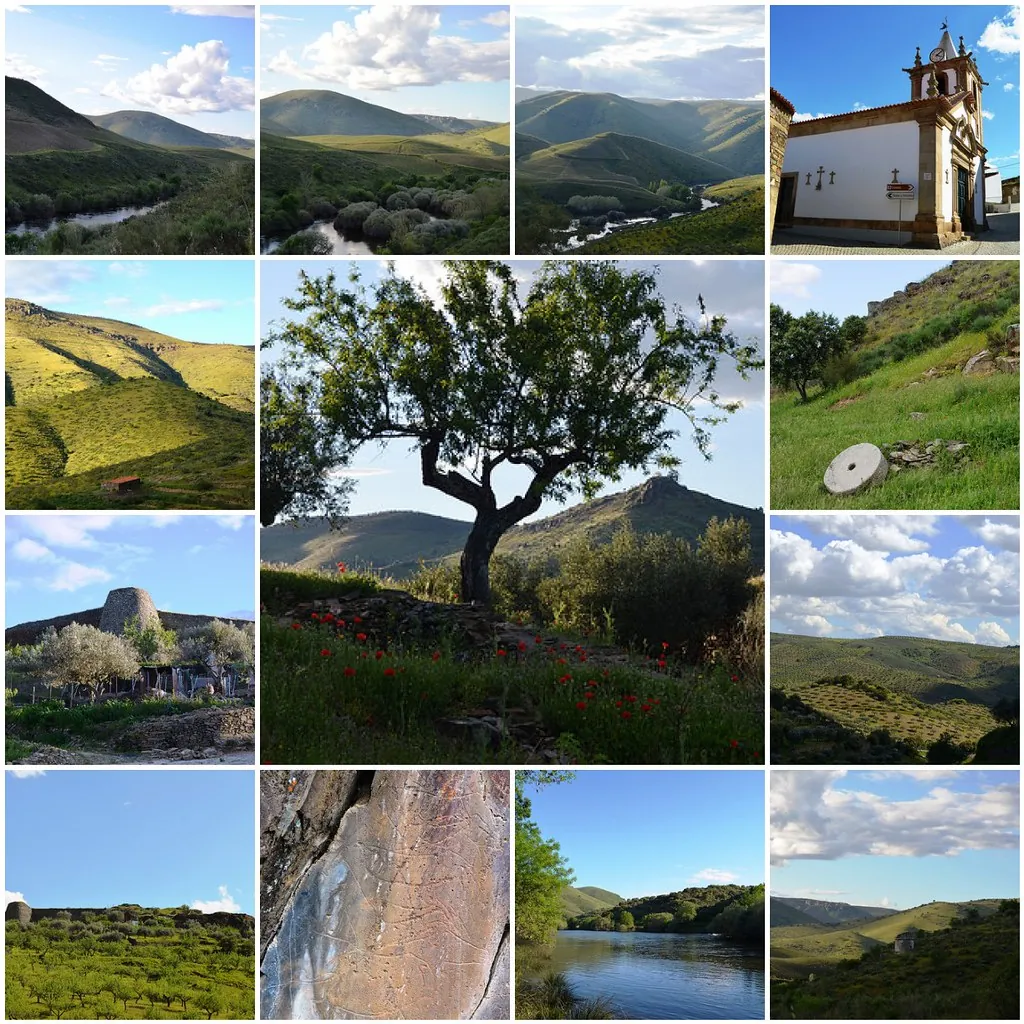
Local lore claims the name was born over a tavern wager: “We’ll build a better castle than the one in Calabria.” Whatever the truth, a keep and curtain rose in the thirteenth century under Afonso VII of León, keen to nail down the border. Dinis tinkered later. What survives is a square tower and stubbled ramparts of shale and granite, obstinate as elders who have seen it all. The stone is warm and rasping; it drinks sun all day and releases it at dusk like a bakery cooling its ovens. Climb the battlements at twilight and the valley changes shirts: olive grey turns ochre, the river threads silver, the slopes slump the way you do after three beers.
Grooves in the rock, memory for the planet
Below, the Côa keeps engravings twenty-five millennia older than any grandparent. Castelo Melhor is folded into the UNESCO Côa Valley archaeological park. Rock shelters carry horses, aurochs and wild goats scratched into schist. Guides time their tours for sunset when raking light makes the figures twitch. You enter through the Côa Museum down-river, but it is here, among cistus and dry earth, that the drawings stop being reproductions and become neighbours. The Alto Douro wine country – also World Heritage – wraps the parish, confirming that this corner hoards trophies its size never forecast.
Almond snow and foot-worn paths
Between February and March the hillsides forget it is winter: blossoming almonds lay a white-pink drift that could fool snow. Lisbon photographers and German hikers follow way-marked trails down to the river, past vegetable plots where water runs in concrete channels. The Portuguese branch of the Camino – the Via Lusitana – crosses the village; walkers pocket the sight of almond bloom the way you save the number of someone you might call again.
Terrincho cheese and jeropiga by the fire
The local table is not out to impress; it means to sustain. Lamb stew glossy with DOP olive oil. Migas breadcrumbs speckled with wild asparagus, tasting of labour. Terrincho DOP sheep’s cheese that cleaves with a snap and leaves a pasture-dry echo on the tongue. Marzipan pillows of Douro almond DOP that collapse between fingers. Terra Quente honey to sweeten what the morning chill soured. Freixo black olives, small as damsons, in clay bowls. Port and Douro wines poured glass by glass, no hurry, no slideshow.
In November the parish council lights a magusto bonfire in the square and hands out roast chestnuts and jeropiga, the fortified wine that tastes of burnt caramel and Christmas. Fire-lit faces are the same every year – neighbours who knew each other when telephones had cords. They share a free bi-weekly bus to Vila Nova de Foz Côa market and, once a year, hire a coach to a regional pilgrimage, preserving cohesion the demographics say shouldn’t exist.
The patron saint and the art of staying
The big day belongs to Nossa Senhora da Veiga. The procession glides along lanes whose granite thresholds have been polished for centuries. An outdoor mass, plain as a village ledger, is followed by a fete modest as a café tray – music, gossip, barbecue smoke, wood-fire scent. No one fusses over Instagram.
There is precisely one place to stay – a house rented privately. Scarcity is not a flaw; it is a filter. You sleep in Castelo Melhor because you choose to, knowing the reward is not on any menu but in what lingers: the late-afternoon heat of stone, almond perfume, and that whistle of wind along the wall – a sound you cannot record, that exists nowhere else, caught only where the valley narrows and the rock answers like an old man who no longer rises for anything.