Full article about Chãs: Where Dawn Rings a Baritone Bell
Feel the schist walls, taste chanfana and fortified jeropiga in Chãs, Vila Nova de Foz Côa, a Guarda village where vineyards are family ledgers and the bel
Hide article Read full article
The Bell’s Resonance
The chapel bell tolls a whole tone lower than you expect – not the bright Anglican peal of English villages, but a baritone thud that lingers against schist walls and drifts down the terraced valley as though it knows the 234 inhabitants of Chãs are in no hurry. Dawn begins the moment a blade of sun grazes the crest of the Cabeco hill, minutes before Zé Carlos’s cockerel remembers his job. Mist boils up from the Douro, thick as scalded milk, and the hamlet hangs in it, half-erased behind shoulder-high walls that grandfathers here still claim are “older than hunger itself”.
Stone Steps & Inherited Names
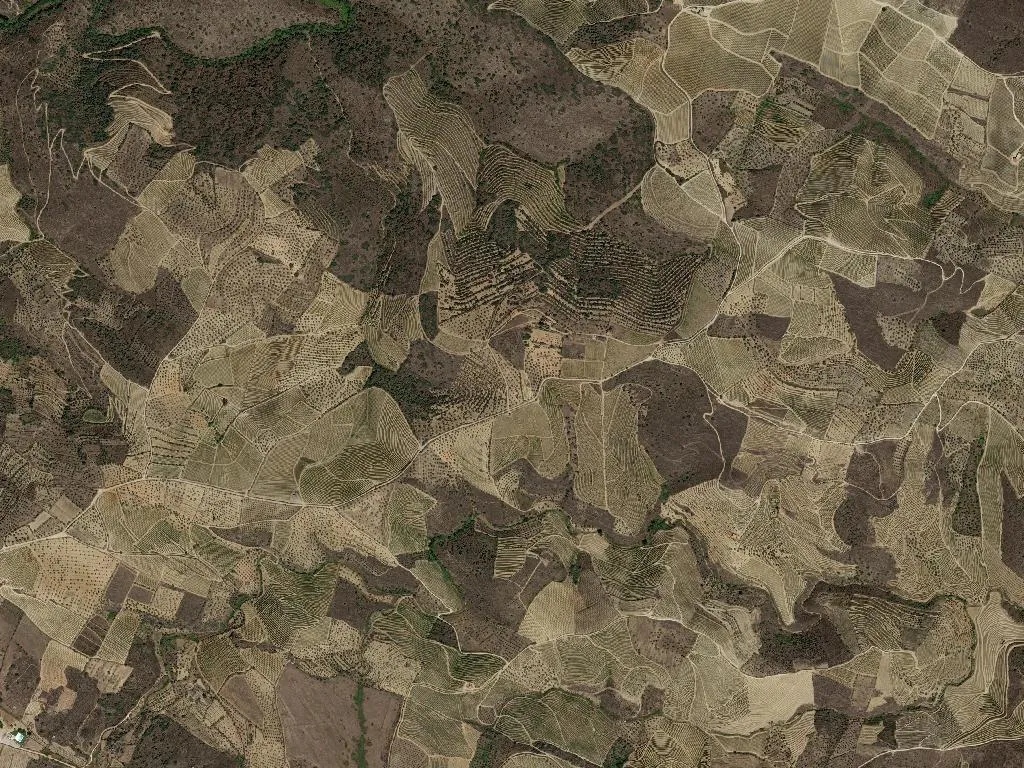
The vineyards are not merely “stepped”; they are staircases hacked out with mattocks, each riser chipped by hand so a mule could plant its hooves and drag a wooden plough. Pick-marks pit the bedrock. Every metre-high wall is a family ledger: that stretch belonged to Uncle Américo, this one to compadre Albino. No interpretation boards are required; children recite the ownership like times tables.
Mortar, Wax & An Ice-Bound Madonna
Our Lady of the Meadows is more than stone and lime-wash. Her chapel is a playground for hide-and-seek, its door still groaning on the same hinge since 1953. Inside, the air is impregnated with decades of beeswax that will scent your jacket for days. On the romaria, the annual September feast, women haul cast-iron pots from home to braise chanfana – goat stewed in red wine – while the men start on jeropiga, the fortified wine, before nine. Grandsons who emigrated to Bordeaux or London reappear to hear how, in the winter of 1954, the carved Madonna was snow-bound for three days and no one went hungry because the village fed itself.
Pilgrim Footfall & A Refilled Spring
The inland route of the Caminho de Santiago passes directly in front of Dona Elvira’s house. She wedges a terracotta jug of geraniums on her sill and offers water to anyone prodding the path with a hazel staff. The stone spout beside her gate is fed by the Bica do Lamego, re-drilled two summers ago after the old spring dried up each July. Pause and you’ll be told about her grandson who walked to Santiago, returned with a scallop shell tattooed on his forearm, and still sends postcards from the Pyrenees.
Tastes That Begin in Schist & Rosemary
Almonds are roasted in Celestino’s wood-fired oven while he’s downstairs splitting logs for lunch-time lentils. The olive oil has a postcode: Lagar do Azeite do Pego, where you queue with five-litre flagons, accept a thimbleful in a plastic cup, still warm from the press. Terrincho DOP cheese arrives from next-door Vilar de Maçada – made by Guida’s sister and sold only on Fridays from surplus goat’s milk. Honey smells of rosemary because the hives sit on the rocky outcrop above the old wine stores, visited only by the beekeeper and his two silent mongrels.
When the Ridge Turns Rose
At sunset the schist does not “ignite” with tourist-board hyperbole; it blushes the colour of teenage lipstick smudged on a mirror. The wind carries the scent of scorched earth and, if the season demands, the sulphur tang of vineyard fumigation still done with hand-burned clay pans. The bell rings again – this time for Sunday mass – and the only percussion is the rubber-soled shuffle down the stone stairway, winter moss slick underfoot.
Chãs keeps its own tempo. Even Joaquim’s tractor, coughing uphill at nine, sounds as if it’s asking the granite for permission.