Full article about Seixas: Where Stone Speaks and Chestnuts Roast
13th-century charter village in Vila Nova de Foz Côa, still scented with almond and bonfire smoke.
Hide article Read full article
The stone that names the place
Sunlight strikes the granite of the Solar dos Aguilares and the 18th-century balcony throws a baroque curl of shadow across the cobbles. Above the studded gate the family coat of arms keeps watch, mute witness to centuries of grape harvests and the slower rhythm of almond picking. In Seixas the schist is everywhere—terrace walls, knee-high garden partitions, even the parish name itself, inherited from the Latin saxa and pronounced almost like the English word it became: stone.
A charter, a captain-major and a head-count
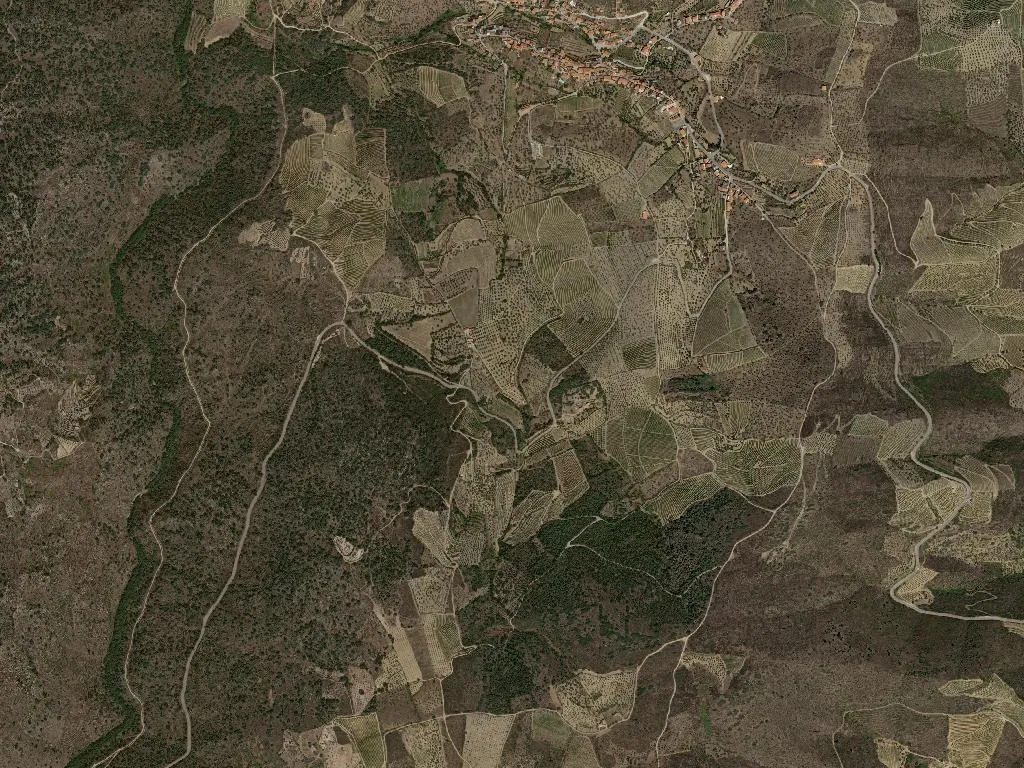
King Afonso III signed the village’s first royal charter in 1262, but terraced vineyards already scalloped these south-facing slopes two centuries earlier. By the late 1700s Francisco António de Azevedo e Sousa, captain-major of neighbouring Freixo de Numão, had made the manor his principal seat; the iron gates still carry the family’s heraldic lion. When John III’s census-takers passed through in 1527 they found only thirteen hearths. Today the roll-call stands at 312 souls, more than a third over retirement age, and the Casa Grande—its façade a patchwork of lime-wash and dressed granite—remains the parish’s most assured building, a reminder that the Azevedo e Sousa once controlled 300 alqueires of arable land here.
Festivals measured by fire and chestnuts
On 11 November, St Martin’s Day, bonfires flare along Rua da Igreja with chestnuts trucked in from the cooler plateau of Vilar de Perdizes. Two roof-tiles were once offered to the saint in the belief they would ward off sezões, the intermittent fevers that haunted the river valleys. The 21 March pilgrimage to St Benedict fills the churchyard with open-air Mass, a brass-band procession and a modest firework display that ricochets across the terraces. Since 2012 the parish council has added a second November date—the 9th—declared Dia da Comunidade Seixense, when the football pitch becomes a dance floor and the produce marquee fills with almond brittle, honeycomb and the peppery new olive oil locals call azeite novo.
Four protected tastes of the plateau
Above 600 m, the stepped plots yield Douro DOP almonds, their shells cracking open to the late-August sun. Olives from centenary groves at Quinta do Correio are hand-picked in November for the peppery Trás-os-Montes DOP oil. Small, fleshy Negrinha de Freixo olives are brined according to a recipe great-grandmother Amélia passed to her granddaughter. Tangy Terrincho DOP ewe’s-milk cheese—made from the Churra da Beira flock—cuts through the dark, heather-scented honey produced in the lower Tua valley. In stone cellars the Alto Douro wine—listed as World Heritage alongside the Côa Valley rock-art sites—ages in 250-litre oak pipas, their staves tightened by river reeds and fire.
Way-markers for walkers bound for Santiago
Since 2018 the Interior Way of the Via Lusitana, a Jacobean route stitched together by the Côa Valley municipalities, has threaded through the village. Way-markers lead past loose schist, up to the 1947 Fonte dos Cântaros—built on a medieval spring—then out towards Póvoa de Santa Cruz and the Spanish border. Only 327 pilgrims logged the section last year, but every one stops at Café O Adro to refill water bottles and pocket a toucinho-do-céu, a syrupy yolk-and-almond cake that travels better than custard tarts.
When the low sun copper-plates the terraces and the wind carries the sweet-sour scent of fermenting must, the manor’s curved balcony throws its shadow precisely over the Aguilar coat of arms carved into the pavement. An accidental sundial, it measures the afternoon by baroque geometry and by the obstinate presence of stone.