Full article about Jardim do Mar: Atlantic Pulse in 215 Souls
Terraced vineyards & salt-kissed cottages cling to Madeira’s 184 m cliff
Hide article Read full article
The cobbled lane drops in uneven flights, its basalt slabs glossed by 170 years of footfall between Largo do Poço and Rua Padre Gonçalo de Carvalho. Each Atlantic breakbeat shivers up through the cliff, the houses, the bedrock—an arrhythmia the 215 souls of Jardim do Mar recognise as reliably as their own pulse.
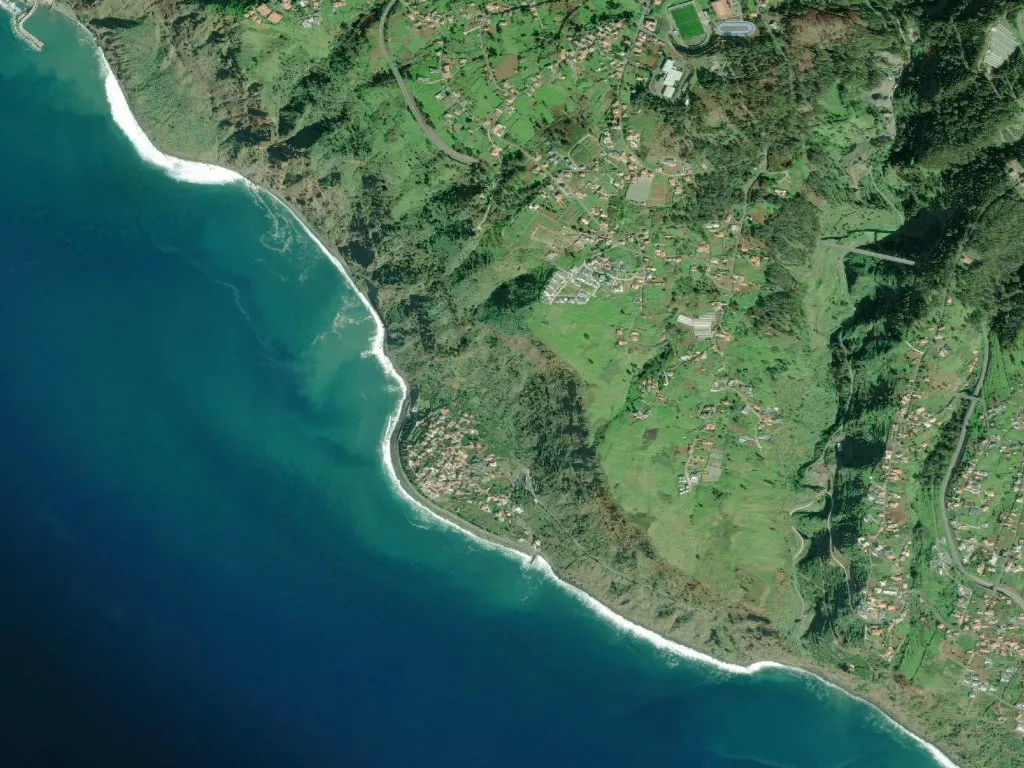
Settlement here is vertical: a stack of narrow terraces clawed from a 184-metre basalt wall. Two or three cottages perch on every ledge; staircases dog-leg round dry-stone walls; pocket allotments—four-by-four metres of lettuce and marigold—teeter over the void. Above the last slate roof on Caminho do Piazo the Laurissilva forest takes over, a laurel-dark canopy that smells of wet moss and fermenting grapes.
Stone, salt and vine
Fifty-nine residents are over 65; the primary school closed in 2009 when the roll dropped to three. Doors painted the traditional sea-breeze palette—cerulean, teal—blister under salt blown up from the small pebble beach. Eleven hectares of vineyard step down in stone-walled terraces, each family tending roughly 0.3 ha of Tinta Negra and Sercial for the island’s fortified Madeira DOC wines. The white rubble in the terrace walls was hacked from the Lombada quarry until 1983, when master stonemason António de Castro died at 78 and the chisels fell silent.
Between nature reserve and ocean
Jardim do Mar has lain inside the Madeira Natural Park since 1982. Construction halts at the ER229; above the road only the stone channels of the 1867 Levada do Moinho survive, trickling past the 3.2 km marker toward ruined watermills. Access is a single wriggling 7.4 km drive from Calheta, pinching to 3.5 m beside the Lombada tunnel. Horários do Funchal runs four buses a day; locals top up the timetable with rides swapped over espresso at Café Oceano, run by the Reis family since 1974.
What endures
At 18.30, when the sun slips behind 1,591 m Pico da Cruz, the village inventory is concise: three bars (Oceano, Modalena, Portinho), Tó Zé’s grocery (08.00-13.00), and the Porto de Abrigo restaurant where a plate of percebes (goose barnacles) costs €14. The Atlantic keeps time, crashing in 12-second intervals just as it did in 1852 when Manuel Caetano built the first recorded house on Rua da Achada. No souvenir stalls, no cruise-ship loudspeakers—just the percussion of water on rock, and a village that refuses to grow beyond its own echo.