Full article about Funchal’s Santa Luzia: salt-lashed façades & Madeira wine
Wander 16th-century lanes from Atlantic-washed Rua da Carreira to mango-scented Mercado dos Lavrador
Hide article Read full article
Santa Luzia: where the Atlantic peels the paint
The first thing that strikes you is the Atlantic light. It ricochets off Rua da Carreira’s façades, splintering into shards of ochre, cobalt, moss and salmon. Narrow houses carry wrought-iron balconies and salt-splintered sashes; their shadows keep the basalt cobbles cool even at midday.
The river that christened a parish
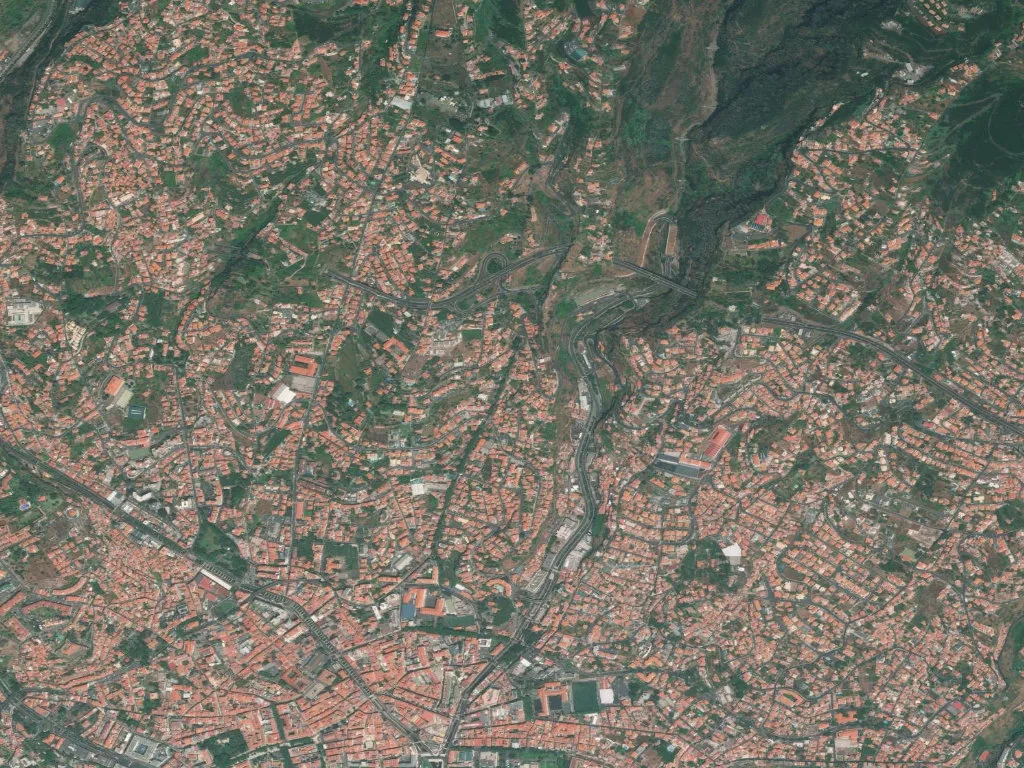
Santa Luzia covers 134 hectares and 5½ thousand souls. The name comes from a 16th-century chapel and the stream that once marked Funchal’s western edge. Today the Ribeira de Santa Luzia is entombed in concrete, audible only after heavy rain when Atlantic clouds shoulder the mountain aside.
Manueline stone, gunpowder walls
Seventeen classified monuments cram the quarter. The cathedral’s cedar-and-ivory Mudéjar ceiling floats above black basalt pillars; the Convento de Santa Clara keeps Hispano-Moorish tiles in dim cloisters; the Palácio de São Lourenço still functions as both fortress and presidential residence. Fortaleza de Santiago, now a restaurant, once bristled against pirates drawn by sugar worth its weight in silver.
Markets and Madeira
Inside the Mercado dos Lavradores, mango flesh glows amber next to split passion fruit and the island’s own miniature pineapples. Flatbreads of bolo do caco blister on hot iron; laurel-skewered beef drips onto charcoal; cod swims in cream. Every glass of Madeira wine begins here, geography and product fused into a single word.
From city stone to primeval forest
Santa Luzia sits inside the Madeira Natural Park. A ten-minute cable-car climbs from the stream mouth to Monte, then a footpath threads up to 1,800 m Pico do Areeiro. Between them lie the terraced gardens of Monte Palace, humming with African parrots, and the church where ex-emperor Charles I of Austria spent his final exile in 1922.
Streets that double as stages
Rua da Carerra hosts Funchal Jazz each August, December’s São Silvestre road race, and a spring book fair under paper bunting. Census data show 1457 residents over 65, only 617 under 14: memory outweighing youth, foundation outweighing fashion.
At dusk the low sun lacquers the walls in dark honey. The air smells of brine and fresh dough. Santa Luzia doesn’t need to be large; every square metre carries volcanic basalt, powdered lime, flaking paint and five centuries of daily use.