Full article about Painted doors & fennel-scented alleys of Santa Maria Maior
Walk Funchal’s oldest parish where corsair walls guard ultramarine doors and garlic butter sizzles
Hide article Read full article
The smell arrives before the view. Wild fennel and brine drift uphill from the harbour, threading between 18th-century eaves until they collide with the hiss of garlic butter on a cast-iron griddle. A bolo do caco—wheat dough pressed flat then prised open like a pocket—is being dragged across the hot plate outside a doorway the colour of ultramarine. Halfway up Rua de Santa Maria, someone has painted a woman’s face across the planks; her pupils track every passer-by. She is one of 200 doors reclaimed by the “Arte de Portas Abertas” project, an open-air gallery that turned the parish’s derelict thresholds into individual canvases. No two are alike, and the street has become a flip-book of stories you read with your feet.
Fennel, pillories and the city that sprouted in a ravine
This is the cradle of Funchal. In 1421 the navigator João Gonçalves Zarco anchored in a natural cove, climbed a basalt ridge and found the valley perfumed with funcho—wild fennel. The name stuck. A parish charter followed in 1508 when Pope Julius II raised the settlement to city status; only in 1992 did Santa Maria Maior become an autonomous freguesia with its own council. Today 11,768 residents share less than five square kilometres, yet you can still turn a corner and hear only the echo of your own footsteps cart-wheeling off stone.
At Largo do Pelourinho, the Manueline pillory—a symbol of municipal autonomy—stands in the same Atlantic wind that once snapped the caravels’ canvas. The granite shaft is pitted like orange peel, but it remains upright, surveying 17th-century townhouses whose balconies are darkened by centuries of salt and soot yet still carry the weight of geraniums in petrol tins.
Walls against corsairs, apartments for presidents
Fortaleza de São Lourenço juts into the sea at the eastern lip of the old town. Built between 1550 and 1646 to deter French, Dutch and Berber raiders, the bastion later became the island’s military HQ and, more unexpectedly, the President of Portugal’s official Madeiran residence. Inside the curtain wall is a discreet three-room flat used during state visits; it is the only Renaissance fort in Europe still lived in by a head of state. Climb the serrated parapet and cruise ships below look like bath toys nosing across a sheet of indigo silk.
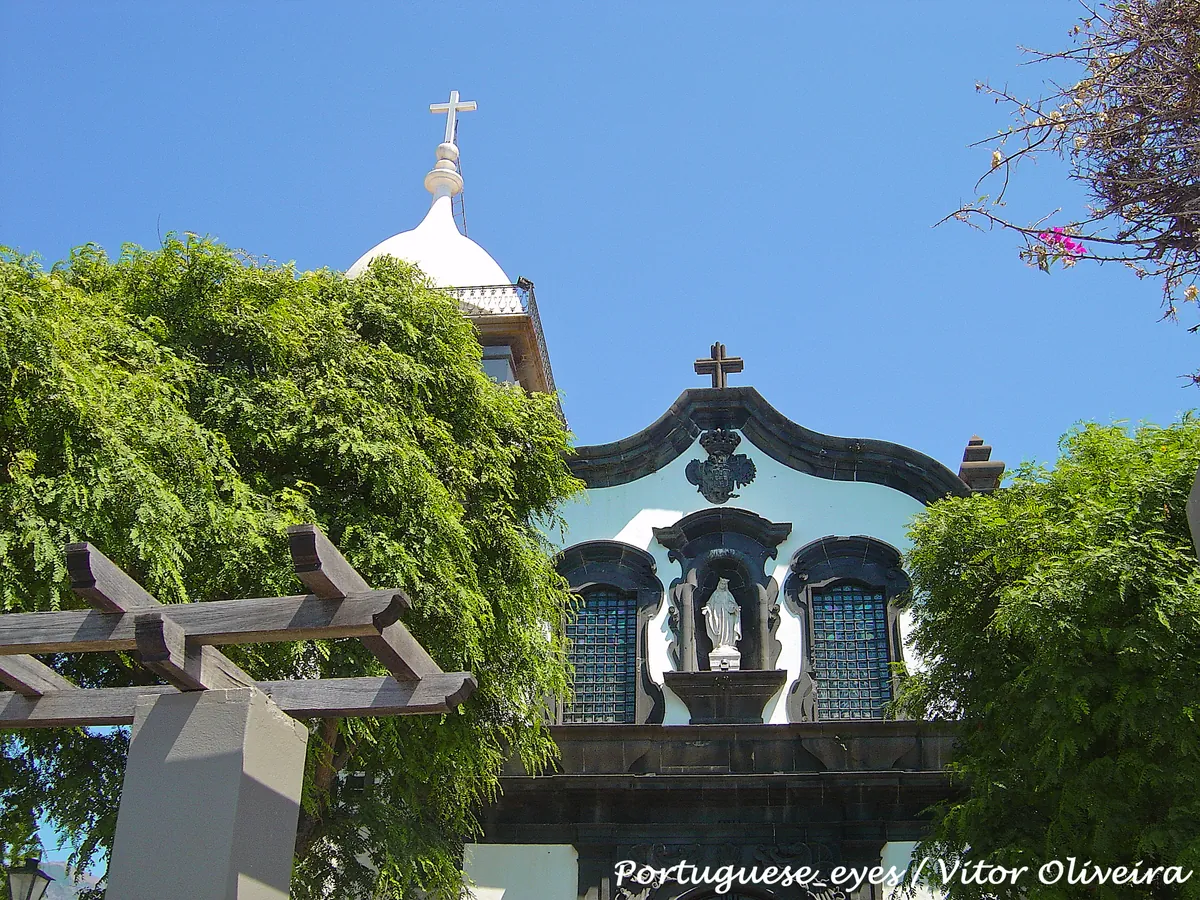
Behind the fort, the Igreja Matriz de Nossa Senhora do Perpétuo Socorro has swapped its original 16th-century severity for 18th-century gilded excess. Gilt carved ivy curls round polychrome saints while cobalt azulejos narrate the Fall and Redemption in comic-strip panels. On the second Sunday of June the Madonna is paraded through a cordon of street-food stalls—smoke from caramelising onions drifts above the incense like a secular halo.
Beef on bay leaves and poncha that bites back
Order espetada here and the skewer arrives splayed over a brazier of flaming bay leaves. The resinous smoke lacquers the vinegar-and-garlic beef with a camphor sweetness that clings to hair and clothes long after the plate is cleared. Fried cubes of maize porridge provide starchy ballast, and a dab of malagueta chilli paste builds heat so politely you barely notice your nose is running. Scabbardfish, oil-black and prehistoric, is breadcrumbed and paired with caramelised island banana—Atlantic depth colliding with tropical sugar. Dessert is dark, treacly honey cake, the sort that sticks to the roof of your mouth, washed down with tangerine poncha, a fishermen’s rum-and-citrus tonic that tastes like breakfast until the third sip rearranges your knees.
From basalt cobbles to laurel cloud forest
Santa Maria Maior climbs from sea level to 279 m at the Pináculo viewpoint, where the city contracts into a horseshoe of terracotta roofs cupping an oval of slate-blue water. A 3 km footpath drops from here to Curral dos Romeiros through a succession of micro-climates: first sun-bleached retaining walls capped with agaves, then allotments perfumed by lemon verbena, finally the dripping, Tolkien-green laurel forest that earned Madeira its UNESCO listing. Moss swallows sound; the light filters emerald through Laurisilva leaves older than the discovery of America. Even inside the urban grid, the Jardim de Santa Catarina preserves dragon trees and Persea indica as living witnesses of Gondwana.
Satirical samba, living Nativity, cod-fish wakes
Carnival here is less Rio sparkle, more island satire. During the “Cortejo Trapalhão” neighbours lampoon local politicians with cardboard floats and home-stitched costumes, parodying the week’s headlines to the beat of steel drums. At Christmas, presépios viventes—living tableaux—populate the churchyard of São Lourenço with real sheep, real straw and a baby borrowed from the parish creche. Easter closes with the “Enterro do Bacalhau” (Burial of the Cod), a mock funeral that ends with everyone eating salt-cod fritters, repentance and appetite reconciled in a single mouthful.
Every Friday the “Arte & Mercado” fair colonises Largo do Colégio: pottery, wickerwork, gin-distilled-with-lemongrass, and a trio that fetches up fado with a side of mandolin. Ten minutes downhill, catamarans depart for the Desertas islands where monk seals still outnumber humans.
When the sun tilts west, walk back up to the Pináculo. The bay becomes a copper mirror, and in that low light each painted door below flickers as if the murals have been waiting all day for this exact moment to blink awake.