Full article about Água de Pena: laurel-shadowed hamlet above Atlantic
Stone lanes, fog-draped vines and a 16th-century chapel ignored by tour buses
Hide article Read full article
The slope exhales
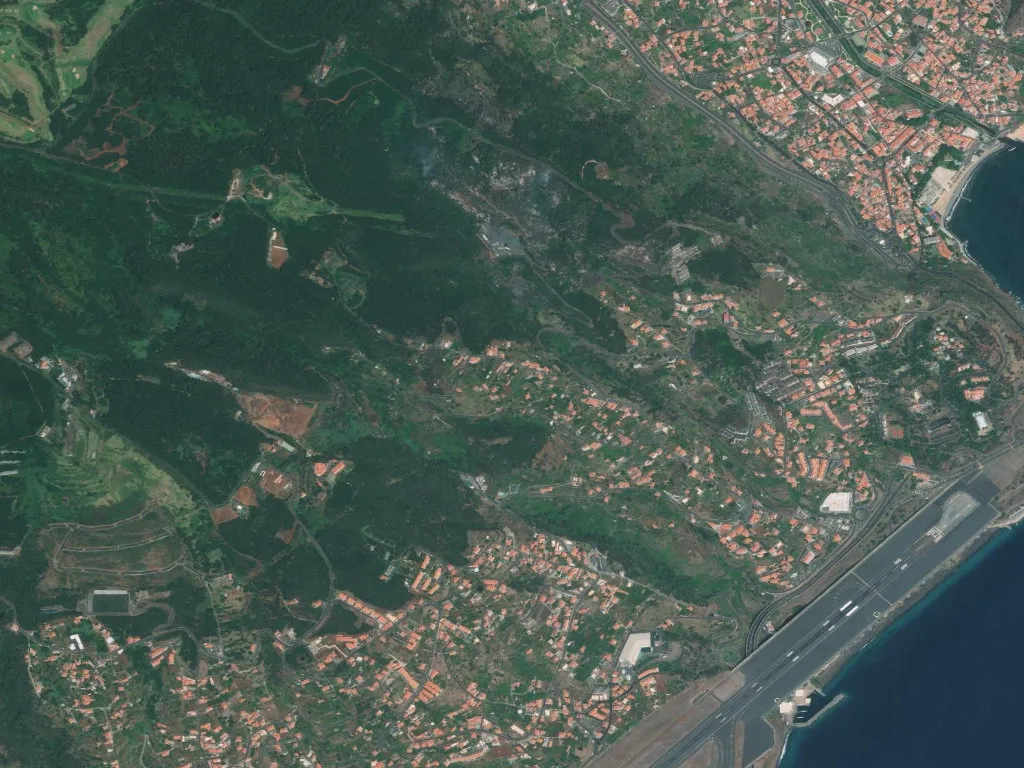
At 279 metres above the Atlantic, the mountain presses Água de Pena against the sea. Moisture hangs in the air – not cold, but bone-soaking – the sort only Madeira’s north coast produces. The parish occupies barely five square kilometres, yet its 2,749 residents navigate the snaking ER101 as if it were their own driveway and read the levadas, those stone water lanes, like living ordnance-survey maps etched into basalt.
Water names the place, yet rock and leaf are in charge. Laurissilva laurel forest – a UNESCO World Heritage site – crowds the horizon so densely that noon feels like dusk. When cloud lifts from the valley floor, the green blackens to almost charcoal and moss-slick trunks loom like sentinels. Some mornings the silence is viscous; a breeze rattling a leaf sounds almost impolite.
Seven monuments no coach stops for
One National Monument, six Properties of Public Interest – all official, all ignored by the island’s tour buses. No selfies queue beside the 16th-century chapel of São Pedro, no tickets are torn at the Baroque manor house of Quinta das Eiras. Instead, whitewash blinks against dark stone, cottages step-stagger up inclines, and the built heritage is simply the backdrop to daily errands. The 481 children walking to the primary school pass carved portals older than most countries; the 386 pensioners leaning on the church railings remember why a door was narrowed or a pig-roof added – stories archived nowhere but memory. Density runs to 535 people per square kilometre, enough to keep the place animate yet never claustrophobic. Each back garden still makes room for a pergola vine, a lemon tree, and vegetable terraces stitched into the gradient like green staircases.
Wine that never sees Funchal
This is Madeira-wine country, but forget the postcard amphitheatres of the Douro. Here vines are domestic, trained overhead on trellises that turn footpaths into tunnels of leaf. Grapes ripen slowly in the salt-washed air, 12 km east of the capital but climatically elsewhere. There is no celebrity quinta, no gift-shop tasting bar; instead, farmers deliver a few crates to the co-op in neighbouring Machico and grandparents lay down dark-amber bottles for christenings yet to come.
Time that refuses to be sold
Visit expecting signage and you will miss the point. Roads narrow to single-track where two cars touch mirrors in greeting; light thickens or thins as cloud lids open and close; when the sun finally pierces, warm earth steams and the scent is of moss, bruised fennel and distant wood-smoke. Between the morning drip and the afternoon burn, Água de Pena keeps its own cadence – neither slow for visitors nor quick for convenience. It simply breathes, steadily, like the café regular listening to rain drum on the zinc roof, content for the world to wait.