Full article about Madalena do Mar: Banana Terraces Tumbling to the Atlantic
Stone-walled plantations, levada walks and black-scabbard-banana plates in Ponta do Sol.
Hide article Read full article
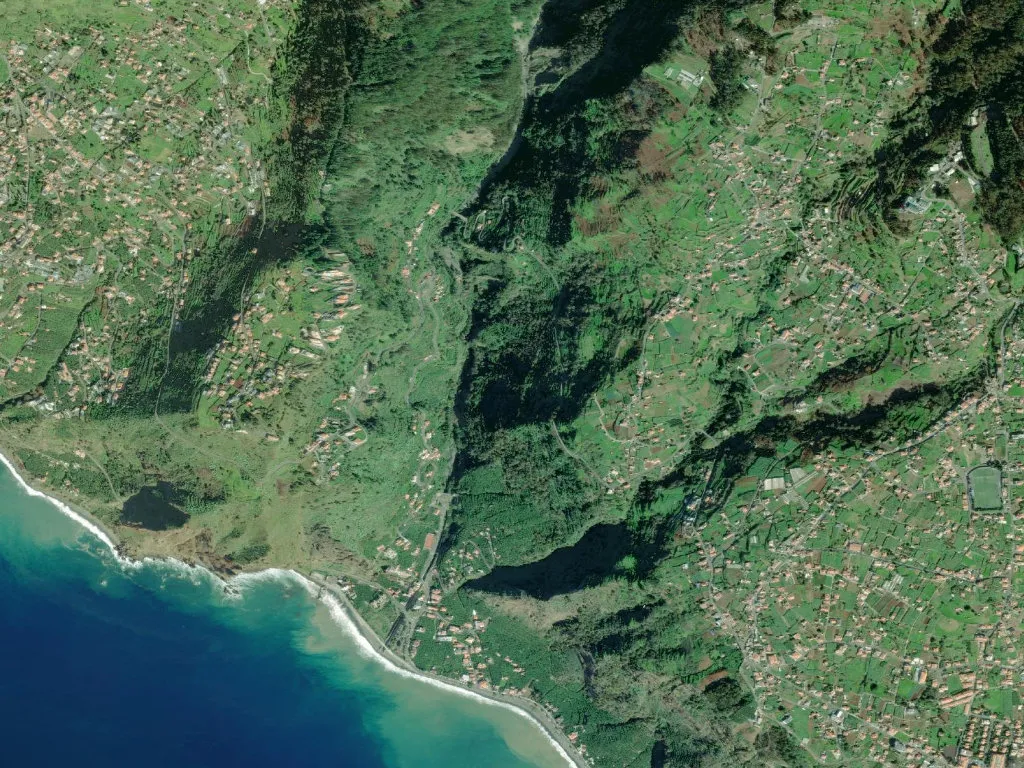
The scent of ripe bananas hits before you even see the village. Madalena do Mar unfurls 80 ha of chlorophyll-coloured terraces, each one stitched to the next like green carpet tacked onto black basalt. From the Atlantic the plantations read as a single vertical meadow; from land they reveal their geometry—waist-high stone walls shoulder-to-shoulder, channeling every breath of salty air straight into the fruit.
Winter fog rolls in at dawn, muffles the greenhouses, then peels away to leave wave-beat and, somewhere overhead, a single concertina rehearsing for Friday night.
Between levadas and lava
Park beside the ER229 and the Levada do Moinho begins immediately: a 4 km, almost-level aqueduct walk to the Cascade dos Anjos pool. Allow 90 minutes, plus ten extra for the inevitable sandal-clad tourist skating on moss 200 m in. Two kilometres uphill the Levada Nova peels off, gifting aerial views of the banana grid and the pewter sea beyond; push on another 3 km and you reach Lombo das Figueiras, where Dona Lourdes dispenses espresso for 80 ¢ and a running commentary on rainfall.
There is no sand, only rock pools: the largest lies 200 m west of the working fishing pier, behind a row of shipping containers. Swim only when the Atlantic is flat-calm—locals call it “ao quadrado”. Whale-watching RIBs leave twice daily (10 am, 2 pm; €35; money back if the ocean stays empty, a rare event).
What lands on the plate
Black scabbardfish still wearing its skin arrives grilled, flanked by fried banana discs and a cordon of passion-fruit sauce—€12 at O Sol. Limpets (lapas) sizzle in garlic and butter (€14); without a squeeze of local lemon they’re a criminal omission. Poncha, the cane-fire nightcap, costs €3 in a cedar cup: aguardente, cane honey, lime. In August the press behind the church crushes fresh cane; half-litre bottles of honey-dark mel de cana sell for €6 and weigh down suitcases home.
Festivals that keep the tempo
Third weekend of July: a statue of Mary Magdalene is carried through the terraces, followed by a beach-front arraial and fireworks from the breakwater at 11 pm. Early September’s Festa do Mar re-enacts the hauling of the xavel net, dozens of boats rowing in formation. Carnival Sunday: concertina troupes shuffle door-to-door; refuse to open and you’ll be serenaded with a satirical lament. Mid-October’s banana harvest sees bunches cut to the metallic rasp of a ferrinho while free beer keeps the machetes moving.
What remains
The 1990s experimental cable-car still glides silently above the fronds, but its motors have been cold since 1998; today it supports irrigation hoses. Of the 508 residents only 42 are under 15, yet the two-room primary school offers free lunch and a view straight across to the Desertas. Plot prices may be modest, but water arrives by tanker—Madalena do Mar has the island’s most expensive meter.
At 6 pm the Bar da Praça unlocks its doors, pours Coral lager at €1.20 and leaves the entrance ajar for the Friday concertina. When the sun slips behind Pico da Torre the last light catches the whitewash and the evening air smells once more of bananas—sweeter now, licked with salt still drying on your skin.