Full article about Ribeira da Janela: window in the Atlantic
Sea-stack pierced by a basalt eye, laurel fog and potato terraces
Hide article Read full article
Fog that remembers
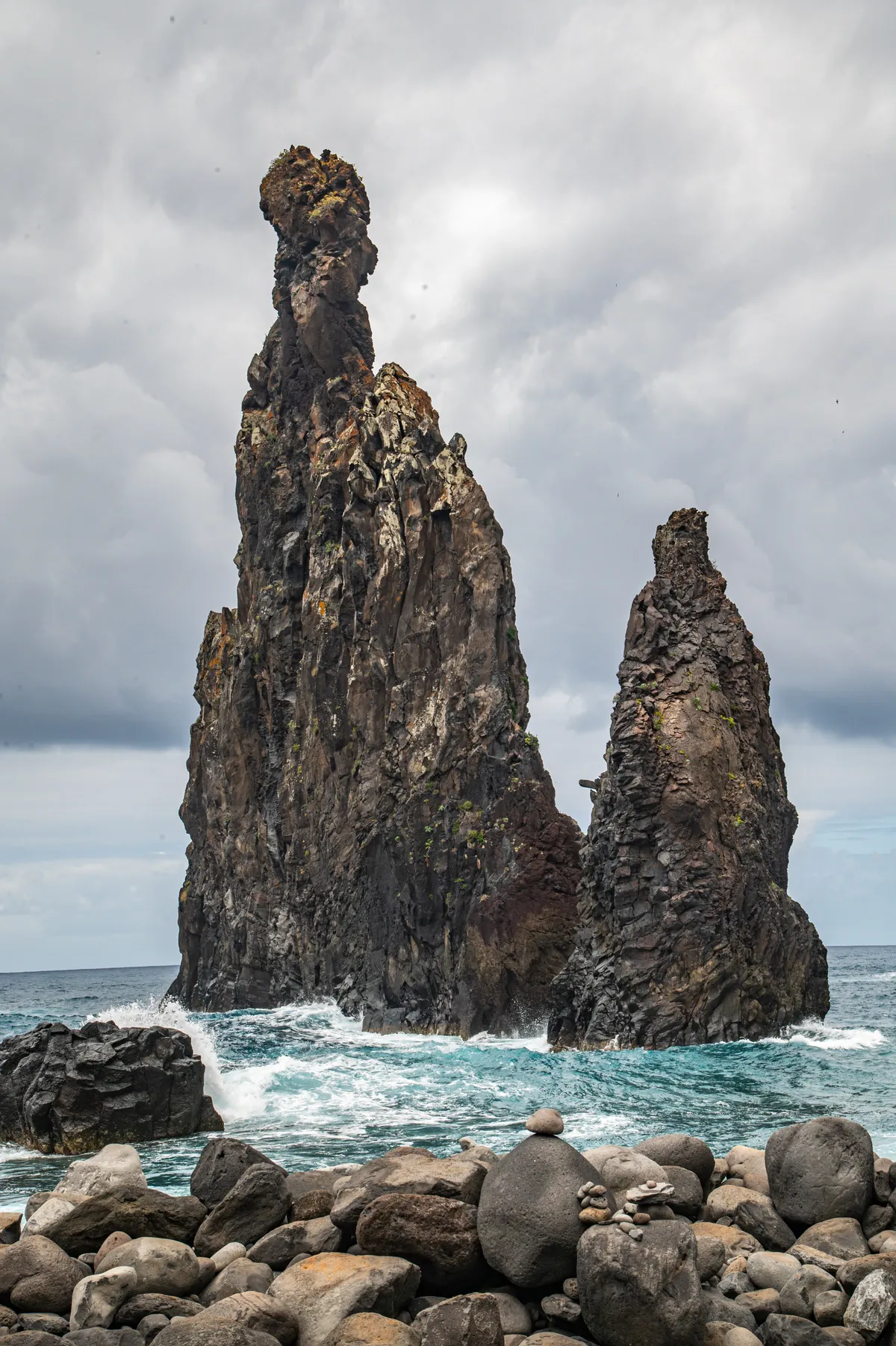
The mist rolls off Paul da Serra like a slow tide, slides between the ancient laurels of Fanal and spills downhill until it meets the Atlantic where Ribeira da Janela – 14.2 km of mountain-born water – empties in a burst of foam across black pebbles. Just offshore, a 54-metre basalt stack rises, its crown pierced by a seven-metre eye: the “window” first inked onto Admiralty charts in 1839. Tuna and scabbard-fishermen once steered by it, lining up the hole with the headland to find shelter when the north-westerly punched in.
Water that still works the land
Only here do three main levadas – Moinho, Nova and Cedros – still irrigate the same small terraces. Two crops of potatoes and cabbages a year are possible on the Lombo Gordo and Cedros slopes; water runs in moss-lined stone gutters, slips through seven hand-hewn tunnels (1946-51) and feeds 82 ha of walled plots planted with Tinta Negra, the grape that gives Madeira wine its smoke-tinged spine. In 1965 the stream was harnessed again: a turquoise-painted turbine house at sea level still hums, one of just two coastal hydro stations on the island (the other hides at Fajã da Ovelha).
Parish life, tuned to two dates
Houses cluster below the Igreja Matriz de Nossa Senhora da Encarnação, parish church since 1571 when the settlement was catalogued as “Janela da Clara”. Basalt flagstones in the yard mirror the pewter light of fog-bound mornings; inside, a cryptomeria ceiling replaced the one ripped off by the cyclone of 19 November 1940. On 25 March the procession of Our Lady of the Incarnation sets out, followed on the second Sunday of August by the Feast of the Lord – drums, brinquinho guitars and wheat-and-cinnamon soup ladled out at two in the morning on the school’s dirt pitch.
A laurel forest left over from the Eocene
Fanal is the eroded stump of a 550 m scoria cone where dendrochronologists counted 48 Ocotea foetens laurels older than five centuries. At dusk, fog condenses on their trunks and the clearing becomes a sound stage for shutter clicks: rented Fiat Puntos nose down the ER209, the asphalt that finally replaced the cobbled ridge path in 1967. The Levada dos Cedros – World Heritage since 1999 – threads for 3 h 30 min between 1.8 m dry-stone walls and endemic heather, dropping from Paul da Serra (1 490 m) to the coast through three tunnels over 200 m long; footfalls echo like muffled drums inside.
Basalt staircase to the roar
A 112-step flight, chiselled into the cliff in 2001, descends to a platform level with the sea stacks. Below, volcanic cobbles clatter as Atlantic sets arrive; when the tide is full the impact registers 78 dB – louder than city traffic. The north-westerly has widened the “window” by 1.3 cm a century, vulcanologists at the University of the Azores calculate. Wade to the river mouth and you’ll feel 14 °C mountain water slide under 18 °C ocean; vortices of foam braid between polished stones. The old ER101, completed in 1936, clings 37 % above the surf, giving dashboard views of a coast where basalt meets brine without apology.
206 residents, nine of them under fourteen
When the cloud deck erases the horizon, conversation stops and the only metronome is water grinding basalt – a sound older than the island itself, which surfaced five million years ago and has been filing itself down ever since.