Full article about Arco de São Jorge: fog, cod & wine beneath basalt terraces
Verdelho vines, 1918 cod procession and an illiterate poet shape Madeira’s quietest village
Hide article Read full article
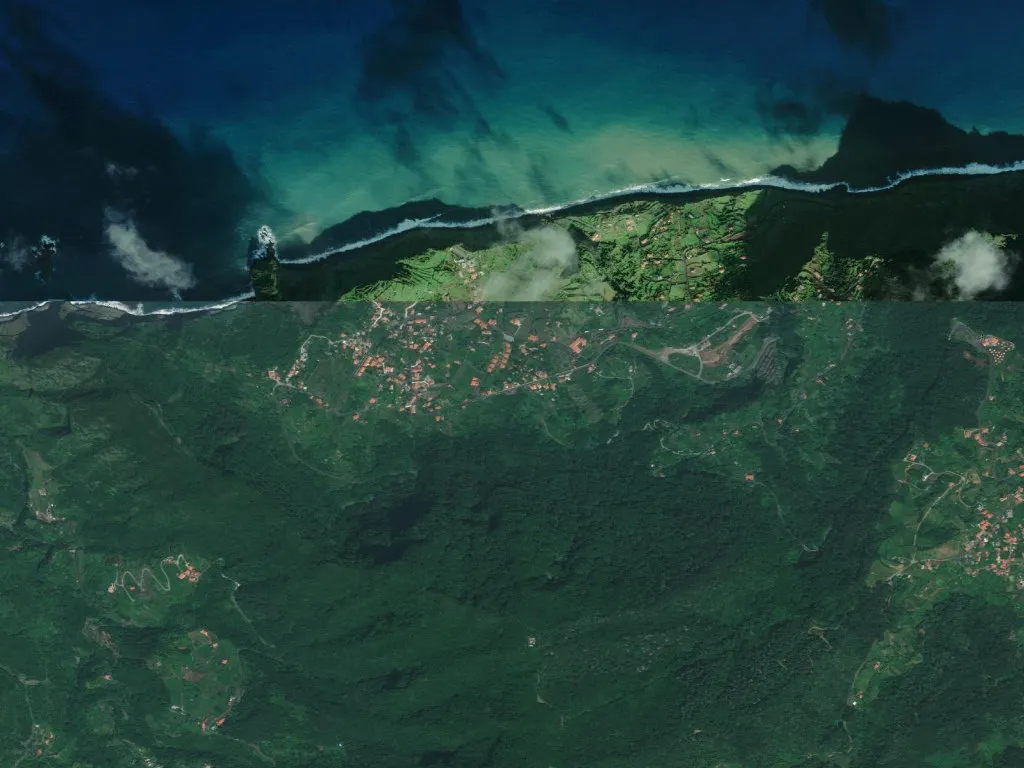
The scent of raw sugar-cane drifts uphill at dawn, just before the fog rolls off the Lombada escarpment and swallows the terraces. Arco de São Jorge, a four-kilometre ripple of basalt walled vineyards, still produces Verdelho loud enough to make Canon António Alfredo Ferreira de Sousa brag to the Bishop of Funchal in 1873: “Nothing in Cães or Calheta comes close.” Of the 364 residents, 128 are over 65, so when the feast-day procession climbs Rua da Igreja it is grandchildren who balance the candles while parents FaceTime from Zürich or Caracas.
Where new wine meets Saint Cod
The parish was created by royal charter of Dom Pedro II on 28 December 1676, but settlement began in the early 1500s when João Gonçalves Zarco rewarded his retainer António Teixeira with these dizzy slopes. The church, built 1723-37 on the Achada ridge, carries a high altar carved by freed Brazilian slaves who arrived with the gold of local silversmith João de Sousa Carvalho. Each 11 November the priest-born-here, José Luís Silvestre Alves, blesses a wicker basket of dried cod draped in winter flowers and parades it through the lane. The ritual began in 1918 after Spanish flu decimated the village; survivors vowed to “bring the saint his supper” if they lived. The new wine is drunk straight from the barrel, and the North Sorcerer—no one calls him Manuel Gonçalves—is recited from memory:
“Saint Martin, keep the end at bay,
death walks tonight in shoes of wine.”
The illiterate poet who sold words for three réis
Manuel Gonçalves was born in Canada do Jordão in 1858 and died in the same paul-wood bed in 1927. He never learnt to write, yet ran off 12,000 broadsheets on a hand-press in Funchal’s Rua da Carreira and hawked them at Santana market for three réis apiece. The municipal library keeps 47 copies, each stamped “Sale off-island forbidden.” Favourite satire: “The Fox in the Corral,” ridiculing 1893 administrator Jerónimo Rodrigues Leitão for planting eucalyptus over vines. Today the village primary school is named North Sorcerer, and pupils chant:
“If eucalyptus is king, I’m a wind-swallower;
the vine is queen and wine her lament.”
Between roses and experimental vines
Quinta do Arco was bought from Viscount Ribeira Brava in 1954 for 1,200 contos; not a single rose grew here until 1961, when 50 cuttings arrived from Lisbon’s Acclimatisation Garden. The collection now numbers 1,847 cultivars, yet gardeners still baptise them with neighbourly names: ‘Dona Amélia’ is the Bourbon rose that scents May; ‘Maria da Conceição’ is a gallica tough enough for the Atlantic wind. In the wine museum—housed in an 1813 stone lagar—you can taste the 1999 Verdelho that took gold in Bordeaux; €36 buys one of the remaining 312 bottles—stock shrank after the owner’s grandson hijacked the rest for his wedding.
Laurissilva and levadas under the gaze of Porto Santo
Trail PR 7 starts at Quinta gate and climbs 320 m in 2.3 km to the Cabanas lookout. On days when the nortada tops 15 knots, the distant outline of Porto Santo shimmers above the horizon. The King’s Levada, hacked out between 1942 and 1946, was built by labourers earning 18 escudos and a jug of sugar-cane juice per day. Laurissilva laurel forest covers 75 % of the parish; the remaining quarter is stitched with 42 km of dry-stone xisto walls raised between 1750 and 1850, their cornerstones still branded “JG 1798” for João Gomes, first to plant vines on the Lombadinha spur.
The church bell strikes seven at 19:00 because sexton Joaquim de Sousa, 77, refuses to pay his grandson to climb the tower. The note hangs for twelve seconds between basalt ridges, leaving only the smell of toasted heather, the hush of São Jorge stream, and the certainty that once you reach Arco you stay—if only in the recollection of the four people who, on average, come back each year and never leave again.