Full article about Ponta Delgada
September processions retrace 1540 miracle in Madeira’s cliff-top hamlet above UNESCO laurel
Hide article Read full article
A crate, a current and a covenant
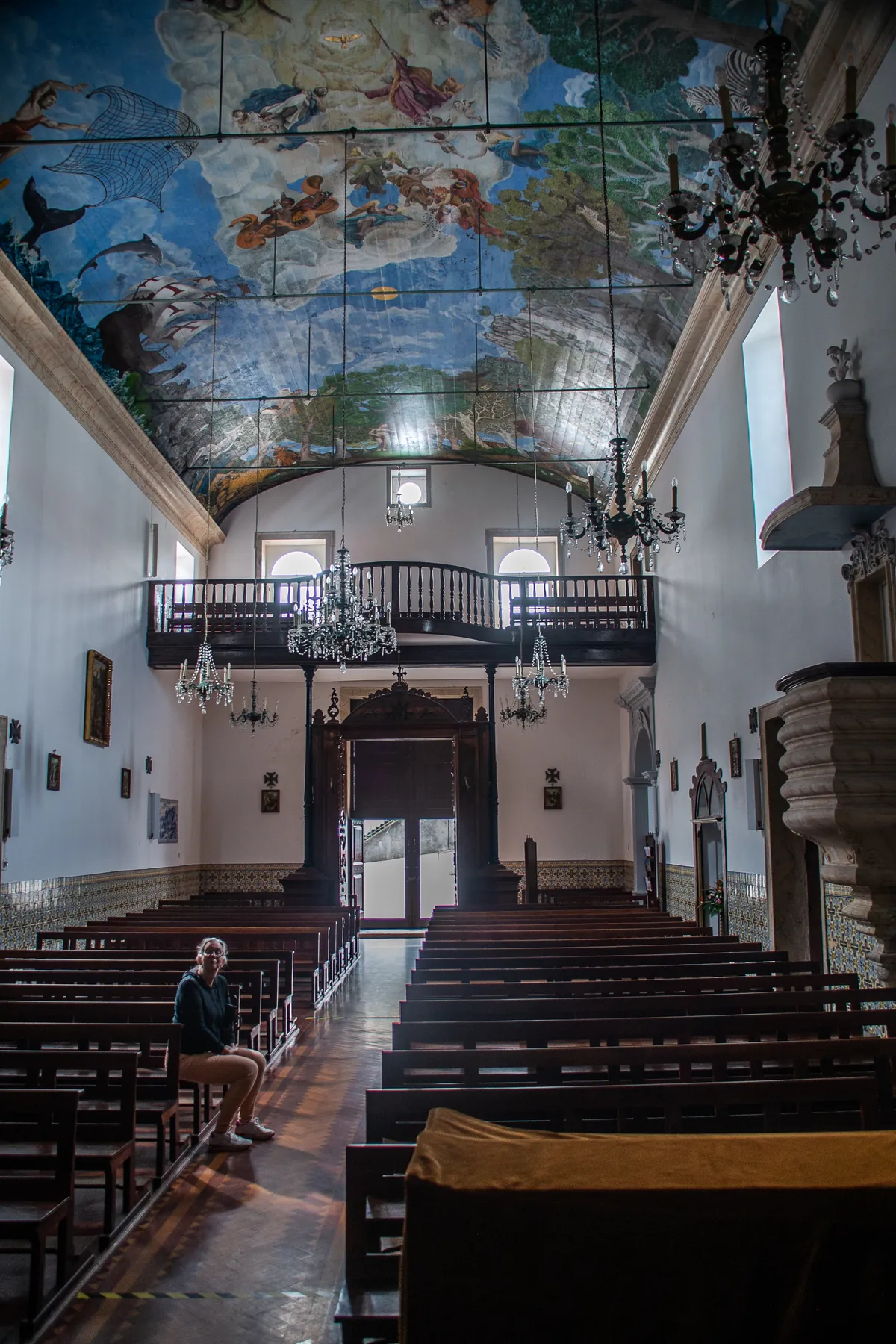
On a bruised-sky morning in 1540 a wooden crate noses into the basalt cove below Ponta Delgada, nudged south by the same relentless nortada that still flings salt against the cliffs. Inside, islanders later swore, lay a carved figure of Bom Jesus – Christ the Good – and the arrival has been rehearsed ever since in every September procession that climbs the lane past the church. The Atlantic is never out of sight here; even at 188 m above sea-level the horizon fills the kitchen windows of the scattered stone houses, while the 15-million-year-old laurel forest – a UNESCO World Heritage site – presses down from the ridge like green velvet that never quite dries.
The north-facing court
The man who claimed both crate and cove was Manoel Affonso Sanha, a squire in service to Prince Henry the Navigator. Granted the valley in sesmaria – the Portuguese equivalent of a mediaeval land charter – he built the first chapel to Bom Jesus and in 1550 saw the settlement elevated to parish. The name, however, is geography, not hagiography: the early chronicler Gaspar Frutuoso sketched a “thin point” of black lava that jabs into the ocean. Locals still call the place Corte do Norte – the Northern Court – because 17th-century sugar and wine fortunes built manor houses along the lanes, their granite doorways carved with armorial wheels and anchors. Inside the parish church Affonso Sanha lies beside his grandson António de Carvalhal, Knight of the Order of Christ and courtier to the House of Braganza; two generations under the same flagstones, the silence broken only by the creak of the cedar-wood confessional.
When the valley re-enacts itself
During the first weekend of September the population trebles. The arraial of the Santísimo Sacramento – locally just the Bom Jesus fair – pulls worshippers from Funchal fishing boats and Porto Santo ferries. Voices rise with candle-smoke, boots scuff the same basalt cobbles that carried 16th-century sandals, and the air is thick with wet laurel and sugar-cane spirit. The liturgical feast falls on 1 January, but September is when the valley shows its communal pulse: a moment when centuries slide off the shoulders of the procession like a silk cloak.
Forest, water and the sound of moss
Nine hundred and thirty-nine hectares of the parish lie inside Madeira Natural Park. Footpaths thread the Laurissilva, crossing irrigation channels – levadas – that still borrow gravity to carry rainfall from the central massif to banana terraces above the coast. Walk ten minutes upstream and the world condenses: the smell of wet soil and bay laurel, the drip of condensation from Til flowers, the Atlantic reduced to a distant bass note beyond the ridge. Locals insist the forest has its own weather; umbrellas sprout from rucksacks even when the coast is dazzling.
Population 1,043, tide 1
The 2021 census counted exactly 1,043 souls spread along the coastal shelf and up the terraced slope – a density low enough for every household to keep a woodpile and a fishing rod. In 1733 the crown carved out the neighbouring curacy of Boaventura, yet Ponta Delgada absorbed the amputation without fuss; space has never been scarce on this north-facing lip of Madeira. Ask a café owner the time and he will consult the sea first, the clock second.
The wayside calvary beside Igreja do Senhor Bom Jesus still tilts into the wind, and every September the same northerly drives low cloud over the ridge. The crate is long gone, but the figure remains on the high altar, shouldered through the lanes once a year while the Atlantic keeps its side of the bargain: an unbroken pulse against the lava below.