Full article about Fajã Grande: where lava meets the endless Atlantic
Europe’s westernmost village clings to Flores’ basalt cliffs, waterfalls and shearwaters
Hide article Read full article
The tarmac dissolves into a basalt wall and, beyond it, 3 000 km of Atlantic roll uninterrupted to Newfoundland. Step out of the car and the wind punches in first – a wet, salt-stiff westerly that feels as if it has been sharpening itself on open ocean since Boston.
Two hundred and twenty souls occupy 13 km² of narrow lava terraces that climb to 230 m. Cows graze between hydrangea hedges; the only daytime soundtrack is their bells and the slow drip of a levada. At dusk Cory’s shearwaters return from the sea, skimming the ridge like thrown paper planes.
What to see
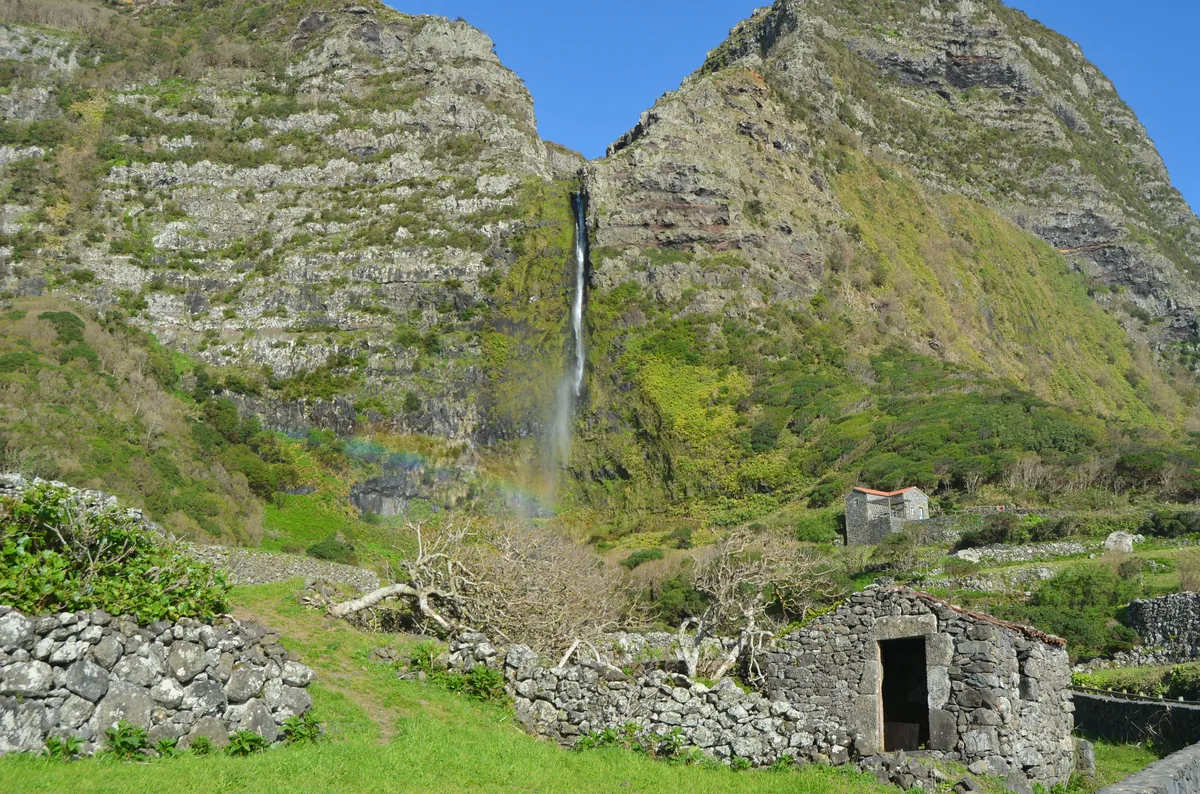
Europe’s western geopark threshold begins here. The coastal basalts stack in 20-million-year-old layers, each a ledger of ancient eruptions. Follow the dirt track up the Ribeira Grande valley: three miles, four waterfalls. The last, Poço do Bacalhau, plunges 90 m into a summer swimming bowl that tops out at 18 °C – cold enough to make a Sloane Ranger squeal.
Two volcanic-sand beaches fly Blue Flags. Fajã Grande’s 200 m crescent has umbrellas only in July and August; Fajãzinha, a 25-minute walk south, is empty the rest of the year. Surf can be vicious – enter only when the lifegue hoists green.
How daily life works
Central café unlocks at 07:00 and stops serving toast and espresso at 11:00 sharp; it doubles as the parish noticeboard and unofficial taxi dispatch. Dias grocery receives bread from Santa Cruz on Monday–Saturday – arrive after 09:00 and you’ll be palming frozen loaves by Friday night.
Hospital appointments are in Santa Cruz, an hour of hair-pin bends. Miss the 08:00 ferry from Lajes – 20 km away – and Corvo or Faial wait until next week.
Where to sleep
Only three registered properties exist. Quinta da Meia Eira (€80) lets you pick kale and passion fruit for dinner; Hostel 13 (€25 bunks) shutters November–March. August is booked three months ahead – the nearest alternative is a 45-minute drive back over the island’s spine.
What to pack
Knee-high boots – the moss-slick flagstones could humiliate a mountain goat. A proper waterproof; it rains roughly every other day. And a head-torch – at 22:00 the darkness is absolute, with no streetlights between hamlets.
When night falls the Ponta dos Rosais lighthouse sweeps its beam every 15 seconds across whitewashed gables, then releases the village back to starlight and the hush of the Atlantic breathing on the lava shore.