Full article about Lajedo, Flores: where wind knits salt into stone
Population 75, cliff-edge gardens and basalt lungs above 300 m Atlantic drops
Hide article Read full article
The wind practices percussion on Lajedo
At 207 m above the Atlantic the sheets still snap on the line in mid-August. The wind isn’t a gust; it’s a lung. Salt fills the mouth, shoulders learn their angle, and the 75 registered residents hear not the weather but the hush that makes their own pulse audible. Curtains billow inward as if the sky were trying to climb through the window and join the supper table.
Geometry of staying put
Seven square kilometres translate into footsteps: the distance between a gate and the field where a single cow lows at 18:00 sharp. Eleven souls per square kilometre can be listed on two hands—Dona Amélia who keeps the white-faced goats, Zé do Telhado (so named after he re-thatched his own roof), the twins who still catch the parish kombi to the school in Lajes. Houses huddle, walls 60 cm thick, apertures the size of a prayer book, roofs bent as if apologising to the basalt beneath them. The stone terraces are not picturesque; they are vertebrae, holding the island’s edge from sliding into the sea.
Demography here is theatre, not statistics. Five barefoot children tear through beetroot plots; twenty elders occupy the concrete bench outside a café that no longer opens on Mondays. Between them yawns the space where Ricardo’s door knocks in the frame since he left for St John’s, Newfoundland. Silence is not contemplative; it is the sound of a sack of grain emptying through a hole no one has patched.
Scenery as contract
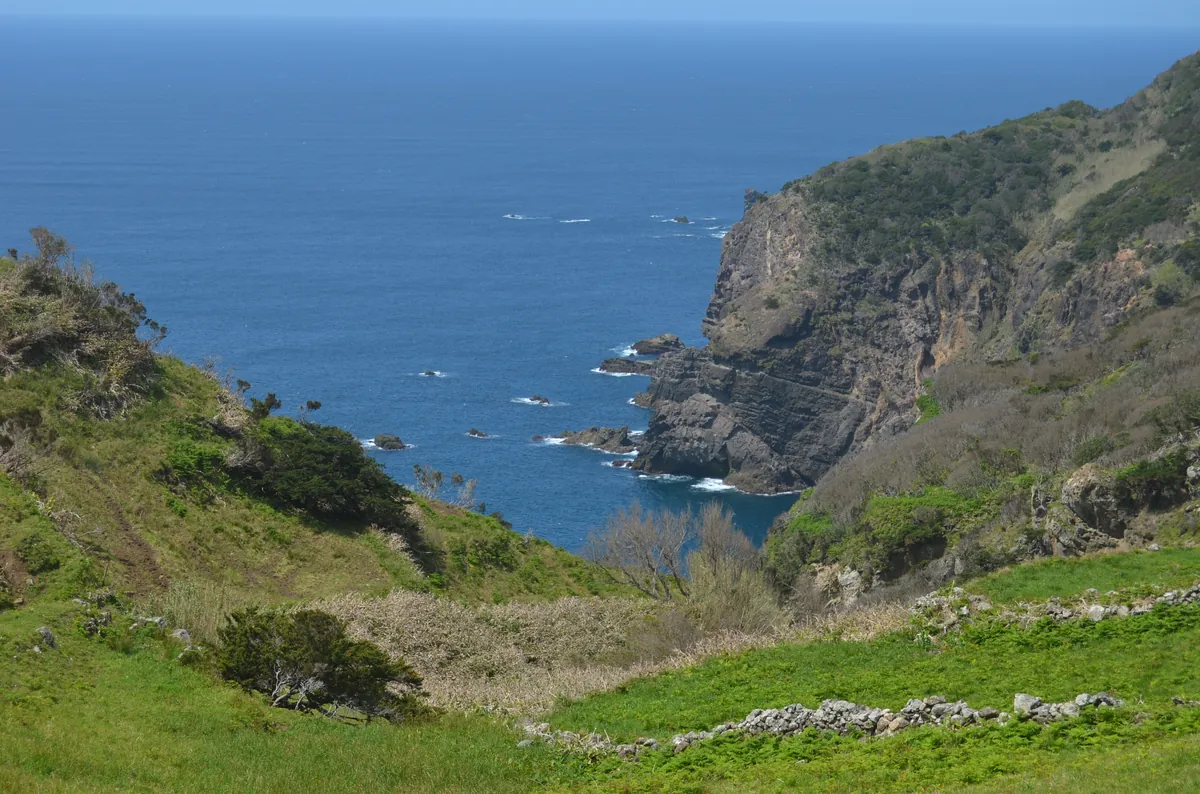
UNESCO Global Geopark status is not a badge; it is a bruise. Every footstep re-opens geology: molten rock that cooled in the last ice age still burns the soles of whoever crosses the pasture for milk. Cliffs are not viewpoints; they are full stops. The world ends in a 300 m drop where gulls skim scalp-height. Pasture green is not colour but scent—wet basalt, fresh dung, life insisting on germination though the odds read failure.
Vines crouch like contraband. There are no heroic terraces, only vegetable gardens that happen to hold grapes. Each vine is a fist raised at the wind. The wine is not poured; it is chewed—taste of chipped stone, swell tide, brine. When Zé Manel offers a glass it is an entrance exam: do you have the stomach to remain?
What remains
At dusk, when light slips behind Morro Alto and the sky appears to pour molten copper into the sea, Lajedo confesses its true nature: not a village but a duration. Sap moves through ancient fig trees at the speed of calendars. The wall that collapses does so one Tuesday at a time. Dona Rosa’s allotment yields less each season, yet it yields. That is the creed—produce less, but produce; stay when the ferry lists the names of everyone who will not come back; believe that 75 people still fill a nave, a procession, a grave.
The wind keeps at it, diagonal and unabated. It rattles doors, but also ribs. One day the last resident will lock up, yet the draught will go on knocking, measuring absence against the same stone.