Full article about Calheta: Where Atlantic Salt Clings to Basalt Walls
Hear children's voices echo off 300-year-old terraces before diving into lava-carved fajãs.
Hide article Read full article
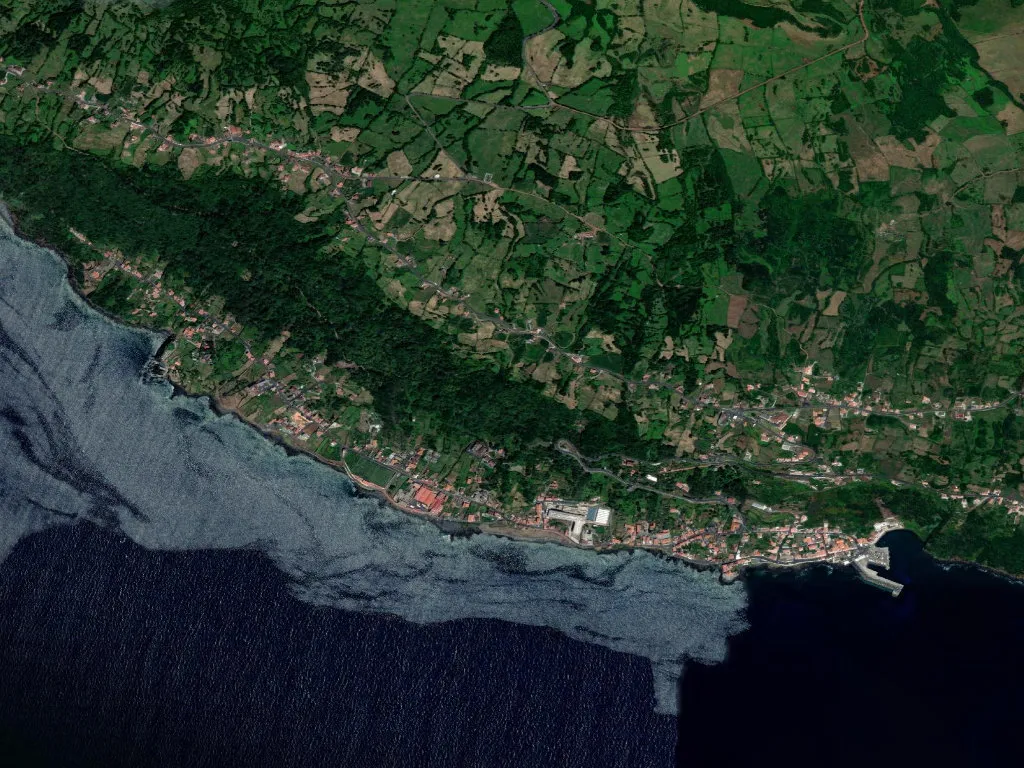
Sunlight slams the north coast of São Jorge so hard the basalt seems to radiate it back. In Calheta the Atlantic is not a view but a house-guest: brine freckles the window-panes, the tide keeps its own timetable, and every wall tastes faintly of salt. Houses stagger down the cliff in uneven terraces, their footpaths polished to a gun-metal sheen by three centuries of boots.
Between generations
There are 1,275 souls here, spread across 19 km² of almost vertical island. That works out at 67 neighbours per square kilometre – enough space for a child’s voice to ricochet off stone before it dies. On weekday mornings 177 pupils march up to the primary school; 294 pensioners watch from granite benches outside the 18th-century church, timing the bus that wheezes in from Velas. Grandparents still hand down the tide tables with the soup recipe, and if the roof needs rethatching the same family that laid the original canna will climb the ladder.
The coast that carves
Calheta is a plumb-line parish: sea level at its toes, 750 m at its brow. The drop creates microclimates you can feel on the same walk: dew-soaked banana leaves in the fajã at dawn, arid maize terraces at midday, a wind that never lets the air go stale. The fajãs – lava deltas wrested from the ocean by 1757 and 1808 landslides – are pockets of black soil where yams, sweet potato and the island’s small white maize still grow. You reach them by footpaths cut into the basalt; every descent is a negotiation between quadriceps and vertigo.
Stone, sea and silence
There is no flat ground. Streets become staircases without warning; knees learn the dialect quickly. The basalt is everywhere – in walls, door jambs, the slabs that bridge the gutters – and it stores the day’s heat like a storage heater, releasing it after dark so the village cats sleep on the warmest stone. Arriving takes planning: two daily ferries from Pico, one small plane from Terceira that cancels in a shrug of fog. The difficulty is the filter. In August you can still have a lava-cobbled cove to yourself, walk the cliff trail for two hours and meet only a dairy farmer moving his cows to the high pastures.
Dusk turns the coast the colour of a bruise. Windows light up one by one, amber pixels against the Atlantic’s black screen. When the wind drops you hear the island’s heartbeat: not waves but a single low chord that has sounded since before anyone kept time. It follows you home – a bass note you recognise in London traffic, in Heathrow queues – the sound of Calheta still measuring the world in swell.