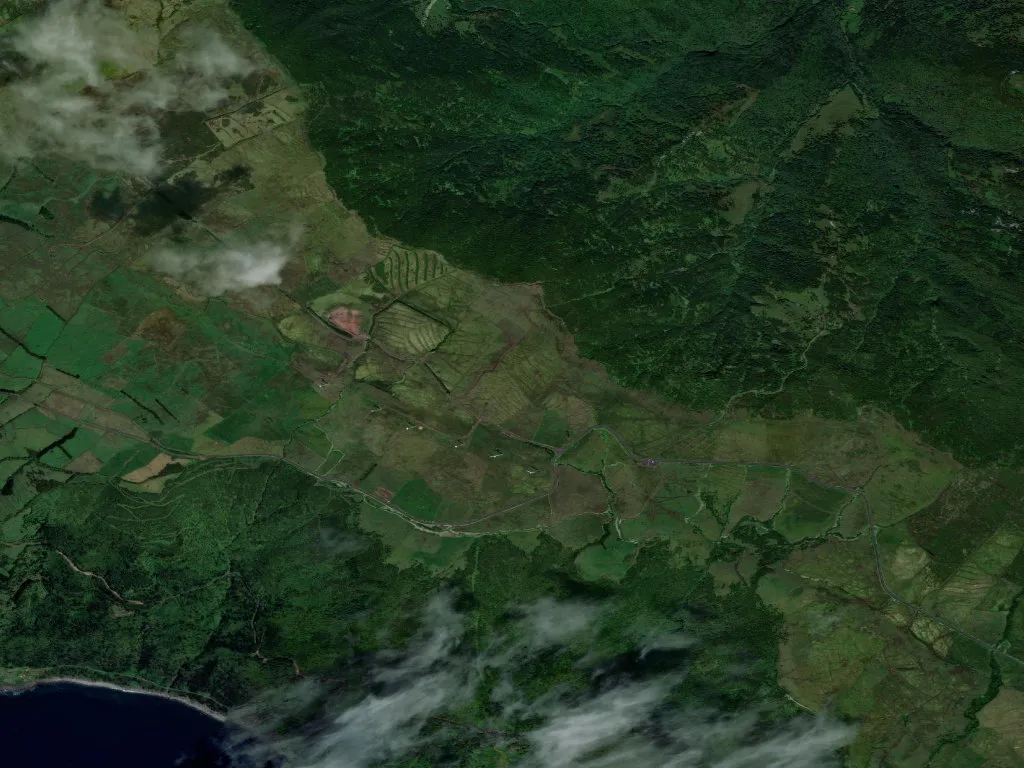
Full article about Ribeira Seca
Black-basalt cottages, invisible streams and wood-smoke kitchens 715 m above Calheta de São Jorge
Hide article Read full article
The sheet that refuses to leave
At 715 m the mist is not above Ribeira Seca – it is inside it. Atlantic air, salt-laden and heavy as wet wool, climbs the cliff from the north coast and stalls, turning the parish into a slow-motion cloud chamber. Breath condenses faster than it is drawn; every inhalation tastes of lava rock and brine. The name itself is a local joke: “Dry River” is drenched nine days out of ten. Water seeps from basalt fissures, drips off hydrangea leaves the size of dinner plates and runs in invisible threads under the pasture. Stand still for a moment and you can hear it trickling beneath the grass roots, a subterranean gossip network that keeps the cows, the cabbages and the 897 inhabitants reliably informed.
Basalt fortresses
Houses here are built like sea walls. Two-foot-thick walls of black basalt absorb the shock of southerly gales; roofs pitch steeply enough to shake off the horizontal rain. Whitewash is applied only where it will not be scoured away – around door frames, under eaves – so from a distance the settlements look like negative photographs, light bleeding through dark. Many still wear the timber upper lip of a corn-threshing platform, now repurposed as a rack for grandchildren’s mountain bikes who arrive each July with SPF 50 and no idea how to address a cow.
The road up from Calheta de São Jorge is a 10 km coil of blind bends; drivers toot twice before each one, a polite Azorean warning that translates roughly as “I’m still here, don’t die”. Google Maps shows the route as a faint grey vein – the cartographer’s equivalent of “are you sure?” – and the internet drops out long before you reach the first gate. What you get instead is signal of a different sort: the smell of wood smoke, the metallic tang of cut banana leaves, the low hum of a parish that has remembered how to live without an audience.
Kitchen diplomacy
There is no brasserie, no tasting menu, no chalkboard in English. If you want to eat you ask in the grocer’s whether Dona Lúcia is making caldeirada today. She will lift the lid on a pot the colour of sunset and ladle saffron broth over wreckfish that was swimming when the morning fog lifted. Side dishes arrive unannounced: yam the texture of chestnut, purple sweet potato roasted in the dying embers of the bread oven, a slice of São Jorge cheese whose peppery bite makes your nose tingle like champagne. Payment is settled in phone numbers and future invitations; the bill never reaches the table.
Vertical conversations
Walking is the parish’s preferred form of chat. Paths tilt at calf-shredding gradients, then vanish into cow parsley and cane. Just when you are convinced the route has been swallowed by bramble, a stone stile appears, or a wooden gate balanced on its last hinge, and the track re-emerges on a ridge where the ocean suddenly feels close enough to skim stones into. To the north the coastline peels away in a series of fajãs – lava deltas reachable only by boat or by the kind of knees that have spent decades climbing for milking. The air is so clear you can count the breakers on the Praia do Simão Dias twelve kilometres away, each white line flicking on and off like Morse code.
Nightfall arithmetic
Dusk is calculated not by the clock but by the moment the fog sinks low enough to erase the antenna on Pico da Esperança. Lights come on one by one – not street lamps, but kitchen windows, yellow rectangles that hang in the grey like unanswered postcards. The sound of the day changes key: cattle grids clang, a dog barks once, the wind drops and the Atlantic resumes its bass note three hundred metres below. Time does not stop here; it merely downshifts, engine braking on the descent towards winter. Those who remain – 229 of them over sixty – do so because they have learnt the metric of patience: how many days until the first cistus flowers, how many tides until the boat can land, how many seasons until a grandchild returns with a rucksack full of city habits to be unlearned.