Full article about Topo (Nossa Senhora do Rosário)
Topo (Calheta de São Jorge) is a wind-lashed hamlet of 440 souls living off swapped seabream, cliff vines and ferry-less Tuesdays
Hide article Read full article
Where the Island Exhales
The wind greets you first, freighted with salt and the steam of simmering beans. It slips through cracked car windows as you drop through the final hairpins, announcing that the map’s promise of “Topo” has finally run out of road. Below, Atlantic vapour coils up from basalt pools; above, the only thing between you and Morocco is 2,000 km of weather.
Living on the Lip
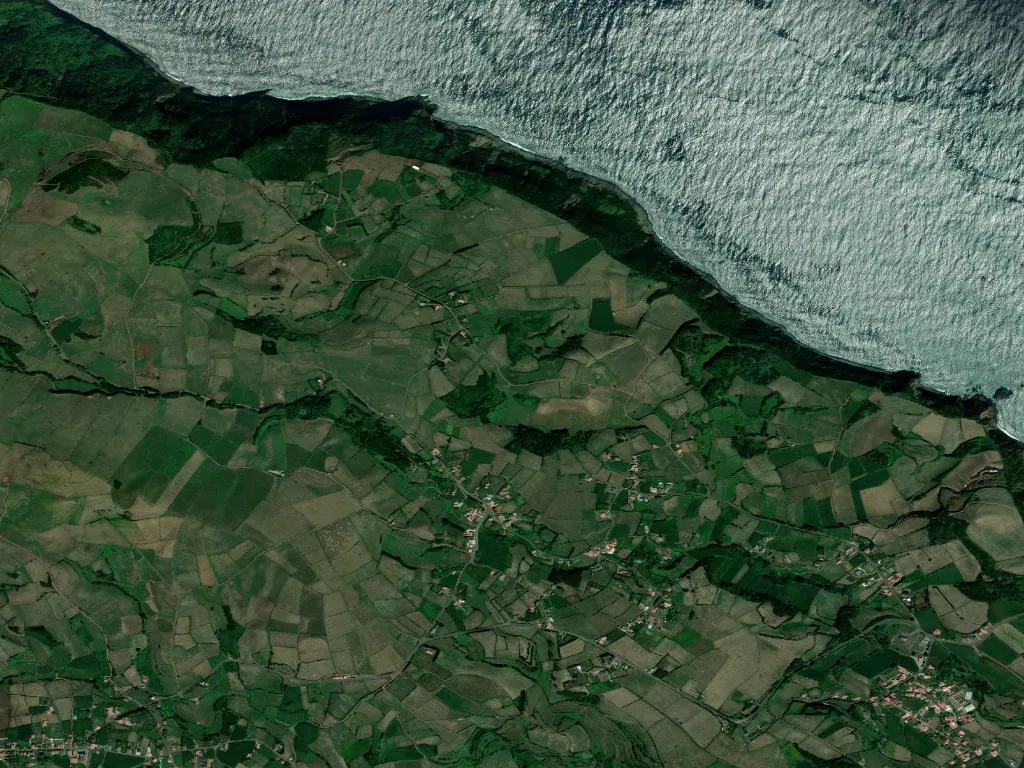
Four hundred and forty people winter here, a few dozen more when July drags the diaspora home. Their houses clamp themselves to a 265-metre cliff like limpets; salt devours the mortar, rusts the gates, flavours the laundry left too long on the line. Grapevines hug the ground—any upright cane would be lashed to death—while cabbages snuggle against sun-warmed stone, the island’s only radiators. Cattle tracks double as lanes; a post van reversing becomes parish news.
The Logistics of Almost-Nowhere
When a northerly swell muscles down the channel, the ferry stays in Velas and the bakery shelves stay empty. That is the moment to inventory the fridge: António’s surplus blackspot seabream, Dona Idalina’s cheese swapped for lemons, the UHT stash reserved for hurricanes and hangovers. A GP appointment requires three days’ notice; a supermarket run is synchronised with whoever owns the roomiest Peugeot. Isolation here is not romantic metaphor but Tuesday routine—alarm at six, hitch at seven, hope the driver remembers your name.
What Passes for Cuisine
There are no brasseries, only the warehouse door of the old grain co-op where whisky is poured into plastic cups while we wait for the boat’s horn. Dinner is whatever the previous night’s currents delivered: boca-negra fried in home-crushed tomato, yanked from Laurinda’s back-garden yam mound. Eating “out” means sardines slipped into supermarket sliced bread, eaten on the breakwater while Mt Pico’s snowcap turns from rose to bruise.
At half-past six the wind drops, and the church bell of Nossa Senhora do Rosário rolls its bronze voice across the ravine. The sound slips through half-shut windows, stalls conversations, suspends time. In that hush—when the sun anchors itself to the basalt and the horizon begins to smelt gold into indigo—you realise Topo is not the end of the world; it is simply where the world pauses, draws breath, and begins again.