Full article about Manadas: Where São Jorge’s Basalt Walls Breathe
Stone lanes, kelp-kissed wine and 361 neighbours who keep time by tide
Hide article Read full article
Basalt geometry
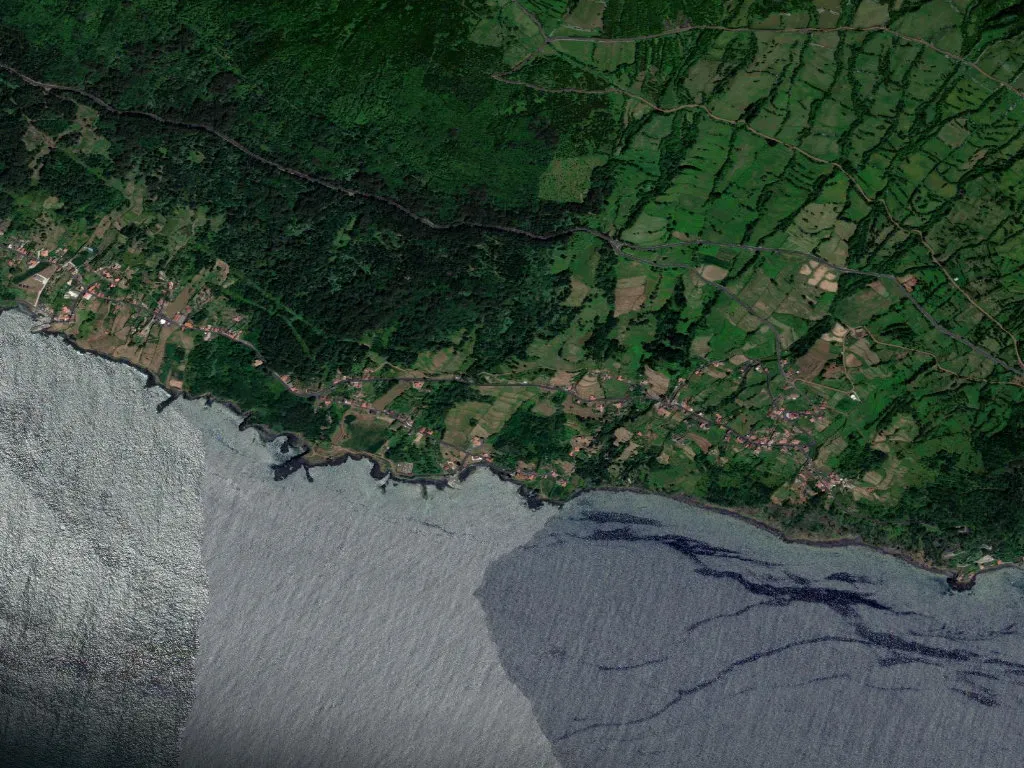
The Atlantic wind shoulders open every door on São Jorge’s north coast. In Manadas it gathers the terraced houses into a huddle, as if they’re gossiping over bica about tomorrow’s weather. Perched at 122 m, the parish unrolls across 11 km² where 361 residents keep time by tide and milking, not by the clock.
We are inside the Azores Geopark, but forget the brochure shots. Here basalt is a working material: dry-stone walls that restrain caramel-coloured cows, stair treads that never slicken in the mist, foundations that outlast every mortgage. With only 33 people per km² the land exhales; fields switch jerseys with the season—bottle-green after winter rain, sun-bleached olive by August, always salt-laced from the spray.
Vines survive in pocket-handkerchief plots the cartographers missed. There are no tutored tastings, just a neighbour who might haul you into a stone lagar to tread Caste-lão grapes, then pour the wine from a glass demijohn older than Heathrow. Accept the glass; it tastes of high-wire acidity and kelp, of someone who hoed this black lava by hand.
What the maps leave out
Yes, the 18th-century church of Santa Bárbara is national heritage, but heritage here is also the open haylofts stacked with firewood and family sagas, the spring where women still balance plastic carafes because that’s simply the route from source to kitchen, the cobbled lanes whose grass seams refuse to acknowledge tarmac.
Forty-seven children under fourteen keep the stone steps tuned to the cadence of scuffed trainers; eighty-two elders remember when every dwelling kept its own cow, pig and henhouse—and plenty still do. The grocer opens six days a week, the church fills on Sunday, and between generations there is always enough news to keep the café in business.
Arriving—and why you might stay
Flying into São Jorge’s airstrip, you drive west along the EN1, each bend revealing another lava-fanged promontory that no postcard publisher has discovered. There is no reason to hurry; the ocean below punches its timecard with metronomic reliability, and the prevailing wind hauls wood-smoke from hearths that burn even in August to keep humidity from the laundry. Manadas doesn’t sell itself, it just is—quietly, saltily, on island time.