Full article about Ribeira Chã: Basalt Ledge Above the Azorean Sea
A tiny basalt parish where stone walls, 365 souls and Atlantic light outnumber tourists
Hide article Read full article
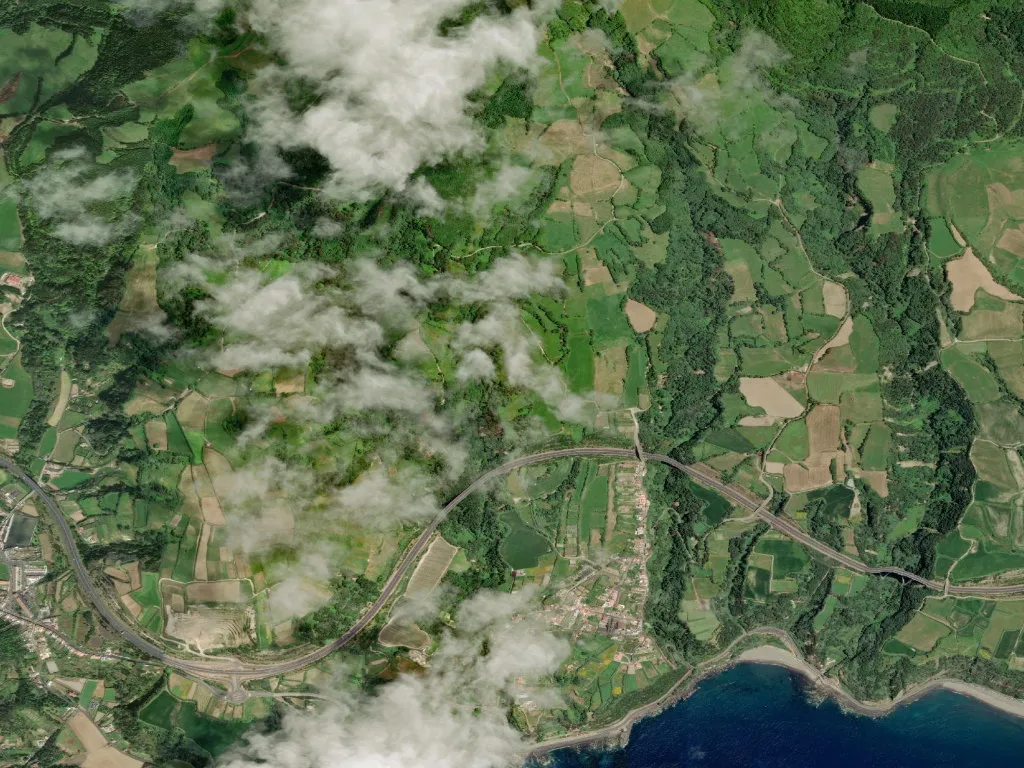
The lane corkscrews between hedges of midnight basalt, ivy stitching the joints. Beyond, the Atlantic reads as a ruler-straight horizon, gunmetal one minute, cobalt the next, as clouds skim in. At 160 m above sea level Ribeira Chã hovers – a 265-hectare ledge caught halfway between Lagoa’s crater-dotted interior and the sea. Three hundred and sixty-five souls live here, a head-count that matches the calendar and feels equally deliberate: you stay only if you can read the island’s moods – the winter humidity that smells of turned earth and brine, the summer light that lingers until half-past nine.
Built on black stone
Every wall is a geology lesson. Basalt, prised from the 1757 earthquake’s rubble, forms gate pillars, pig-pens, the church steps worn smooth by Sunday shoes. Nossa Senhora do Rosário, listed by the regional government since 1986, anchors the square with walls 80 cm thick – the Azorean answer to Atlantic gales. Roofs pitch steeply, canal tiles channeling away 1,200 mm of rain a year; south-facing windows are postcard-sized to keep out weather rather than prying eyes. Since 2013 the parish has sat inside the Azores Geopark, but the accolade changes nothing for farmers who still lever stones from the field each spring to make room for another row of kale.
The arithmetic of staying
Census night 2021 found 45 children under 14 and 55 residents over 65; the gap is narrow enough to feel like a collective breath held. Density is 146 people per km², yet houses stand apart, washed in the hush of grazing cattle. Time is measured by light: low, watery beams between November and March, then the long amber wash that turns pastures the colour of Granny Smiths and lets Holstein-Friesians keep grazing until the stars come out. Behind dry-stone corrals, micro-vines of Verdelho and Arinto huddle against the wind; total production rarely tops 500 litres, most of it drunk at Christmas tables in the parish.
Where lava meets tide
The EN1-1A loops past the ridge, but the final descent is a single-track lane with 15-metre hairpins that discourages coach parties. Black-sand Ribeira Chã beach lies two kilometres away at the foot of a rutted path; you hear the breakers long before you see them. On still days the ocean climbs the slope as salt mist, seasoning the smoke from wood stoves. When the fog arrives – relative humidity 85 % – the village folds into itself, colours reduced to charcoal walls and the phosphorescent green of moss. Then the sky tears open, afternoon light ignites the pastures, and you understand why 365 people refuse to leave a place whose calendar is written in basalt and Atlantic weather.