Full article about Achada, Azores: Atlantic cliffs, soup & silence
Achada in Nordeste, São Miguel, is a high-cliff hamlet of lava pools, cedar-smoke air and festa soup served before Atlantic breakers.
Hide article Read full article
The sound arrives first.
A stream’s low murmur reaches you before the water itself, a soft announcement that carries salt and wet basalt. Then the colour: not the postcard greens of Sete Cidades but the bruised, high-altitude pasture you only get at 300 m on São Miguel’s windward slope, stitched together with black-stone walls that look like running seams in a frayed blanket. The air smells of winter woodsmoke from slow-burning cryptomeria and the iodine nip of the Atlantic somewhere below the cliff.
Where the land ends without a beach
Achada is the smallest parish in Nordeste – 387 residents, 283 m above the ocean – and feels even emptier when you drive through at nine on a Tuesday. The name simply means “flat place”, a geologic joke on an island that does almost nothing but tilt. Nineteenth-century São João Baptista stands white against a changeable sky, its forecourt paved with hexagonal basalt where men in flat caps weigh the morning.
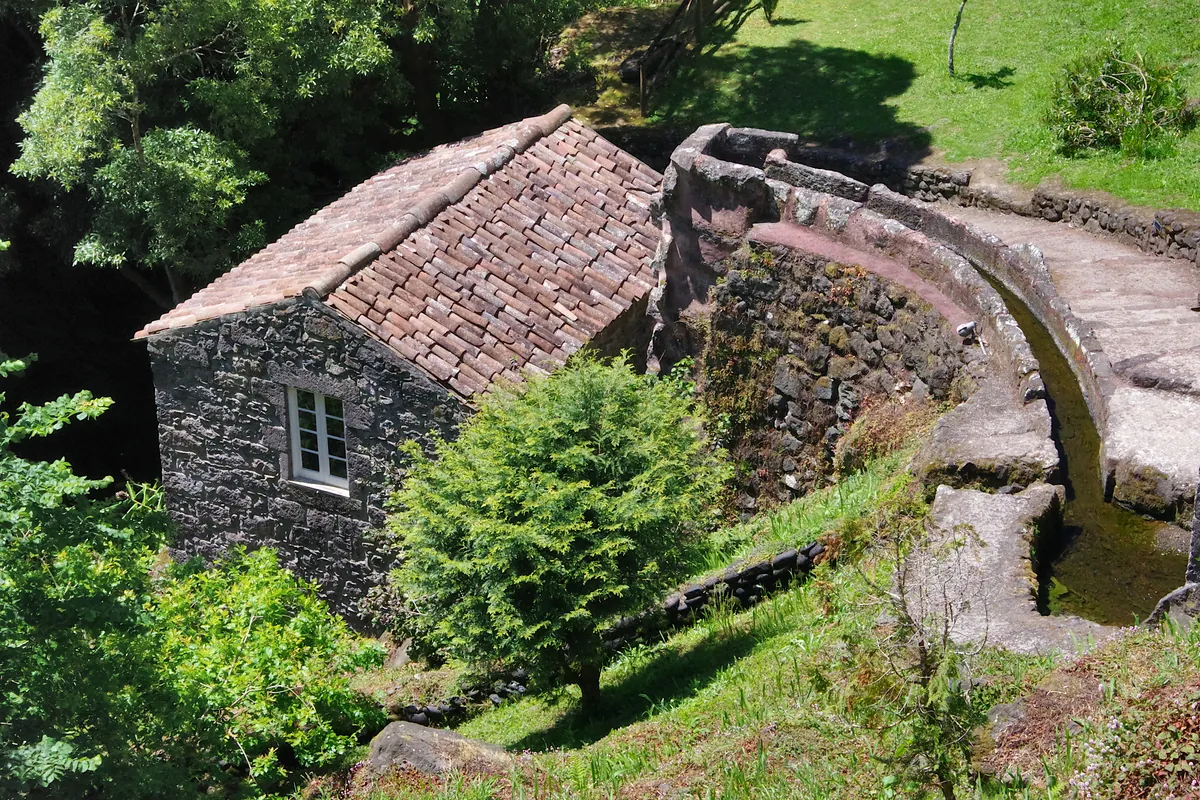
Landscape here is not a view you frame; it is something you walk into. Footpath PR05-SMI drops past ruined watermills and Japanese cedar, then spits you out onto a balcony of air. Below, the Atlantic detonates against 70 m of columnar basalt; there is no cove, no sand, no concession to swimmers. Ten minutes east, however, the natural lava pools of São Pedro de Nordestinho give you a place to slip into the ocean without being towed to Newfoundland.
The taste of being the last ones left
Cooking at this altitude is improvisation governed by whatever the sea and slope offer. Holy Ghost soup – a saffron-stained pot of beef, potatoes and the island’s own yam – is ladled out during festas to feed half the county; the fish stew arrives made with lingueirão razor clams prised off the same cliffs you hiked that morning. Order a bolo lêvedo at the only café that remembered to open and it comes torn in half, butter melting into the sweet crumb like a hot teacake with Azorean manners.
Almost half the village is over 65; the young left for Toronto, Fall River or the vineyards of southern Brazil, locking doors behind them. Yet every August the fields below the church still host the Day of the Harvest, when a 1950s reaper-binder is coaxed into life to show how corn was cut before the Italians brought tractors. On Epiphany the Canto dos Reis wanders through the fog: men in woollen caps singing medieval villancicos no one can date, guided only by the parish priest’s torch and the promise of a glass of aguardente.
When the cloud ceiling descends off the Serra da Tronqueira, Achada vanishes. All that remains is the stream, the church bell counting the hours, and the mineral breath of wet stone rising from the walls – a scent as old as the lava that first cooled here, and as stubborn as the 387 people who refused to leave.