Full article about Santo António de Nordestinho
Thursday wood-fired loaves, priolo bullfinch trails and June flower processions at 271 m
Hide article Read full article
Thursday Bread, Rising
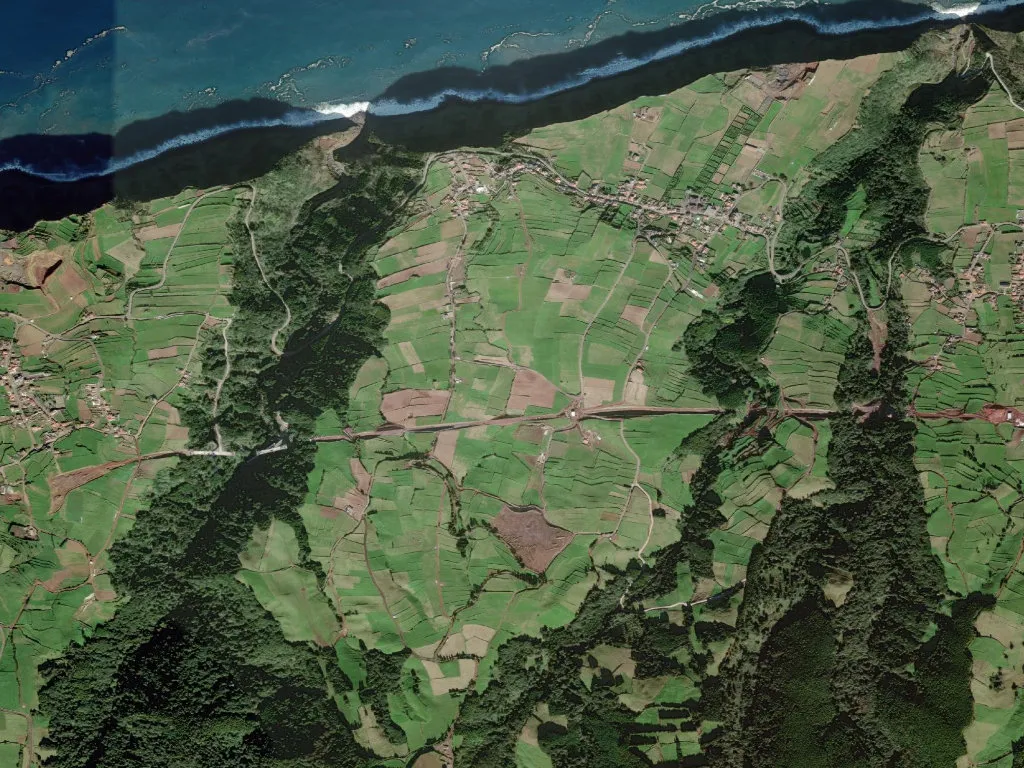
The communal oven exhales a plume of cryptomeria smoke that smells of warm cornbread and damp moss. Inside, six women work in wordless rotation: tipping yellow maize flour onto boards fissured by decades of Thursday mornings, folding, pressing, turning. Through the doorway the cloud lifts just enough to expose the tiny terraces stitched into the slope below Pico da Vara, indigo basalt walls corralling sweet-potato foliage still jewelled with rain. At 271 m above sea-level the smallest parish in Nordeste—260 souls across 937 ha—keeps time by yeast and firewood rather than by the ferry timetable that rules the coast.
When Work Became Festival
Every other June the village stages the Festa do Trabalho e do Pão, a one-day resurrection of pre-industrial choreography. Children from the primary school walk behind the last working reaper-binder on the island, gathering sheaves of island maize that will be threshed on the stone threshing-floor. Dough, cloaked in linen, snoozes in wicker baskets before the oven. On 13 June, Santo António’s eve, parishioners thread the lanes with branches of blue- and rose-petalled hydrangeas—flor-de-santos—then follow the statue of the saint round the 18th-century churchyard, gilded wood catching candlelight like low sun on water.
Mountain that Guards a Bird
Trail PR02-SMI begins at the Casa do Guarda, a lime-washed forester’s hut that once housed the royal gamekeeper. Pastures dotted with purple heather and holly give way to cedar and laurel as the path climbs São Miguel’s roof. Here, on the windward escarpment, the priolo bullfinch—Pyrrhula murina, confined to 6,000 ha of eastern cloud forest—flits between branches. The Priolo Environment Centre’s volunteer nursery produces 40,000 endemic seedlings a year; spend a morning planting Vaccinium cylindraceum and you leave with basalt grit beneath your nails and a stake in the bird’s survival.
Slope-Side Table
Turnip broth thickened with blood sausage burbles on the wood range, ladled into clay bowls with doorstop slices of sourdough. In January the matança still summons neighbours: belly pork hangs in the smokehouse, air-cured sausages bead with mountain dew, crackling from the pig’s ear disappears the instant it hits the board. The parish sweet tooth is answered by Santo António’s own sponge, scented with island lime zest, and cinnamon biscuits dunked in vinho de cheiro, the lightly sparkling red made from terraces too steep for a tractor.
Under the Darkest Sky
Dusk at the Atalhada lookout: basalt cottages with wooden eaves, tiny fields inked in by walls, the Atlantic a charcoal stripe on the horizon. On moonless nights the Milky Way arches from ridgeline to ridgeline, unpolluted by anything brighter than a cooking fire. Silence is interrupted only by wind riffling the valley of Ribeira do Guilherme and, somewhere below, the single toll of a bell counting the hour. You stand on chilled stone, lose count of shooting stars, and feel the island exhale.