Full article about Ajuda da Bretanha: Milk-Scented Dawn Above the Atlantic
Fog drifts over lava-walled pastures where 14 farms ship 38,000 L of Azorean milk before breakfast.
Hide article Read full article
A morning in Ajuda da Bretanha
The fog unrolls so slowly that the Holsteins notice it only when damp noses touch their flanks. At 239 metres above the Atlantic, the air is neither cool nor warm; it tastes of wet basalt and of silage fermenting in concrete silos. Somewhere beyond the hedgerows the 07:00 whistle drifts across from LactAçores, the island-owned dairy that employs 47 locals on the Regional Road 5-1. Six hundred and fifty-two people live here, scattered across seven square kilometres of wrinkled pasture that averages 92 souls per km²—quiet enough to hear a cow’s chain clink, never lonely enough to need a stranger’s voice.
Milk country
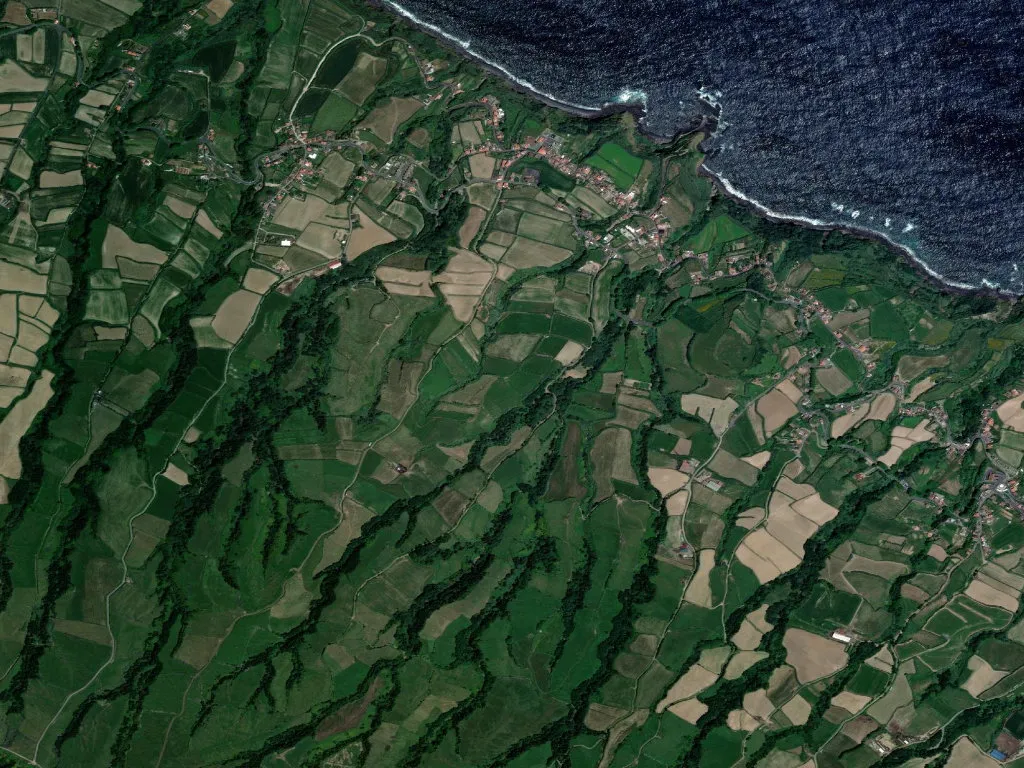
Fields are clipped into exact rectangles, walled by moss-covered lava and planted with Italian ryegrass that flashes silver when the wind turns. Fourteen family farms feed the Co-operative Agrícola dos Açores; every dawn they pump 38,000 litres into stainless tankers at €0.38 a litre under the 2024 contract. Volcanic memory is everywhere: the basalt underfoot cooled 3,900 years ago when the Sete Cidades caldera threw its final tantrum, and the land still drinks rainfall as fast as it falls. UNESCO listed the whole parish as geopark in 2013, not for spectacle but for the way humans have read the lava and grassed it over.
Life without a brochure
There are no ticketed viewpoints, no baroque façades. Low houses line Rua Direita and Rua do Moínho; hydrangeas along the verge shift from searing blue to lilac depending on whether the soil hovers at pH 5.2 or 6.8. Café Central charges the same €0.60 for an espresso that António poured in 1998. The chapel of Santo António unlocks only on Sundays for a congregation of 38; 109 children share two classrooms at the primary school while 69 seniors remember bread baked in Dona Laura’s communal oven, silent since 1987. The C08 bus passes three times a day—07:15, 12:30, 17:45—yet most households keep a car for the weekly run to Ponta Delgada’s hypermarkets. That small inconvenience is a moat: visitor numbers stay low, authenticity needs no marketing plan.
Atlantic plate
O Pescador opens only at weekends. Saturday means ensopado de carne, a clay-pot stew of beef shin and island cinnamon; bowls of yam soup arrive tasting of the 1974 recipe Dona Alice refuses to update. Cheese is that morning’s fresh queijo da Quinta do Monte, sold at €6 a kilo, still tacky in its waxed paper. Fish is landed 13 km away in Rabo de Peixe at 05:30, reaches the grill by 11:00, served simply with São Jorge sweet potato and a molho de vilão whose chilli heat makes British tabasco taste like ketchup. The north-west swell breaks 2.3 km beyond the last pasture; at dusk you hear it above the creaking of eucalyptus logs on kitchen fires.
By 18:45 windows glow sodium-yellow against the slate sky. Woodsmoke, roast pork and the permanent Atlantic damp settle over the hedges. Somewhere a cow coughs, a gate chain rattles, the factory whistle sounds the shift change. Ajuda da Bretanha does not perform; it simply continues, an island within an island, breathing at the pace of grass and milk.