Full article about Candelária: Black Basalt & Atlantic Mist Above Ponta Delgada
Explore Candelária on São Miguel Island: dairy pastures, home-grown wine and UNESCO-listed lava geology 219 m above the Atlantic.
Hide article Read full article
Atlantic Drift at 219 Metres
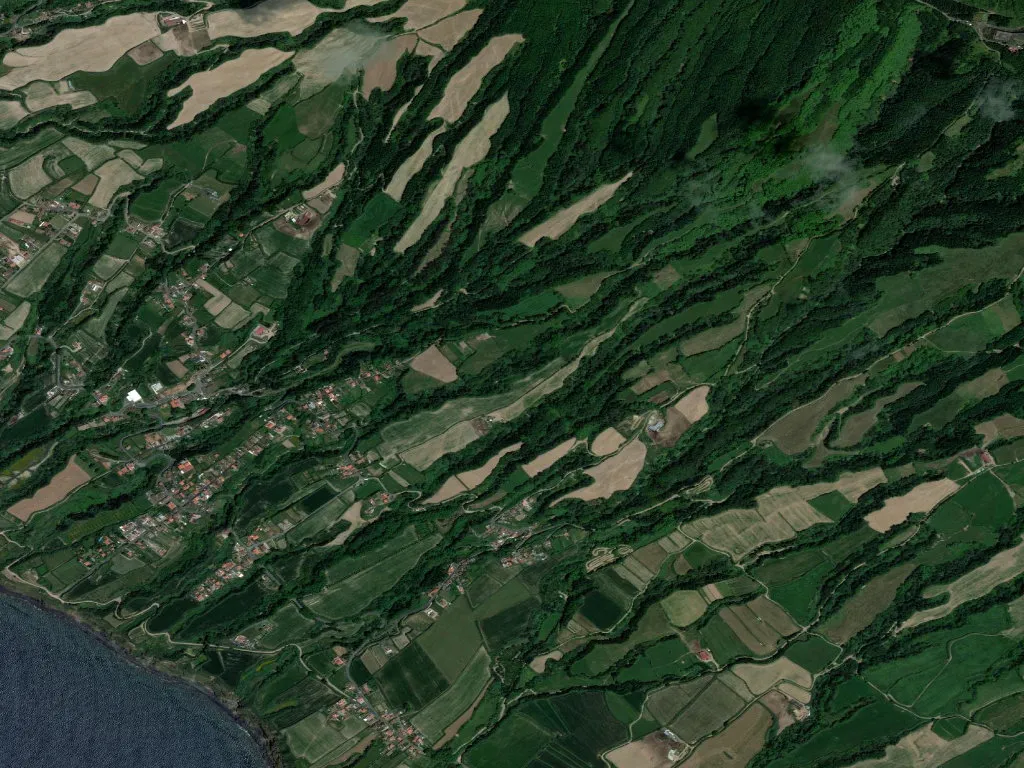
Mist lifts from rain-soaked pasture, dragged upward by an Atlantic wind that combs the fields at 219 m above sea-level. In Candelária, the hyper-green of dairy grass fractures against walls of jet-black basalt, and silence is broken only by the low of a Friesian or the groan of a wooden gate. Nine-hundred-and-seventy-six souls share 863 hectares; houses sit far enough apart that each seems to command its own slice of horizon. No one arrives clutching a selfie-stick. This is working land, where hands still know the heft of a hoe and the obstinacy of São Miguel’s volcanic loam.
Sky-Island Climate
Elevation gifts Candelária its own micro-climate—cooler than Ponta Delgada’s seafront, wetter than the Sete Cidades rim. Light changes by the minute as cloud banks roll in from the west; some mornings boundaries dissolve into white-out, others the Atlantic glints like beaten pewter between hills. Officially the parish counts 113 people per km², yet settlement feels thinner: every smallholding keeps a buffer of grass, maize or the cobalt flare of hydrangeas. The ground itself is part of the Azores Geopark, recognised by UNESCO in 2013; underfoot you tread crushed scoria, ancient pumice, ropey basalt—stone that once glowed orange, now disciplined into paddocks.
Wine Between Walls
Viticulture clings on, though without the theatre of neighbouring Pico’s marbled vineyards. Low stone currais—cow-barns—double as windbreaks for knee-high vines trained almost prostrate. Come September, families pick red American hybrid grapes by hand, destem into plastic barrels, and ferment in garden sheds. The result is a light, peppery tinto for kitchen tables rather than tasting menus; there are no tour operators, no gift-shop. Food follows the same subsistence-upgraded-by-time logic: chunky kale-and-bean soup, pot-roast beef from the yard, que fresco that still drips whey. Statistics say 140 children and 154 elders live here; generations share the same table, the same platter of home-cured linguiça.
Calendar of the Interior
Monuments? None classified. Landmarks? The single Igreja de Nossa Senhora das Dores, its tower a compass point above terracotta roofs. Inside, azulejo panels narrate the Passion in Wedgwood blues; outside, the churchyard hosts the annual festa on the third Sunday of September. Emigrants back-fly from Boston or Toronto, population doubles for 48 hours, and the night air smells of woodsmoke and roasted cinnamon-dusted milho. No wristbands, no stage bar—just a brass band, a bouncy castle, gossip rekindled after decades.
Wind as Chorus
Late afternoon, low sun gilds the basalt stripes and shadows stretch like elastic across the paddocks. Somewhere out of sight a wood-burning stove is lit; a filament of smoke unravels, dissolving in the cold air. What remains is the constant companion of Candelária: wind, freighted with salt and cow-bell clank, sculpting cypresses into leeward combs. Stand still long enough and you feel it pressing jacket to ribcage, reminding you that here landscape is not backdrop but co-author of daily life—rough, alive, impossible to mute.