Full article about Fenais da Luz: Yam Fields & Noon Bells
Ponta Delgada’s quiet parish hums to hoe-time and church bells
Hide article Read full article
Noon bell, yam fields
The bell of Nossa Senhora da Luz strikes twelve – the same one I hear from my aunt’s upstairs window on Rua da Igreja. The note drifts across the yam plots as if it were walking to Dona Lurdes’ bakery, slips along the waist-high basalt walls that separate Sr Agostinho’s vegetable patch from his yard, and dies somewhere up in Canada do Pico. Fifteen minutes by car from Ponta Delgada’s roundabouts (count the approach to Relva, then turn right onto the EN1-1A), time here keeps hoe-time: when the neighbour is “doing the seeding” everyone knows it is yam-planting week.
Irrigated land, slow light
Fenais da Luz – 2,227 residents, 7.7 km², 289 people per km² – was the latecomer parish. While São Roque was already raising its Jesuit college church, this corner of the island was still “the hayfields”, fertile flats tilled by farmers from Santa Clara. A chapel existed from 1771, yet only on 26 August 1832, by provincial decree no. 383, did the settlement become a civil parish. The present mother church, commissioned by vicar Jerónimo Cândido de Bettencourt between 1855 and 1866, is grandmother in stone: whitewash, basalt quoins, a wooden door that groans in the same spot every time. On 8 December – Feast of the Immaculate Conception – mass starts at nine, procession winds to Canada do Mato, yam-and-bean stew is served in the parish hall and espresso flows at Pastelaria O Amorim, run by António since 1983.
Volcanic soil, volcanic taste
Step into Tasquinha do Félix (left of the church, beside the BP pump) and ask for yam soup – there is no menu, Dona Rosa decides on the spot. Shredded home-grown kale, chouriço from Matias’ smokehouse and the same yam she peels with a blue-handled knife. A freshly baked bolo lêvedo arrives to melt Azorean butter. In winter the choice shifts to turnip broth – “it’s what there is, sir” – and, if it’s Friday, honey-cornbread from the Canada da Lapa bakery: €3 a round, wrapped in brown paper. No foam, no fusion: just what the terra gives, seasoned with pimenta-da-terra the way Félix’ grandmother did it.
Between green lozenges and the sea
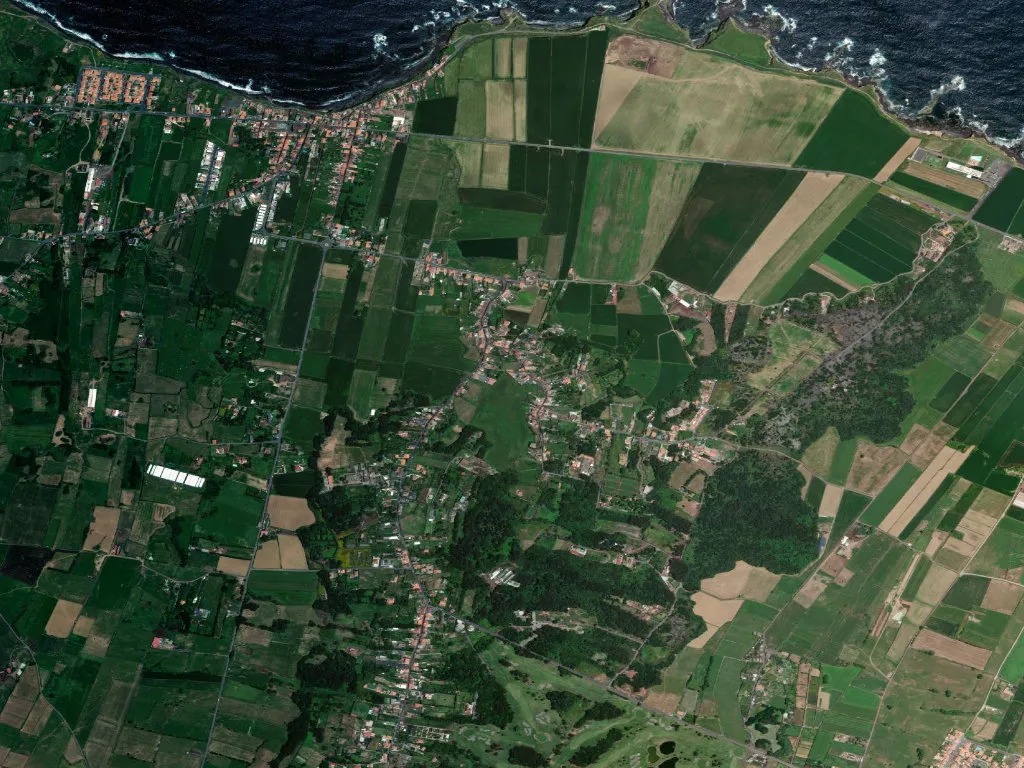
Leave the main road at Canada do Rolo, walk uphill for three minutes and the Atlantic unrolls like a strip of navy felt five kilometres away – the same view my uncle shows his grandchildren. At 56 m above sea-level the land fragments into smallholdings: Dona Emília’s potatoes, Sr Domingos’ pineapple glasshouses, the cooperative dairy pasture of Capelinhos. The PR14SMI footpath begins here: 4.2 km way-marked yellow, ninety minutes if you pause to pocket the tangerine that has rolled over the wall. Mid-way a makeshift lookout: black pumice, missing interpretation panel, but the compensation is wide – Feteiras below, Pico do Carvão to the right and, on a clear day, the terracotta roofs of Vila Franca do Campo on the horizon.
Living close, living slower
The 2021 census says 2,227, yet the real nightly head-count is lower; many are registered here but sleep in Ponta Delgada, coming back only for weekends. Still, the same faces appear in the stationery shop O Pensamento, in Café Central (opens at six, shuts at seven, closed Sunday) or at the monthly market the town hall sets up on the second Friday outside the health centre. Need a beach? Ten minutes to the lava slabs of Santo António, crystal water but beware the slippery basalt. Prefer a pool? Continue to the tidal pools of São Vicente in Rabo de Peixe where the Atlantic slides between mica-flecked boulders. Be back before six; afterwards the road clots with commuters and the single traffic light at Grotinha turns merciless.
When the sun drops behind Pico da Cruz – 20.37 tonight, my watch says – the schist walls of Rua Dr Augusto César de Bettencourt gild and the scrub of the morgado looks brushed with honey. The smell never changes: loose earth, gorse-smoke from Sr Agostinho’s chimney and, from uphill, the sharp scent of hydrangeas Dona Lurdes has not yet pruned. No terrace bars, no playlists; only the diesel cough of André’s tractor returning from the fields and the neighbour’s dog barking at a lamppost that knows him already but gets the warning anyway. That is how you read Fenais da Luz: a place that fits inside a glance, yet where every gesture – sow, water, knead – takes exactly the time it demands.