Full article about Ginetes: where Atlantic mist duels black lava vines
Experience Ginetes, São Miguel: Atlantic fog over lava-walled vineyards, empty trails and a village that bottles its wine only for cousins
Hide article Read full article
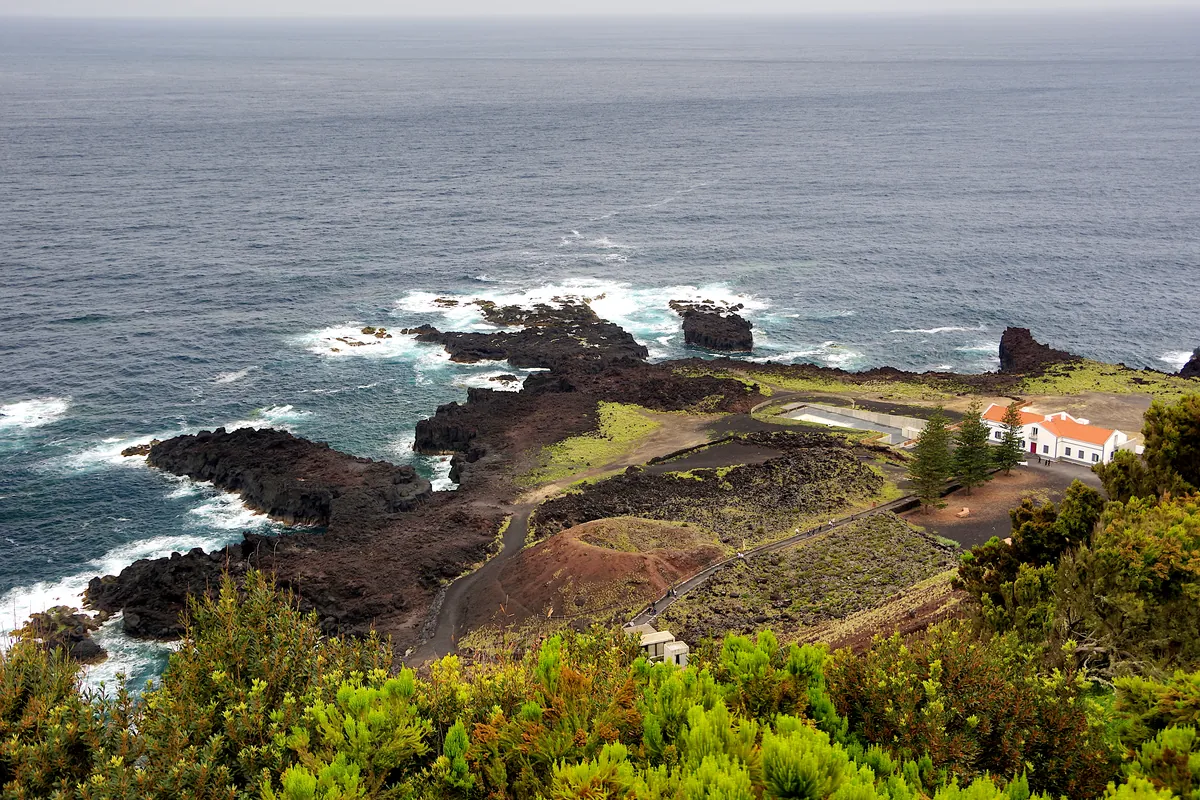
The Atlantic fog banks against the basalt ridge above Rua Direita, then spills downhill like a slow tide, erasing the whitewash on the first row of houses. By dawn the wind has already started its daily argument with the telegraph wires, hauling salt and wet gorse across the 1,213-hectare parish. At 171 m above sea level, Ginetes is suspended between an invisible ocean and cow-cropped pastures so green they seem back-lit. Sunshine arrives only as a brief, tactical raid – a blade of light splits the mist, then retreats, and the drizzle resettles on the cobbles that link the village to the hamlet of Moitas.
Fewer than 1,200 people live here, spread thin at 97 per square kilometre. One hundred and fifty children share a single primary-school playground; 212 pensioners can recite every pothole on the ER3-2A and every loose stone in the waist-high basalt walls that hem in the Picodo dairy co-op’s Friesians. The ledger between young and old wobbles, as it does across the Azores, yet the parish refuses to tip into silence.
Between lava and ocean
Ginetes faces the full western fetch of the Atlantic, its vineyards classified under the Azores’ lone DOP, “Biscoitos-style”. Here that means knee-high vines crouched behind windbreaks of loose-scree lava, the black stones absorbing daytime heat and radiating it back after dusk. Yields are tiny, acids fierce; fermentation happens in repurposed water tanks or, in the case of Sr. Agostinho on Rua da Igreja, the same stone trough he has scrubbed every October since 1973. Nothing is bottled for export – the wine is poured for cousins at Christmas and christened vinho de cheiro for its heady, nutmeg-tinged nose.
The parish sits inside the Azores Geopark, and the footpaths read like a geology fieldbook: ropey pahoehoe, orange lichen on blast-scarred scoria, tree ferns wedged into fault cracks. The Salga Trail, an 8.5-km, 400-metre-drop traverse to Mosteiros, is way-marked erratically; weather can pivot from cobalt to soaked cloud in the time it takes to lace a boot. That friction keeps the crowds away – no coaches idle outside the whitewashed chapel of Nossa Senhora da Boa Morte; arrivals come by rented Citroën or on foot, and they mean it.
Unvarnished days
There are no postcard squares or baroque set-pieces. Pride is reserved for the 1845 parish church of São Sebastião, its bell-gable skewed slightly by the 1980 earthquake; the stone water spouts still used when the mains are shut off; the baker’s wooden peel scarred by four decades of bolo lêvedo. Breakfast is a disc of warm, sugar-dusted bread torn open over a counter that opened at 05:30. Olga’s clay-pot cozido simmers with yam, chouriço and the island’s cumin-scented blood sausage; cheese arrives still dewy from morning milking at 600 m. On the last Saturday of July the Feira do Trigo sets the football pitch alight with bonfires, viola da terra duets and the metallic snap of cane against cane in improvised sword dances.
Commerce is a three-room affair: Laura’s grocery stocks tinned sardines in piri-piri, Café Central hosts a daily Sueca card tournament sharp enough to draw players from two parishes, and Rosa’s bakery sells out of folar Easter brioche before the sun clears the ridge. For anything else – petrol, a dentist, a replacement phone screen – the road tilts east fifteen kilometres to Ponta Delgada, a thirty-minute crawl through the Covadinha bends once the morning commuters clog the Variante.
The Atlantic doesn’t knock
Evening closes the show with a low, bruised sky. One by one, sodium lamps flicker on, their glow no match for the wind that keeps searching for gaps around the sash windows. Cypress hedges hiss; somewhere a gate chain rattles like loose rigging. Visitors expecting easy spectacle leave disappointed. Ginetes offers instead the obstinate poetry of a place where every stone wall has been rebuilt after last winter’s gales, where the ocean is less a view than a co-tenant. Stay long enough and you stop noticing the roar – then, days later, in a city hotel, you’ll wake wondering why the air feels suddenly mute.