Full article about Pilar da Bretanha: Where Cows Clock the Morning Bell
Cloud-draped basalt lanes, kids listing heifers by name, volcanic wine at dawn.
Hide article Read full article
The road climbs, tightens into two switchbacks, and the air switches from diesel to damp earth and warm cattle. Pilar da Bretanha is not a lay-by with a panoramic plaque; it is where Senhor Toninho’s café unlocks at seven because the cows refuse to snooze. Officially 576 souls live here, though only half are ever present—the rest are “studying in Lisbon” or “in Toronto”, the Azorean code for gone but not forgotten.
High-ground geography
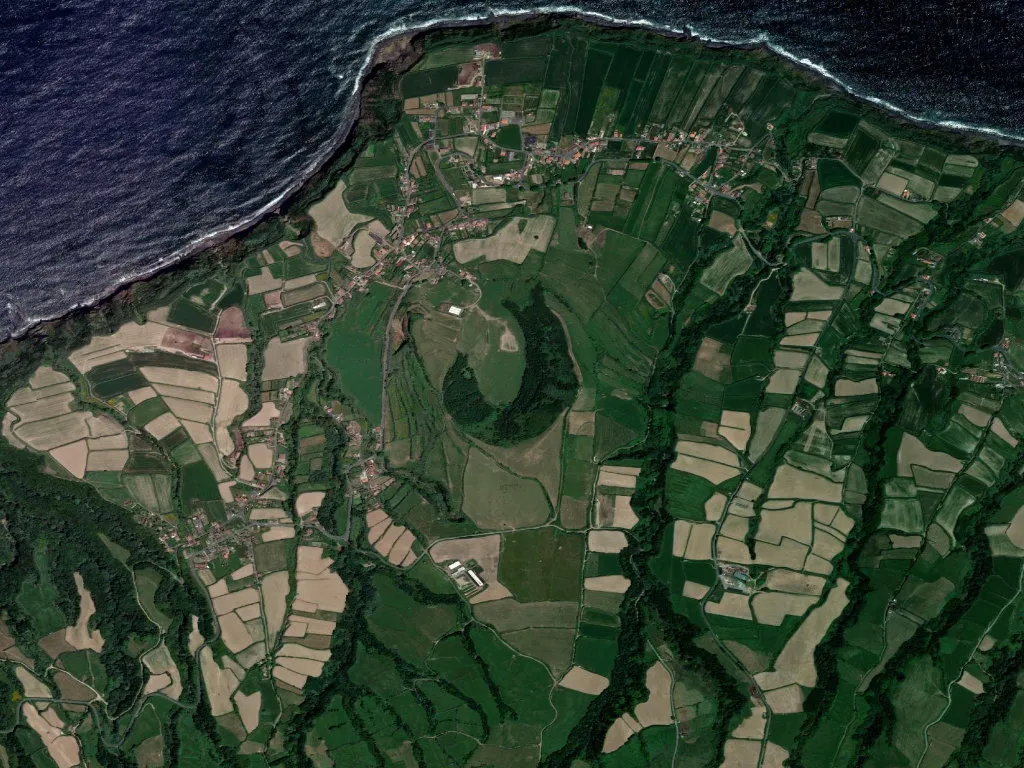
Altitude 229 m: just enough for Atlantic cloud to flop across the lane a dozen mornings a year. Locals don’t call it fog; they say “the island’s soaking”. There are no postcard lakes, only loose basalt that doubles as wall, bench and, when children are bored, marbles. UNESCO’s Geopark colours the parish in on its maps, yet the only volcano that matters is the one that steams the cozido pot; if the ground trembles, nobody notices—they’re checking if the heifer has calved.
Interior daybook
The primary school squeezes two classes per year, yet break-time sounds like Wembley. Sixteen fourth-years become a swarm the moment a football appears. Those who leave return in July with Boston vowels and photos of snow; those who stay can list every cow by name and still set their fathers’ wristwatches for the 5 p.m. milking. Sunday means Mass, yes, but also a quiet bet on whether Gualter will finally sell the plot next door—asking price: “whatever someone offers, as long as they don’t paint the holiday house pink”.
Volcanic wine & other alliances
Forget Pico’s tidy walled vineyards. Here the vine scrambles up beside a poplar, produces berry-sized grapes and ferments into something the priest eyes nervously before communion. It is served in thick glass tumblers at baptisedawn breakfasts, and not a bottle leaves the island—empties are needed for Aunt Albertina’s moonshine liqueur. The cheese hails from São Jorge, true, but the bread is baked by Clarinha in the village wood-oven, sliced thick, anointed with salted Azorean butter, and eaten as though the world ended at the parish line.
Inhabited silence
What lingers after you leave is not a selfie. It is the faint throb of a tractor radio at dawn, the silage scent that clings to your socks, the mongrel that escorts you to the bend in the road then turns back—he already knows you’re not staying. You drive away certain that somewhere time did not march on; it simply sat on the basalt wall, lit a roll-up and waited to see if you’d notice.