Full article about Ponta Delgada’s bells, cakes and pineapples
Ponta Delgada, São Miguel: climb the tower pilgrims polish for return, taste greenhouse pineapple, hear bells roll to the sea
Hide article Read full article
The bell of the 18th-century Torre Sineira strikes nine and the note rolls downhill like a pebble skittering across Lagoa do Fogo, rippling through the sash-windowed houses whose doors are brushed the exact green of a snooker table and the precise red of a post-box. It slips along Rua dos Mercados, slips again into the Mercado da Graça, and lands—without knocking—beside the cup Alice has poured at her counter since 1983. Inside, pineapples from the island’s greenhouses are stacked like billiard balls, three euros apiece, worth every cent: they still taste of pineapple, not of the refrigerated cargo that reaches Heathrow. The woman at the queijada stall halves a cake without looking up. “Take three,” she tells a bemused German. “One is never enough to understand what good is.”
Where the sea stopped and the town began
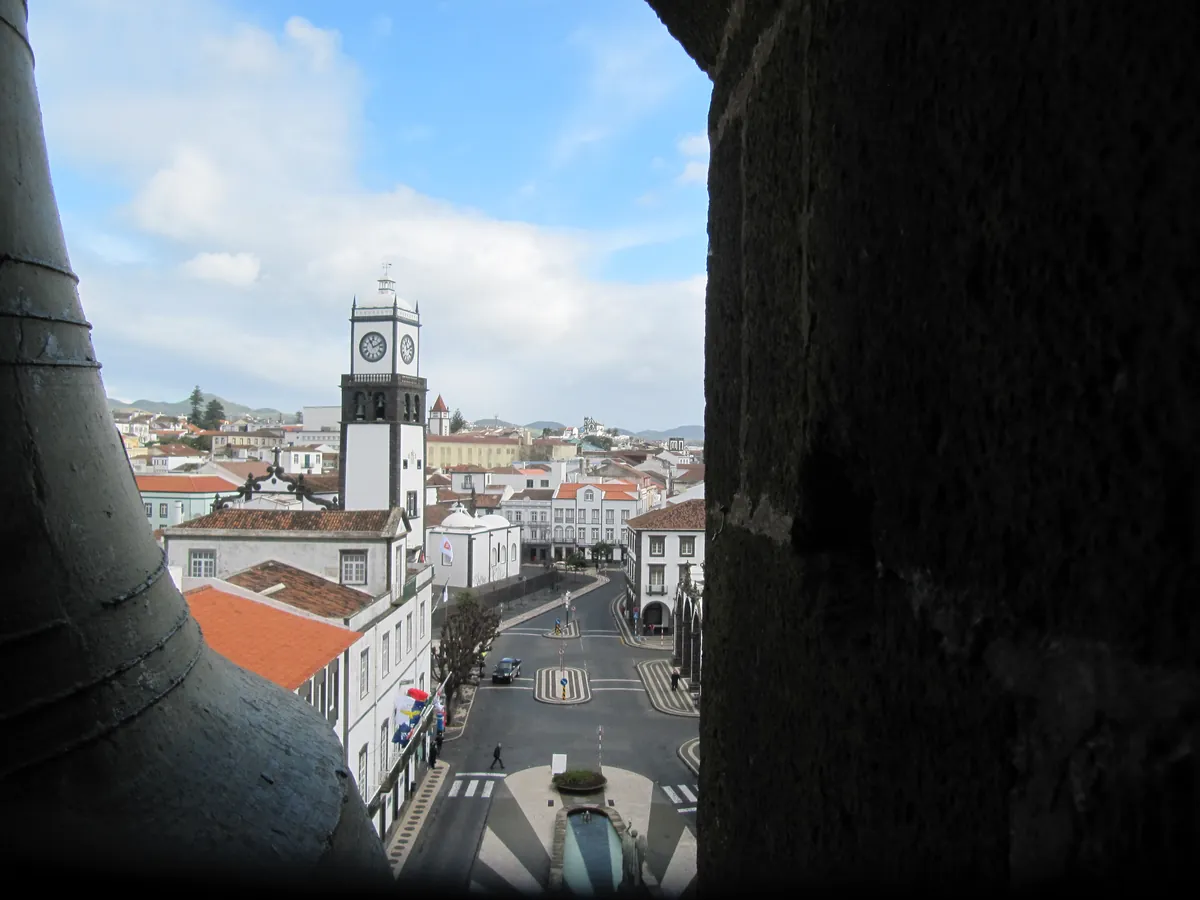
The Igreja Matriz was assembled the way Azorean houses are: piecemeal. A nave paid for by a good wheat harvest, a side chapel by a bad potato year, a Baroque window after the 1832 earthquake—each century leaving its receipt. The tower, all that remains of a 16th-century lookout, now summons only the tardy to the 10 o’clock Mass. I once climbed its 102 steps with my son; he quit at 47 to announce he was starving. From the top the stone Saint Michael has one polished toe—pilgrims rub it “to be sure of coming back”. It works; I’ve returned three times, none of them planned.
Down on the waterfront the city’s 18th-century gates were dismantled so Avenida Infante Dom Henrique could breathe, then bolted back together like flat-pack furniture nobody quite needed. They are now a perch for pigeons and a backdrop for cruise-ship selfies. A five-minute shuffle east, the Forte de São Brás still wears its star-shaped 16th-century corset. The cannons haven’t spoken since 1829; inside, a small military museum plays the same loop about the 1587 defence against Drake’s privateers to every coach party as if it were breaking news.
When the town shuts down
January belongs to São Sebastião, a village feast that has moved to town. Loaves are taken to church, blessed, and tucked into sideboards until summer—no one can explain why, but everyone does it. May is commandeered by Senhor Santo Cristo dos Milagres. The week opens at 5 a.m. with drums that sound as if the world is ending; in a way it does—traffic, conversation, time itself. Locals walk the flower-carpeted streets at a processional shuffle you never see outside airports when flights are cancelled. The petals last the lifespan of an Instagram story, then are swept into the compost.
What you eat when you’re from here
The fish is “of the day”—whatever the skipper wired from the boat at dawn. Caldeirada splits opinion the way Lancashire hot-pot does: every family owns the definitive recipe. Limpets are marmite in a shell; either you grow up loving their iodine bite or you wonder why anyone would chew on a rock. Octopus comes ashore in nearby São Roque and is grilled until the edges bronze like demerara sugar. The house wine is from someone’s cousin’s backyard; the banana-swordfish pairing began as an experiment by a chef with too much fruit and too little imagination. Queijadas da Vila—custardy tarts wrapped in a paper-thin pastry—are claimed to taste better at “my aunt’s house”, though the address is never disclosed. Pineapple jam looks like pumpkin, spreads like pumpkin, but isn’t; taste it before you decide.
Where you go when you need to be alone, but still in town
The Jardim António Borges is a borrowed back garden. Australian tree ferns planted by a long-dead councillor shade duck ponds where toddlers skim stones and parents practise selective blindness. The “grotto of love”, a mossy lava tunnel, is where teenagers promise each other eternity; local wisdom says relationships sealed there collapse within the year. Climb the short zig-zag path to the Miradouro da Mãe de Deus and you can watch Atlantic weather being manufactured on the horizon—São Roque to the left, the crater of Sete Cidades to the right, and between them a town that feels smaller than its own map.
The town-hall clock strikes six and the evening exhales. Joggers jog because that is what they do at this hour, fishermen hose down their decks because even fish knock off for dinner, and the nightly ferry gives a departing blast that means it will be back tomorrow. What lingers is the briny dusk—salt on the tongue you can’t rinse away with water, only with another dawn.