Full article about Santo António: Azorean balcony above Ponta Delgada
June peppery broth, child emperors, cowbells at 409 m
Hide article Read full article
Between City and Crater
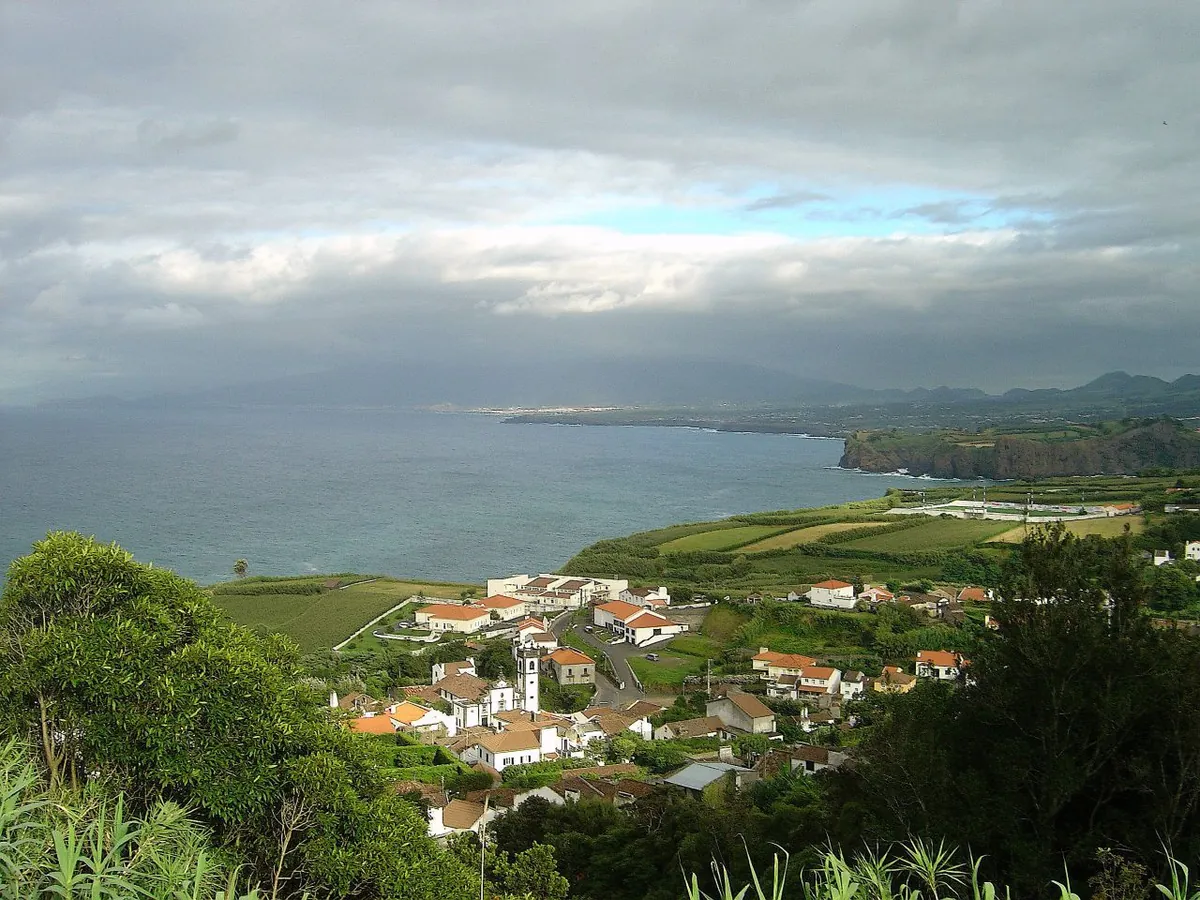
Morning fog unrolls down the slope like a slow carpet, erasing Ponta Delgada’s apartment blocks and cruise-ship docks until only the thin white line of the break-water remains. At 409 m the air is already wine-cool, laced with Atlantic brine and the sweet iron scent of wet pasture. A single cowbell answers the distant hum of the Via-Rápida. Santo António—1,574 souls, one café, one chemist, one baroque church—hovers above the capital like a balcony that forgot to come down.
The parish never chose sides: it is neither suburb nor village. Land was parcelled out here in the fifteenth-century donatary captaincies, yet the settlement only thickened when Ponta Delgada’s merchants began climbing for summer grazing and weekend pig-killings. The church, begun in 1737, is a modest essay in Manueline braid and volcanic stone; around it, narrow lanes still carry the names of the smallholdings they once served—Caminho da Matela, Canada do Ribeiro. No castle crowns the ridge; Azorean defence was always coastal. Instead, granite calvaries mark crossroads where processions pause on 13 June, the feast of St Anthony of Lisbon, and women in embroidered aprons hand out clay bowls of fish broth sharpened with peppery chilli-and-garlic molho de vilão.
Festivals Without Spotlights
Forget headline acts or corporate sponsors. June’s celebrations are lit by strip bulbs strung between lampposts and powered by neighbourly competition. A brass band that rehearses all winter in the fire station loft launches into a chamarrita; children scramble for caramel-coloured candies thrown from the church steps; teenage boys compare Instagram stories while grandfathers argue over the correct number of bay leaves in the communal caldeirada. Later, the Holy Ghost festivals—peculiar to the Azores—unfold with coronations of child emperors, silver crowns borrowed from the parish safe, and free soup served from copper cauldrons called alfaias. The last rehearsal of the local folklore group still relies on Dona Lourdes, 81, clicking two knitting needles to keep time while younger feet learn the Bailinho da Madeira before it disappears.
What Arrives on the Back Seat of a Minicab
Santo António grows nothing under its own label anymore—the final dairy herd trotted onto a lorry in 2019. Yet the parish eats better than most capitals. At dawn a Whatsada message pings: “Lobsters just landed in Calheta.” By 08:30 the catch is steaming in a neighbour’s pot. The weekly shop is a relay: bananas from Fajã de Cima’s greenhouses, pineapples still wearing their paper bonnets, peppery Gorreana tea that travelled fifteen minutes down the hill. On feast days, bolos lêvedos—soft, slightly sweet English-muffin cousins—arrive warm from a kitchen in Fajã de Baixo, wrapped in a check tea-towel. Cozido das Furnas, the island’s volcanic stew, is technically from the village forty minutes east, but every household owns a tall copper pot and a cousin who will lower it into a geothermal vent at 05:00 and collect it at lunchtime, perfumed with sulphur and smoked sausage.
Footpaths That Remember Whales
Walk 200 m past the last hydrant and the cobbles turn to black basalt chips polished by centuries of clogs. These paths once channelled cattle to summer pastures; now they guide hikers into the island’s drowned interior. Follow the aqueduct from the church for twenty minutes and you slip beneath a canopy of Laurus azorica, tree heather and giant ferns that brush your shoulders like damp green flags. The trail forks: left to the twin lakes of Empadadas, mirror-calm and mosquito-haunted; right to the viewpoint at Pico do Carvão where only four cars fit on the mud apron and the entire island tilts upwards—calderas, hydrangea hedges, the razor line of Sete Cidades. Locals still unearth pumice when they plant potatoes; the parish sits inside the Azores Geopark, its stone walls built from the same magma that carved the mid-Atlantic ridge.
Twilight on the Ridge
By late afternoon the sun drops into a slot between Faial and Pico, 250 km west, and the Atlantic turns mercury. The first streetlamp flickers; someone revs a moped down to the city for the evening shift; a dog barks at the echo. From the churchyard you can still make out the red crane in Ponta Delgada’s harbour, but up here the night wind tastes of salt and wet moss. Shutters bang, ceramic roof-tiles cool with a soft tick, and the fog prepares its second descent. Santo António never asked to be picturesque; it simply stayed put, halfway between the crater and the cruise terminal, watching both worlds from a height that keeps them honest.