Full article about Sete Cidades: Crater Lakes Echoing 36,000 Years of Silence
Azorean twin lakes shimmer inside a yawning basalt bowl where cows graze above myth and mist.
Hide article Read full article
The silence you hear is the crater breathing
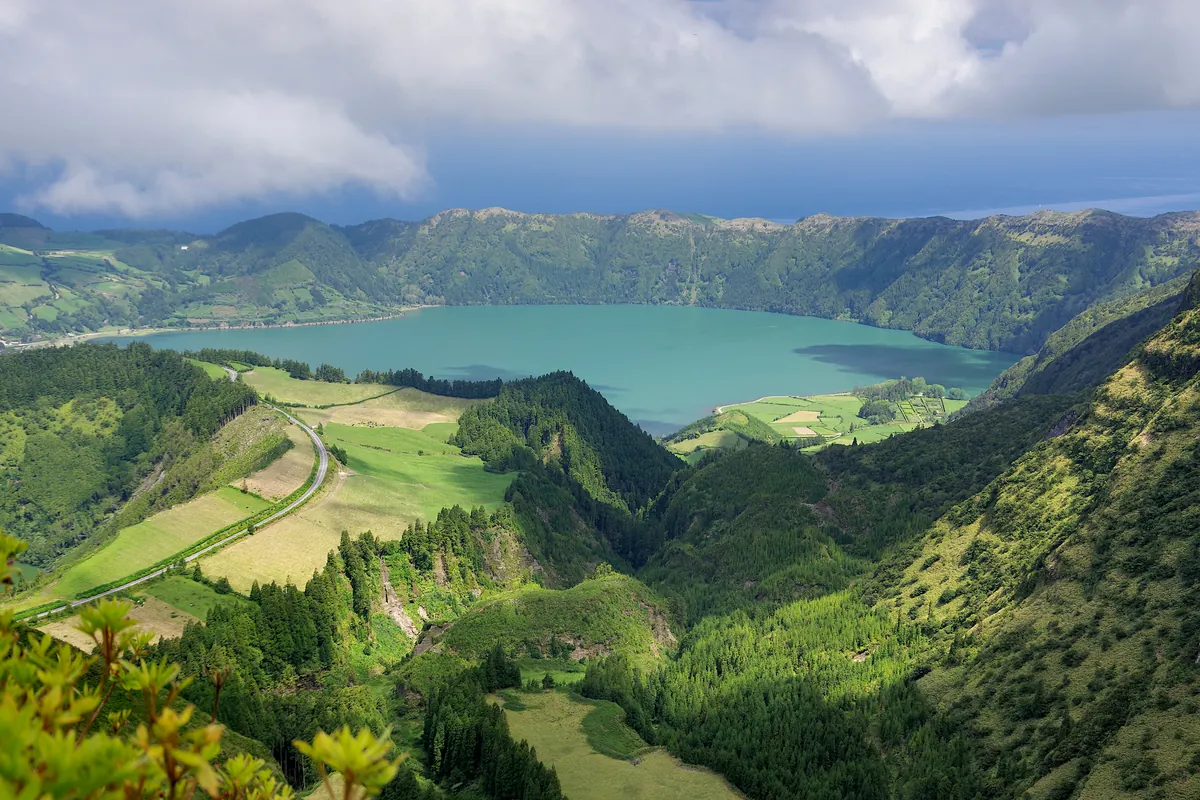
The first thing that strikes you on the switch-back descent is the acoustics: not silence, but a hush that lets you separate the hiss of tree-ferns from the wind scraping the basalt walls, the low gossip of the stream that drains the two lakes, the sudden kee-ee of an Azorean buzzard planing above the water. Light arrives in instalments. At dawn it lands first on Lagoa Azul, the deeper, colder bowl, while Lagoa Verde stays ink-black until the sun climbs high enough to flip a switch and turn the surface a jade so saturated it looks backlit. The air is heavy with the smell of wet peat and rotting bracken — the perfume of a place where water and volcano have been negotiating terms for 36,000 years.
Inside the stone circle
Sete Cidades village occupies the floor of a five-kilometre-wide rupture left when two magma chambers gave way. Humans arrived in the 1400s, cutting rye and rye-grass into the crater walls and grazing cows on the sodden rim, yet the settlement was only formally recognised as a parish in 1867, detached from the coastal town of Bretanha. Until the ring-road was finished in 1973 the only reliable route out was a mule track to the sea; the population today is still just 701, the lowest density anywhere on São Miguel.
White-washed São Nicolau church has stood since 1851, its baroque altarpiece flanked by 18th-century blue-and-white tiles that show St Nicholas calming a storm-tossed caravel. Higher up, on the crater lip, the tiny Nossa Senhora das Cidades hermitage marks the spot where, legend insists, the Virgin appeared to a mute shepherdess. Each August the parish answers with two processions: on the Sunday nearest the 15th, flower-decked fishing boats motor across Lagoa Azul for open-air mass; seven nights earlier the Procissão das Velas threads down the inner slope in a candle-lit serpentine of hymn and echo.
Two lakes, one volcano
The colour split is not folklore but physics. Lagoa Azul drops 33 m and stays a chilly cobalt; Lagoa Verde bottoms out at 18 m, warms faster and blooms with nano-algae that paint the water electric green. The Ponte dos Regos, an 1880s stone culvert, lets you step from one basin to the other without walking the full 12 km crater rim. Around the edges, diffuse fumaroles keep the soil warm enough for banana palms and taro to survive 400 m above sea level, while cedar and heather rule the cooler ridge.
The PR3 SMI trail follows the crest through king-view balconies — Vista do Rei, where every guidebook shot is taken, and Cerrado das Freiras, angled west for sunset. Down below you can rent a kayak at Café da Vila and paddle to the black-sand beach tucked inside Lagoa Verde; on calm afternoons the shallows feel almost Mediterranean. A forgotten 1839 report describes CO₂ bursts bubbling through the surface; today buried sensors track gas flux the way cardiologists watch a sleeping heart.
Calderas and cauldrons
Cooking here starts with what the crater gives: turnip broth spiked with home-cured chouriço and kale, lake-fish caldeirada of trout and sea-bass simmered with tomato, onion and fistfuls of fresh coriander. Queijo da Lagoa, a soft DOP cheese, is made from the milk of cows that graze the water-meadows. The cozido das furnas — beef, pork, blood sausage, yam, cabbage and pumpkin layered in a lidded pot and interred overnight in a geothermal vent — arrives at table tasting faintly of steam and sulphur. Finish with massa sovada, a lemon-scented sweet bread, or fofas de Sete Cidades, cinnamon-dusted dough puffs still warm from the fryer.
When the sun slips behind the rim and the crater fills with long indigo shadows, the sound that remains is the wind circling the walls — a low, continuous note that seems to rise from the ground itself. Only then do you realise why every islander, believer or not, calls the place encantado: not because seven drowned cities lie beneath the lakes, but because you can feel the mountain inhaling, exhaling, remembering.