Full article about Fenais da Ajuda
Stone lanes climb 361 m through hydrangea hedges to hidden chapels and spring-water tanks
Hide article Read full article
Mist that clings
At 361 metres the air smells of wet eucalyptus and woodsmoke drifting from unseen chimneys. Fenais da Ajuda, population 890, splays across the northern lip of São Miguel inside the Azores Geopark, its pastures, hydrangea hedges and Japanese cedars stacked like green theatre flats. A single cow bellows; a pick-up snarls up the switch-back, then silence reclaims the slope.
Stacked settlement
Thirteen square kilometres of tilted land hold 66 people per square kilometre, scattered in stone houses that obey the contour lines. Paths too narrow for two cars link pocket-size chapels to places known only in local speech: Criação, Espigão, Ribeira Funda. Atlantic fronts arriving unannounced drape the parish in vapour; winter frost can bite until April. Yet the black volcanic loam feeds dairy herds, wind-sheltered vegetable plots and low-wire vines whose slow-ripening grapes yield sharp, Atlantic-tasting whites.
Between barn and breakers
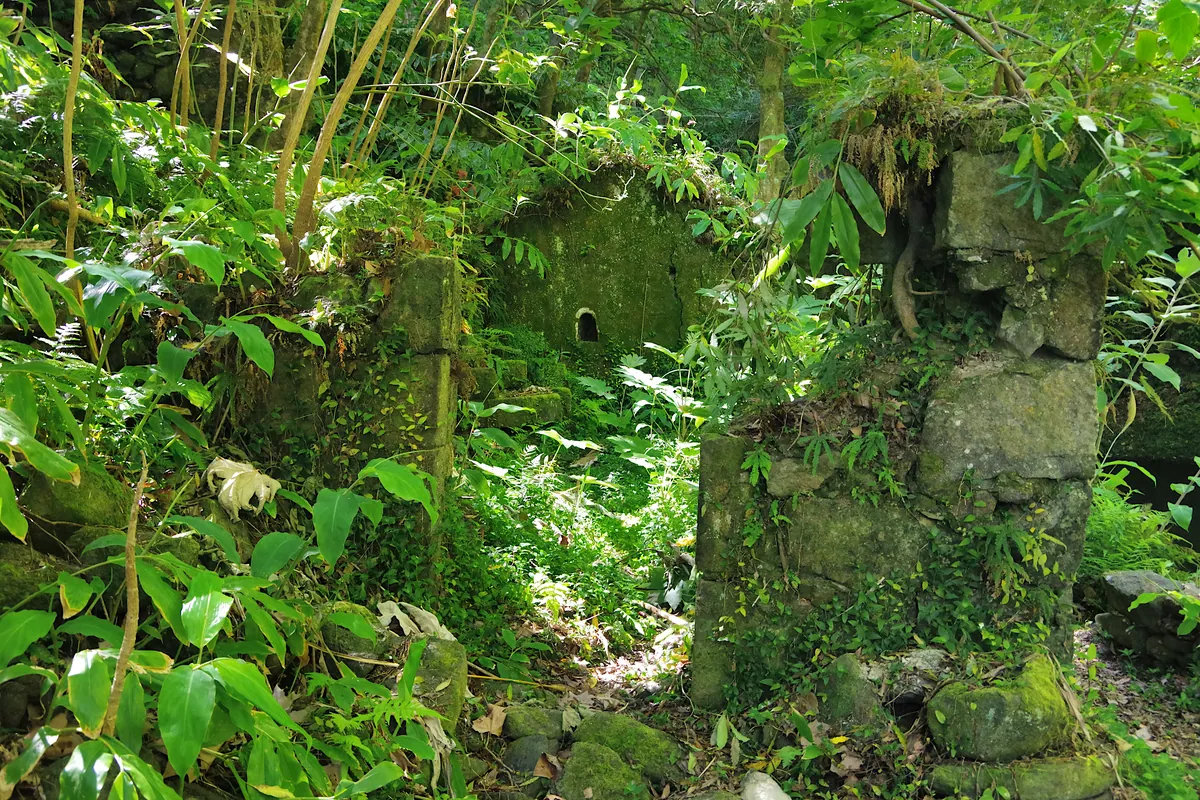
The primary school enrols 156 children; Sunday mass gathers 122 elders and a discreet tally of visitors. Morning milk is collected by the cooperative tanker; breakfast is fresh queijo with massa sovada, the island’s saffron-tinted brioche. No signposts point to monuments—because there are none. Walkers follow cobbled lanes to stone tanks of spring water and watch cloud-shadows race the valley floor when the sun finds a gap.
Permanence, not tourism
There are no online cottages, no shuttle buses. If you stay, it is because a farmer’s cousin has a spare room. Ribeira Grande’s cafés and pharmacy are 20 minutes away by car. Cozido, the volcanic stew, simmers in clay pots at home; beef stewed in wine-red molho appears only on household tables, not on menus—because there are no restaurants.
Weight of height
At dusk lights click on one by one, granite walls darken with damp, dogs quarrel behind gates, and the scent of stable straw drifts into kitchens. Every metre above sea level registers in lungfuls of cooler air and stone that hoards the Atlantic chill long after sunset.