Full article about Maia
Cool air, hot springs and salt-kissed wine in a 1,792-soul Azorean parish
Hide article Read full article
Breathing Room
At 449 m above the Atlantic your lungs notice the difference first. The air arrives cool and mineral, thick with pasture and wet basalt. Maia inhales slowly; vapour lifts off the fields in sheets, erasing stone cottages, reducing the parish to dry-stone walls that hover like pencil lines on smudged paper. This is the island’s northern spine, where São Miguel’s famous greens cease to be scenery and become infrastructure—2,200 ha of dairy sward stitched together by black volcanic thread.
Vertical Geography
Temperature drops three degrees from the coast; humidity holds. Pastures are trimmed for Holstein-Friesian herds, vegetable plots crouch behind cane wind-breaks, apple and pear trees are stubby, salt-pruned. Eighty-one people per km² live in loose clusters—cousins’ houses linked by calf-deep lanes to chapels dedicated to annual romarias. Of the 1,792 residents, 307 are under fourteen and 268 over sixty-five: enough children to keep the primary school open, enough elders to remember when maize was threshed by hand.
Living Geopark
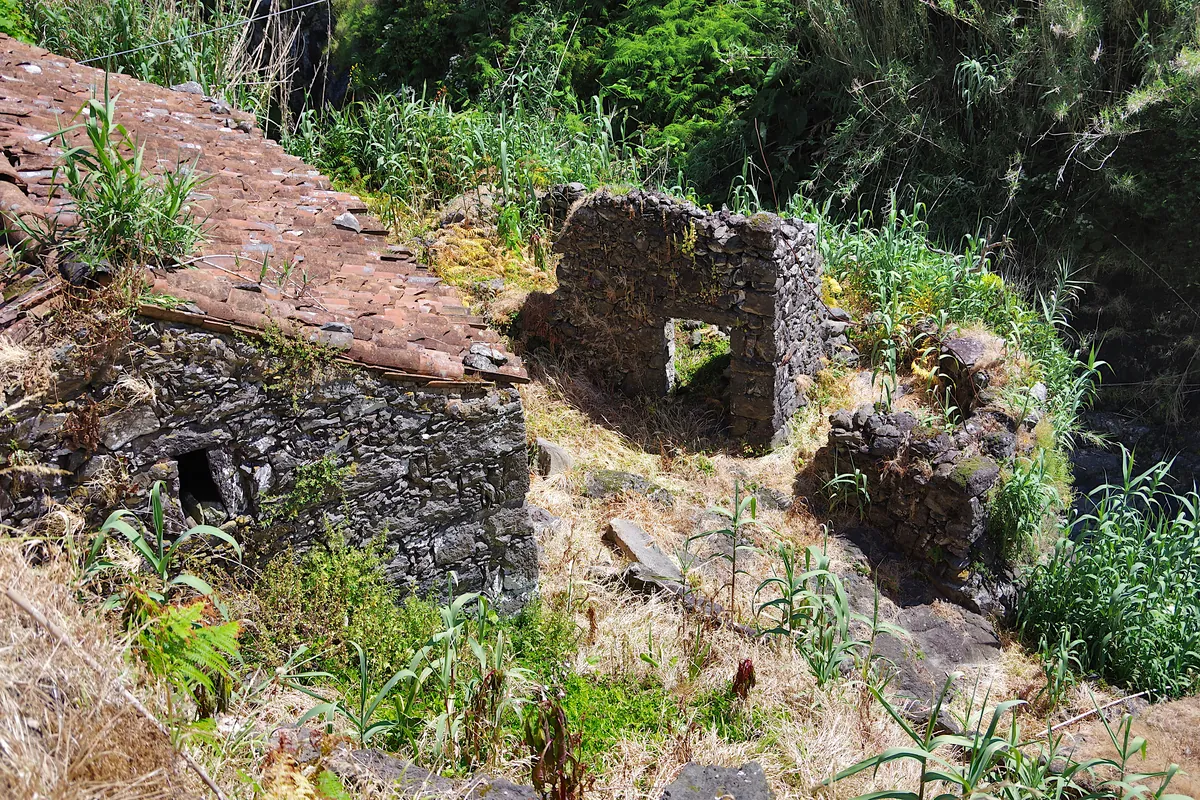
UNESCO’s Azores Geopark is not marketing garnish. The parish sits on young basalt; tuff cones poke through pasture, thermal springs seep at 38 °C, yesterday’s rain races down ribeiras to the sea within minutes. Dark, vesicular stone is the default builder: retaining walls, cottage footings, uneven cobbles that collect rainwater like obsidian mirrors. South-facing slopes ripen figs; their northern twins stay in perpetual shade and grow moss instead.
Economics of Soil
Look for the Azores’ Protected Designation of Origin wine and you’ll find it here, parcelled into walled plots no larger than an English allotment. Vines hug the ground, shaped like coat buttons, yielding grapes with Atlantic salinity and electric acidity. There are no tasting lodges; bottles are swapped at doorways for a litre of morning milk. Tankers groan up the serpentine road at dawn to collect the previous day’s milk from 40-cow holdings, ferrying it to the COOPERLACT cooperative near the coast.
Daily Life, Unamplified
The nearest supermarket is 11 km away in Ribeira Grande, so shopping lists are strategic. Local commerce shrinks to a single café-mercado hybrid, a pharmacy open four mornings a week, and a bakery van that toots its horn at 10:00 sharp. Social life orbits the Igreja de Nossa Senhora da Graça, the Holy Spirit império whose brass band rehearses on Thursdays, and the annual feast that marches a silver crown through the lanes between May and September depending on the lunar calendar.
Crowds register at 15/100; you can walk the cliff-top loop to Lomba de Maia without meeting anyone except a cattle dog who escorts you to the boundary wall. Weather risk sits at 25/100—sudden fog that halves visibility, rain driven sideways by the nortada, July nights that demand fleece and a rain shell. Locals read the sky like a timetable: a particular lead-grey shade means turn back now.
Evening. A low sun splits the cloud lid and the pasture ignites—an almost toxic, phosphorescent green. Cow shadows stretch across the walls for ten perfect minutes. Then the fog folds back, erasing outline and distance, and Maia returns to a monochrome hush where navigation is memory and every stone wall is a handrail home.