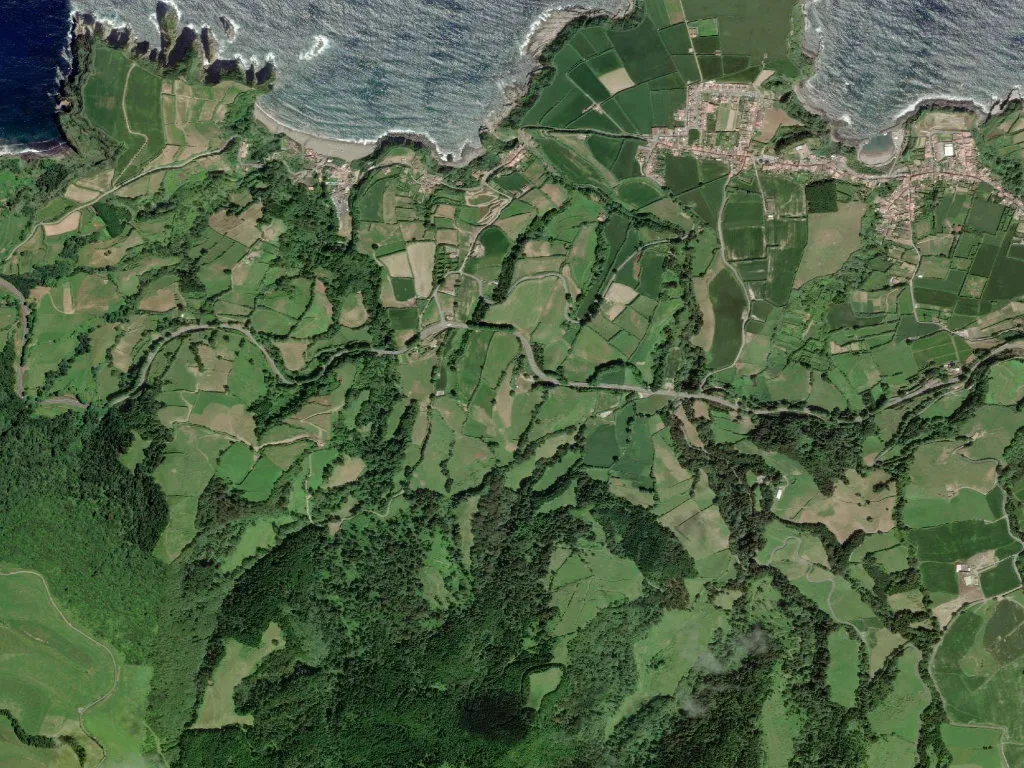
Full article about Porto Formoso: where tea fog kisses Atlantic waves
Porto Formoso shelters Atlantic gales, whalers’ ghosts and tea-leaf perfume in Ribeira Grande, São Miguel
Hide article Read full article
The scent that clings like an old lover
When the southerly rolls in off the Atlantic, it drags the fog down the Ladeira da Velha and the smell of bruised tea leaves slides right into the houses of Porto Formoso. It is a soft, almost over-ripe perfume, the kind that lingers on a jumper long after you thought you’d washed it away. Here the ocean is not a postcard backdrop; it is a lodger. On storm nights it rattles the sash windows and dries into salt freckles on the glass. Sailors once christened this bay “beautiful” on a day of high spring tide and rinsed blue sky. They should have waited for a nor’easter—then they would have seen the same water turn pugilistic, white-gloved waves sparring against the sea wall.
A republic before the republic
In 1908, while Lisbon intellectuals argued over kings, Porto Formoso was already holding open-air plebiscites in the square. Their home-grown republic lasted three years; when the real one arrived in 1910, nobody noticed the difference. The stone skeleton locals still call “the Castle” has watched the entire pantomime—first constitutional soldiers firing muskets, then whalers rendering blubber in the powder store. Now children play hide-and-seek among the oil-dark walls, and on hot afternoons the basalt exhales the ghost of whale grease.
Stone that prays, faith that stays
The chapel of Nossa Senhora dos Anjos is barely wider than a confession box; guidebooks claim it wore the first stone roof on São Miguel, built while men still slept with one eye open for Atlantic gales. Up the lane, the church of Nossa Senhora da Graça has a door that shrieks like the gate of my grandmother’s Cornwall cottage—iron on basalt, a noise that jerks every head in the street. In the abandoned Convento da Vitória the nuns left something palpable: a hush that feels rent-paying, permanent.
Leaves that never saw Darjeeling
Gorreana gets the coach parties, but the smaller Porto Formoso tea factory reopened only because Augusto’s grandson refused to let his grandfather’s 1930s withering drums rust into oblivion. Tours tiptoe past cedar trays where leaves lose their green, and visitors sniff the liquor that carries the mineral scent of wet Azorean basalt. Ask nicely and the manager lifts down a dented tin dated 1953—harvest of a summer no one here can remember. Outside, between the camellia rows, farmers turn up oyster fossils in the claret soil, reminders that the ocean owned this slope long before the first tea bush was planted in 1883.
Sand that scorches, water that slices
Praia dos Moinhos is a lesson in colour theory: obsidian sand so heat-hungry it can melt the sole of a trainer in July, and water so clear you track individual sardines sprinting past your shins. A stream escapes the cliff like it’s being chased, carving a natural paddling pool where mothers bring children straight from school, Tesco-striped towels over their shoulders. Follow the footpath west and you meet goat-herds who introduce you to every animal—Lúcia, Branca, Diabo—and the goats answer, each in its own register.
What is eaten, what is stitched
O Gato has no sign, only word-of-mouth. Limpets arrive on a ferrous skillet, still fluttering, eased loose with backyard lemon and butter that runs to your wrist. Across the parish, women cut patchwork quilts from last year’s school shirts and daughter’s outgrown dresses; no craft-shop kitsch, simply the Azorean art of wasting nothing. In early September the Festa da Nossa Senhora da Graça spills onto the lane—funnels of oil, pots of yam, and an uncle who always produces one more bottle of aguardente and a story everyone pretends is new.
When the sun slips behind the ruined castle, the bay turns the colour of burnt honey. At that moment the smell of tea collides with the salt line on the breeze, and the church bell strikes seven (the sacristan is deaf; he always adds one). Walk the Ladeira then and you wear Porto Formoso on your skin—an Atlantic note you’ll recognise days later, waiting for a London bus, the scent of land the sea keeps trying, and failing, to repossess.