Full article about Rabo de Peixe
Dawn diesel coughs, basalt quays, kids’ voices ricochet—São Miguel’s busiest parish breathes brine
Hide article Read full article
Rabo de Peixe: where the basalt still smells of brine
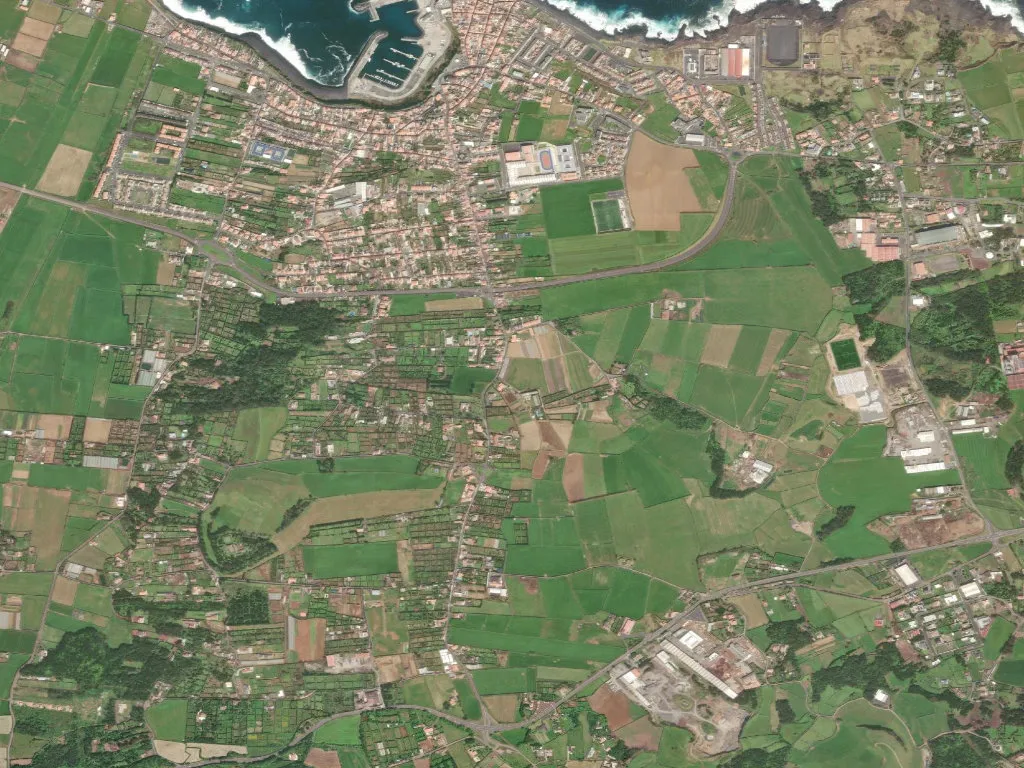
You hear the sea before you see it. A staccato rattle of pebbles on water – fist-sized stones knotted to ropes, thrashed to mimic fleeing fry and draw in the real thing. Locals call the technique pesca-à-boca and nowhere else in the Azores bothers with it. Dawn on the 220-metre quay starts with the cough of marine diesel and a salt mist that settles on your jumper like damp confetti. Rabo de Peixe wakes the way it always has: facing the Atlantic, palms already wet.
The rock that named the parish
From the water the basalt headland does indeed resemble a fish tail – hence the cartographers’ label. What began as a few nets drying at the mouth of the river gathered heft in the nineteenth century when Madeiran migrants realised the bay was essentially a dinner plate. Parish status arrived in 1836, the harbour in 1893. Between 1900 and 1970 three canneries sucked in labour from every island, and the settlement ballooned like fennel in bloom. Today 8,799 people live here, making it São Miguel’s most populous parish; 2,089 of them are under fifteen, which explains the echo of voices bouncing off the stone streets.
Chapel, church and the liturgy before leaving
The mid-nineteenth-century Igreja Matriz has Lisbon tiles and gold carving soft enough to dent with a fingernail, but fishermen reserve their reverence for the tiny Capela da Boa Viagem beside the slipway. They step inside to mutter a decade before the gunnels clear the harbour mouth. Each August the statue of Nossa Senhora is floated round the breakwater on a garlanded lorry-boat while sardines spit on improvised grills and a concertina wrestles with the wind. In the square, a granite wayside cross from 1897 pins the centre; the 1903 Casa do Pescador wears hand-painted tiles of bream, grouper and albacore – a ceramic species list drawn from daily catch books.
Across the lane, the derelict Fábrica da Rocha still smells of wood shavings and tuna brine. Here the Azores’ first refrigerated vessel, the Cachalote, off-loaded iced albacore in 1952, turning the islands into serious players. Captain João Alves de Sousa’s house survives further up the hill; in 1934 he founded the archipelago’s first fishermen’s cooperative and argued, successfully, that men who harvest the sea deserve something better than indentured wages.
Swordfish liver and wine that bites
The table is dictated by tide and swell. Caldeirada de peixe-da-terra layers grouper, black-tail and stone bass with yam, sweet potato and the small, fiery pimenta-da-terra. Torresmos de atum translate as tuna belly fried with crunchy yam chips; molho de fígado de espadarte – swordfish liver stewed with garlic, vinegar and clove – is strictly for the iron-stomached. At Christmas, bolo de véspera folds sweet-potato jam into soft dough, a confection that predates the arrival of sugar refineries. Two households still pressure-cook tuna in olive oil the way their grandmothers did for the cannery night shift; the result is spread thick on maize bolo do coco.
The three-kilometre Rota das Curraletas, walled in black basalt, climbs to Santa Catarina where vinho de cheiro – high-acid wine fermented in stone corrals cooled by Atlantic fog – is poured from unlabelled bottles if the grower is at home.
Basalt organs, black sand and 300 steps
At Ponta do Cão hexagonal columns rise like the pipes of a submerged cathedral; fossilised algae freckle the joints – proof this lava once bubbled beneath the sea. The beach of black volcanic sand breeds serious surf: local Ruben Gonzalez rode these wedges to a national title. When the swell turns nasty, villagers retreat to the lava-sculpted pools of Santa Catarina, where seawater slops over natural ledges and the roar is muted to a bass thud.
The Rabo de Peixe river begins under the Água de Pau massif and empties into the Caldeira lagoon, a Ramsar wetland where grey herons nest between October and April. Beside the reeds, the tide-mill ruins are only moss-coated teeth now. The Pescador & Vinha footpath threads vineyards planted in pumice and ends at a cliff-top platform once reached by 300 hacked steps; farmers lowered themselves by rope to steal bananas from the fajã below.
A football pitch that the tide claimed
Canada do Lodo’s old pitch sat so close to sea level that spring tides washed the touchline; matches paused while players waited for the water to retreat. On 29 June the Noite do Bailhé turns the quayside into a dancefloor for chamarrita, the Azorean two-step. Easter Sunday’s Enterro do Bacalhau sees a papier-mâché cod borne in mock-funeral to the surf, a satirical full-stop to Lent. The eve of São Pedro lights a bonfire on the beach, corn cobs charring while singers trade improvised rhymes until the stars fade.
When the last outboard cuts its engine and the plastic crates of fish slide across wet basalt, the village composes its own after-hours soundtrack: the rasp of crate on rock, a rhythm Rabo de Peixe has perfected and no neighbouring parish has ever managed to copy.