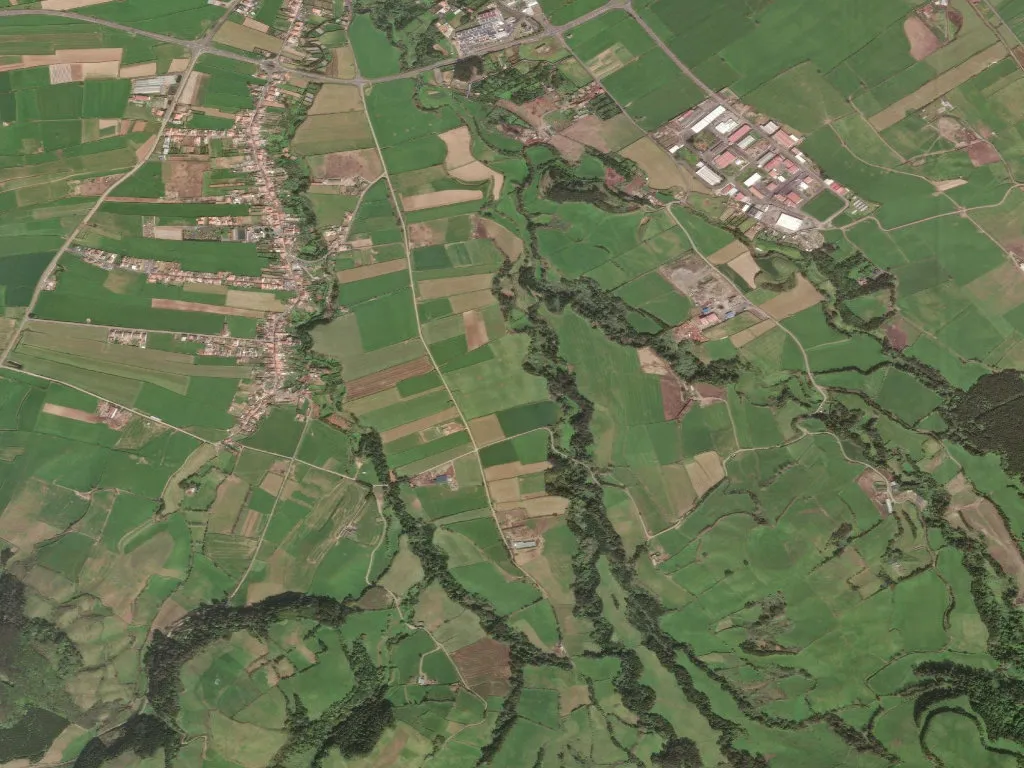
Full article about Ribeira Seca, Azores: Where Silence Carves a Volcanic Valley
Dry riverbed, stone hamlets and eight chapels—Rural São Miguel at its starkest and most fragrant.
Hide article Read full article
The stream that forgets to flow
Ribeira Seca begins with an absence: the hush where water should be. Stand on the basalt bed at the height of summer and you hear only your own pulse and, somewhere below, the Atlantic sucking at the lava coast eight kilometres away. The stream—when it remembers—appears as a quicksilver ribbon that polishes the black stone to obsidian, then vanishes again, leaving the valley floor a slate-coloured amphitheatre scattered with the ghost-prints of ferns flash-fried by 16th-century eruptions. At 112 m above sea level, this is the island’s diaphragm: rural São Miguel breathing at its slowest.
Where the scythe still sings
Density here is 22 souls per square kilometre—one of the lowest on São Miguel—and the silence is deliberate. Farmers still mow their plots by hand, the scythe’s metallic ring ricocheting off basalt terraces planted with heirloom white maize whose cobs will be ground for bolo de sertã, a skillet-cake cooked over open fire. Between the rows, free-ranging porco preto fatten on acorns dropped by the island’s last Quercus ilex stand; their hams will hang in stone sheds until Christmas, when they re-emerge as translucent petals in winter wheat stew. Kitchen gardens are fenced with blue hydrangeas whose colour is less horticultural flourish than acid testimony: the soil here is volcanic, sharp, unforgettable.
Eight chapels, one horizon
The parish inventory lists eight classified buildings—nothing grand, everything insistent. The 17th-century Igreja de Nossa Senhora da Estrela keeps its gilded altarpiece dimmed by centuries of wood-smoke; on the last Sunday of August the statue of the Virgin is carried down lanes flanked with Erica azorica and Vaccinium cylindraceum, two endemics whose Azorean names no outsider can pronounce. Higher up, the whitewashed Capela de Santo António sits like a punctuation mark above the valley’s semicolon of basalt. From its single window you can watch the stream’s dry axis point directly to Santa Bárbara’s surf line, where North Atlantic swells unroll like bolts of indigo silk.
Wheat, turnip and cinnamon blood sausage
The menu is dictated by altitude and rainfall. Winter begins with caldo de nabos—turnip broth thickened with stubby linguiça—and ends with ensopado de trigo, heritage wheat berries simmered overnight with pork hock and wild marjoram. On feast days the cinnamon-scented morcela doce appears, its filling of pig’s blood, sugar and spice sliced so thin it curls like watch-springs. Cheese is made each morning: a spoonable fresh curd for breakfast, a firmer wheel rubbed with Fayal fern for later. The only imported ingredient is time—everything else is already here.
Footprints in dry lava
The signed Ribeira Seca trail is five kilometres of levada, watermill and swimming hole, but the unofficial extension is better: follow the streambed upstream until the basalt becomes a natural pavement printed with the ropey textures of pahoehoe lava. Yellow-legged gulls wheel overhead; the occasional Azorean buzzard cuts a silent diagonal. Where the water pools, children dive from basalt ledges, their shouts echoing off walls of Hypericum foliosum—the island’s own St John’s wort, blooming improbably in December. At the coast, black pyroclastic cliffs give way to a boulder beach where fisherman still launch wooden dories painted the same ox-blood red as the church doors inland.
When the flow finally ceases, the valley holds its breath. Sunlight strikes the exposed riverbed and the basalt turns mirror-bright, reflecting a sky that has seen every ship since 1522. Somewhere above the tree-line a cloud gathers, the cicadas pause, and the stone begins its long wait for the next pulse of water—an annual resurrection as reliable as the feast day that will, without fail, bring the Virgin back down the hill.